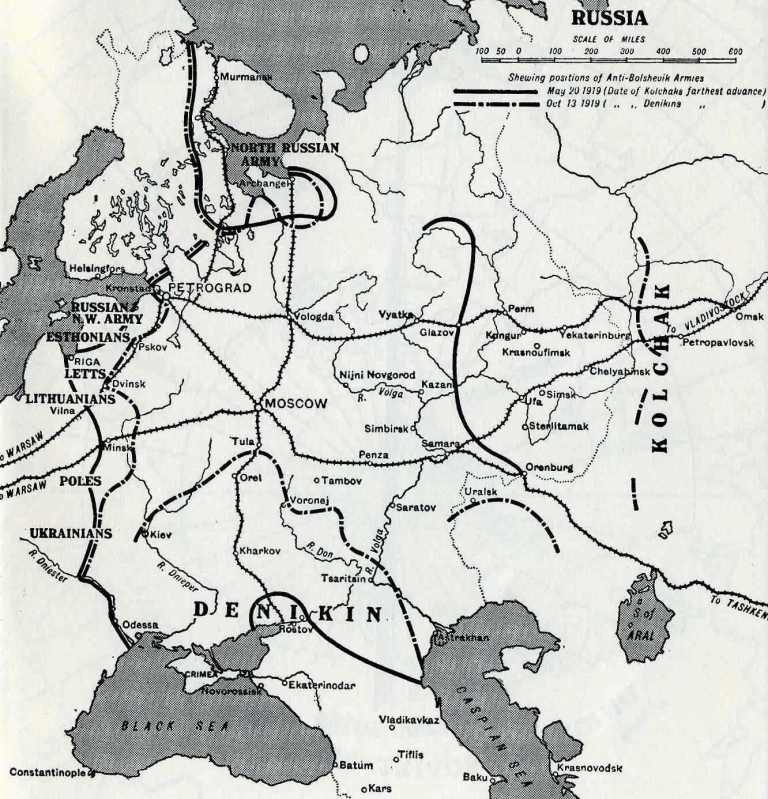
1917fe23:mr02; Eight days of intense disorder, sometimes
called "the February Revolution" [WRR:9-33]
- These eight days in February opened eight months of "the Second Russian Revolution"
[1905 = "First"]
- Norwegian peace activist and internationalist, winner of the Nobel Peace Prize, Christian Lange,
witnessed and wrote about March events [ID]
- Some background statistics = McC2:2-7
- February Revolution in Siberia (Irkutsk) and Transcaucasia [RWR:59-62]
- These days were immediate and dramatic, but they had long-term causes and consequences
- They cannot be understood independently from the WW1 context
\\
*2017ja01:RT News| "1917 LIVE: Relive the Russian Revolution as it
happened with RT's unique Twitter project"
[E-TXT#1 |
E-TXT#2]
*2017:RT News| "Retweet the Revolution: What if Twitter existed 100 years ago?"
[Video]
*2017fe24:RT News| "1917fe24 Live: Exhausted Russian Army on verge of turning against Nicholas II (VIDEO)"
[E-TXT#1 |
E-TXT#2]
*2017mr15:Lowy Institute| "The Russian Revolution, a century on"
[E_TXT]
*2017mr29:Johnson's Russia List| "Patriarch Kirill blames 1917 revolution on intelligentsia"
[E-TXT]
*2017:RIA Novosti illustration of 1917 Russian revolutions
*--Ferro.SOLDIER
*--Wildman.END v#1=“The Old Army and the Soldiers' Revolt (March-April 1917)”
*--Jason Yanowitz, "February’s forgotten vanguard: The myth of Russia’s spontaneous revolution"
[E.TXT]
*--"The Deepening of the Russian Revolution"|
An
extensive E-TXT collection of primary and secondary sources
*--SFR
*1967:|_Russian Revolution: Essays, Photographs, and Excerpts from Classic Works about
the Men [sic] and Ideas that Shaped the Most Significant Revolution of the 20th Century
<>1917fe23:Petrograd| International Women's Day
expanded into massive "street level" demonstrations of wartime working women [RWR:36-8]
- Wartime experience, working and fighting (both in international and internal wars),
strengthened women's movements
- Women's issues now gripped all Europe and North America
- 1917:English middle-class woman Naomi Loughnan, Genteel Women in the Factories
[P20:71 |PWT2:272-4]
- 1916:German woman Magda Trott described Opposition to Female Employment [P20:73]
- 1916my04:New York Times reported from Russian newspapers about Russian Women in
Combat [P20:73]
- 1917:Russian radical Ariadna Tyrkova, "The Emancipation of Women" [DRW:51-7]
- Social and economic protest during the Russian commemoration of International Women's Day
represented the domestication of the international battlefield
- International war was becoming internal war, and international war was becoming revolution. Soon revolution
would become revolutionary civil war
<>1917fe25:Pskov | From
his railroad bivouac near the front, Emperor Nicholas II
prorogued [discontinued sessions of] the Fourth Duma
- This political/institutional event, which stretched over five days, until the abdication
of Nicholas II, compounded the social and economic disorder
- 1917fe25:fe26; Petrograd | Commander of the Petrograd Military District, General Sergei
Khabalov, reported on conditions of everyday life [VSB,3:878]
- 1917fe26:On the wintry Petrograd streets | Okhranka (political police) Major-General Globachev
reported on conditions of everyday life
=
Today, 26 February, at 3.30 p.m., a crowd gathered near the City Duma. Three blank rounds were
fired at this crowd, after which it dispersed. [An hour later, a half-mile down
the Nevskii Prospect from the City Duma = ] On Znamenskaya Square [in front of the Moscow rail station]
the police collected the bodies of about 40 dead and around the same number of injured.
[The crisis on the streets deepened.] In response to requests to disperse, the crowds threw stones and lumps of
snow from the street [...] Not only did they not disperse, they responded with laughter. [Quote based on
extinguished website]
- Especially critical was the breakdown of food supply [McC2:7-9]
- Petrograd police chief reported on breakdown of political authority [RWR:38-42]
- A Russian princess experiences revolution [RWR:67-9]
- 1917fe26:Duma President Rodzianko telegrammed Emperor Nicholas II in Pskov =
The situation is serious. The capital is in a state of anarchy [he means "chaos"]. The government is paralyzed;
the transport service has broken down; the food and fuel supplies are completely disorganized. Discontent is
general and on the increase. There is wild shooting in the streets; troops are firing at each other. It is urgent
that someone enjoying the confidence of the country be entrusted with the formation of a new government. There must
be no delay. Hesitation is fatal.
- "Confidence of the country" was a novel and significant consideration for an establishmentarian politician
like Rodzianko
- Along with the new demands of total military-industrial mobilization of
national life, and consequently the militarization of politics in general, "everyday
life" considerations had grown in importance over the previous two centuries
- And "everyday life" continued over the next decades to be an important part of the Russian historical experience,
and also well beyond Russia
<>1917fe27 ("Red Monday", 2:30pm): Petrograd |
Fourth State Duma ignored Nicholas II’s effort to prorogue it [GRH:277-8]
- Instead, the Duma Executive Committee formed a Provisional Committee [McC2:9-11]
- Participant's eyewitness account [TXT]
- 1917fe27:mr04; Reactions to February Revolution in its first days [McC1:92-100 |
WRR:9-33]
- 1917fe27:1917mr03; Nationalist monarchist Vasilii Shul'gin, close to main
events, wrote memoirs [GRH:258-77 |Excerpted TXT].
A few weeks later he appeared with views on the lamentable fate of the Duma [Ibid:407-10]
- 1917fe27:Back at the wartime front rebelliousness also seethed. An appeal to revolution circulated
among soldiers [RWR:42]
- 1917fe28: French journalist L.-H. Grandijs described military and civilian disorder on St.Petersburg streets
[Eye.WW1:271-4]
- USA Ambassador David Francis reported to State Department [DRR:12-14]
- Rodzianko, now the chair of the Provisional Committee, again telegrammed Emperor Nicholas II
in Pskov [Chamberlin,1:429 | McC2:11-12 |
GRH:278-9 | StH:16(with letter of Empress to Nicholas II
as well)]. Here's what Rodzianko wrote =
The situation is growing worse. Measures should be taken immediately as tomorrow will be too late. The last hour has
struck, when the fate of the country and dynasty is being decided.
The government is powerless to stop the disorders. The troops of the
garrison cannot be relied upon. The reserve battalions of the Guard
regiments are in the grips of rebellion, their officers are being killed.
Having joined the mobs and the revolt of the people, they are marching on
the offices of the Ministry of the Interior and the Imperial Duma.
Your Majesty, do not delay. Should the agitation reach the Army, Germany
will triumph and the destruction of Russian along with the dynasty is inevitable.
- The Russian State Duma was a large representative and legislative body whose strength had grown over the eleven years
since the troubled convocation of the First Duma [ID]
- Now, in a time of catastrophic wartime crisis, the Duma seemed on the one hand to stand against the
orders of the Emperor and, on the other, to shrink from the center of events
- The Duma officially lived on for eight months more, but at this earlier point it ceased to function as "State Duma"
- It decanted a small portion of its possible great national authority into two very small institutional flasks =
- Rodzianko's "Provisional Committee" and,
- at the head of the "Committee", fresh-minted "Commissioners" [Komissary] with implications of extraordinary authority
- The Russian "experiment" in European-style parliamentary politics
began with the 1905 Revolution (the "first" Russian Revolution)
- Now it came to an abrupt end in the first moments of the second Russian Revolution
- Parliamentary government of this sort was not to be revived until after the collapse of the Soviet
Union, seventy-six years later
- As international and domestic ("internal") war raged all around, no one and no organized group
planned or knew or guessed what lay ahead
- Fourth Duma and tsar were sliding out of the picture
- All central national institutions of political authority, except the Imperial Armed Forces,
would be new to the scene in a matter of just three more days =
<>1917fe27 (7pm):And that evaporation
of the Imperial political establishment was only the beginning. In the Taurida Palace, just down the hall
from the quarters of the Duma's new Provisional Committee, another new institution appeared, independent
of the Provisional Committee and with political ambitions of its own = The Petrograd Soviet [Council]
of Workers and Soldiers Deputies. Summoned earlier, the Soviet now met for the first time and formed its
own Executive Committee [GRH:285-93]
- 1917fe27:fe28; Russian State Council telegraphed Emperor Nicholas II [GRH:279-80]
- 1917fe28(02:00):Russian Duma Provisional Committee issued a proclamation
[VSB,3:881 | GRH:281-2]
- 1917fe28:Russian Imperial military Chief of Staff, General
Mikhail Vasil'evich Alekseev [W-ID], telegrammed a
gloomy report to government officials [McC2:12-13]
- 1917mr01:Duma Provisional Committee appealed to the army [GRH:282-3]
- Expressions of support for Duma [GRH:284-]
- Description of how the Petrograd Soviet selected its Executive Committee [RWR:43-8]
<>1917mr02:Pskov, at the front | Emperor Nicholas II abdicated
in favor of his brother Michael |
[TXT | Russian E-TXT |
DIR3:524 | PFM:467-8 |
GRH:258-77 & 294-302 | StH:17 | GDR:510-11]
- 1917mr01:mr02; Pskov HQ| Russian Minister of Finance, Petr Bark, observed events on these two fateful days and
described them in rich detail [*1957jy:RRe#16,3 and in Moh:75-84]
- Nicholas did not want the weight of the crown to fall on his hemophiliac son
- After two and a half years of international battlefield, the reach of war
into the domestic life of belligerent peoples extended further than ever before
- 'Amazing news from Petrograd’: Western press’ caustic reaction to abdication of Tsar Nicholas II |
2017mr17:RT News [E-TXT]
- Now international and internal war combined to bring down the first of the stumbling great-power combatants
- But within a matter of just a few days, the more than 300-year
Romanov dynasty was at its end
- The Emperor was finished, and the Empire itself was teetering on the brink of disintegration and destruction
- Imperial Russia collapsed in the midst of World War One
- The Russian "old regime" simply fell to shreds. Even the loyal high command seemed ready to move on to
something new, as described by Trotsky =
In all the commanding staff there was not found one man to take action in behalf
of his tsar. They all hastened to transfer to the ship of the revolution, firmly
expecting to find comfortable cabins there. Generals and admirals one and all
removed the tsarist braid and put on the red ribbon [E-TXT]
- Bernard Pares (1867-1949), an English scholar who visited Russia and who was closely
familiar with Russian political developments since the 1905 Revolution [ID] was author of
several scholarly first-hand accounts of Russian war and revolution. He concluded the following about the 1917
collapse of the old regime [PFM:24] =
The story which emerges from this material is as tragic as anything I
have ever known. Following the events throughout while they were
evolving and later filling in one gap after another in my knowledge of
them, I have become quite convinced that the cause of the ruin came not
at all from below, but from above.
- Was the domestic revolutionary battlefield created by the international battlefield?
- Would the Revolution (internal war) have happened without WW1 (international war)?
<>1917mr02:Russian tsarist dynasty collapsed under
the weight of the catastrophic first mechanized total war, WW1 [ID],
in what is called "the Second Russian Revolution" [ID]
- Some background statistics [McC2:2-7]. Further data on economic and social
aspects of this revolutionary year [McC2:59-48-50, 59-112]
- Documents on public response to the February Revolution [HCV:83-117]
...Response of soldiers, workers, professionals, industrialists and students [117-47]
...Response of Clergy, Peasants, aristocrat landowners, women, national and religious minorities [147-225]
- The Russia of Nicholas II was the first (and the "youngest") of four
great imperial monarchies to disintegrate over the next 18 months =
- 1613:1917 (304 years); Russian Romanov
- 1453:1918 (465 years); Ottoman Turkish
- 1415:1918 (503 years); German Hohenzollern
- 1282:1918 (636 years); Austrian Habsburg (ruling over Austro-Hungarian Dual Monarchy since 1867)
=
Here's a description of how Wawro.MAD
accounts for Austro-Hungary in WW1 =
Speaking a mystifying array of languages and lugging outdated weapons, OST.MGR troops
were hopelessly unprepared for the industrialized warfare that would shortly consume
Europe. [...] Doomed Austrian conscripts were an unfortunate microcosm of the OST.MGR
itself-both equally ripe for destruction. After the assassination of the Austrian Archduke
Franz Ferdinand in June 1914, Germany goaded OST.MGR into a war with Russia
and Serbia. With the Germans massing their forces in the west to engage the French
and the British, everything -- the course of the war and the fate of empires and alliances
from Constantinople to London -- hinged on the Habsburgs' ability to crush Serbia and
keep the Russians at bay. [mlf=] However, Austria-Hungary had been rotting from within
for years, hollowed out by repression, cynicism, and corruption at the highest levels.
Commanded by a dying emperor, Franz Joseph I, and a querulous celebrity general,
Conrad von Hotzendorf, OST.MGRs managed to bungle everything -- their ultimatum to
the Serbs, their declarations of war, their mobilization, and the pivotal battles in
Galicia and Serbia. By the end of 1914, the Habsburg army
lay in ruins and the outcome of the war seemed all but decided. [...] The
Eastern Front [?S.fr] changing the course of European history || More = Austria-Hungary found
itself at the mercy of the Germans after 1866 Austro-Prussian war. Internal struggles also
important, especially strained relations with Hungary. Empire's inability either to
control or mollify its minority populations led to its disintegration. At the outbreak of war
Austria-Hungary's army was small & poorly trained and equipped. Vacilating tween
E.fr & S.fr = Destroy Serbia first or husband its strength against Russia. When
Conrad von Hotzendorf, Vienna's generalissimo, did finally act, his campaigns
were disastrous and embarrassing defeats. Austria's role in causing World War I
is well documented, but Wawro's contribution = the overall decline of
Austria-Hungary & broken relations with Balkan states and Russia.
Then military blunders caused its ultimate destruction
- By the time the war ended, even the victors found themselves in a state of economic collapse
- It took another decade for the tsunami of global market-economic collapse to reach USA
[ID]
- By that time, only two of the world's modernized, industrialized and militarized economies remained
(temporarily) intact = USA and Japan
<>1917mr02:1917oc25 Eight months
of "the Second Russian Revolution", from the February and March disorders that provoked the abdication
of Emperor Nicholas II to the Soviet Revolution [aka "The October Revolution" or "The Bolshevik Revolution"]
- At this time, two centers of revolutionary political authority arose in tense relationship to one another
- Out of the disintegrating Imperial State Duma there arose a "Provisional Committee" which quickly formed a
"Provisional Government" [E-TXT |
McC2:20-3 | VSB,3:881 | BNE:224-6 |
WRR:34-63]
- From the ranks of mobilizing factory workers and disgruntled military ranks there arose a
Petrograd Soviet of Workers and Soldiers Deputies
[Chamberlin,1:431-3]
- These two amorphous bodies vied with one another for almost nine months
in a situation described as "Dual power"
- First steps of the new Provisional Government [RWR:55-9 |
GRH:303-19]
- Leading figures at the outset included activists prominent in post-1905 Russian political life,
many associated with the "Progressive Bloc" [ID]
[RWR:50-2] EG=
- A sequence of coalitions followed one after the other in an effort to stabilize a domestic
revolutionary situation in the midst of a world war
- Five serious crises arose in the eight months of the Second Russian Revolution =
- Provisional Government's secret promise to Allies to honor Nicholas II's war
agreements and continue the disastrous fighting
- "The July days", an unsuccessful armed uprising against Provisional
government and for all power to the Soviets
Documents related to Russian revolutionary events up to the July Days [HCV:63-83]
- "The Kornilov Affair", an unsuccessful armed coup attempt spearheaded
by ex-tsarist generals
- The contest between Provisional Government and the Petrograd Soviet terminated when the Soviet, now
armed and under firm Bolshevik leadership, seized power [ID]
- The Constituent Assembly, though technically elected and convened after
the Soviet revolution overthrew the Provisional Government, must be included as the final sorry
crisis afflicting the Provisional Government [8-hop LOOP]
- Because of "Dual Power" and other factors, the Provisional Government
has been characterized as all too provisional and all too little government
- 1917fe27:oc25; Russian Gen. Boldyrev kept diary which covered full eight month period of
Provisional Government [VRX:189-226]
- 1917fe27+:Pollock, An Outsider's View [P20:102]
- Years later, a key activist, Alexander Kerensky
[Aleksandr Kerenskii], worked with Professor Robert Browder to gather
and publish three volumes of translated primary documents [coded "B&K" in SAC]
relating to the "Provisional Government" in the midst of war and revolution
- 1927:Great pioneer Soviet-era movie director, Sergei Eisenstein made 10-year anniversary epic film account of these
months, OCTOBER [Oktiabr] [SAC]
- SUMMARY with emphasis on war, revolution and liberalism =
- Modern mechanized total war challenged European "liberal" traditions everywhere and perhaps
neutralized them permanently in certain areas, certainly weakened them just about everywhere
- The Russian Provisional Government was just about the last gasp of Russian "liberalism", and feeble it was
- Russian liberalism died in combat, so to speak
- It fumbled the most important issue inherited from the old regime =
WW1 on the Eastern Front and on the Southern Front
- After the Soviet Revolution overthrew the last of the "liberal" Provisional Governments [ID],
some of the defeated activists out of the old 1905 tradition joined various military-led movements in a failed effort
to defeat the emerging Soviet Republic
- This was a distinct era of politics as war, "internal war" or
Revolutionary Civil War [LOOP]
- It could be argued that the liberal legacy of the 1905 Revolution was revived to some degree in the
first peace-time Soviet period called "NEP" [ID]
- But events probably should not be labeled "liberal" unless they take place on a solid liberal
social/institutional foundation [ID "Civil Society"]
- NEP "liberalization" of certain economic market relationships could be called "liberal" only in the
most superficial sense of the term
- How about "liberalism" even later in the Gorbachev era of "perestroika" [ID]?
- Or "liberalism" in the post-Soviet governments of Boris Yeltsin [ID]
and Vladimir Putin [ID]?
\\
*--William Rosenberg, Liberals in the Russian Revolution
<>1917fe:1918; Narodno-sotsialisticheskaia
(Trudovaia) partiia [NSs] came alive as A. V. Peshekhonov, Venedikt A. Miakotin
[ID] and other veterans
of the 1905 Revolution were joined by Sergei Mel'gunov, ME Berezin and others
- NSs supported the Provisional Government
- Mel'gunov's memoirs of eventual Provisional Government defeat = The Bolshevik Seizure of Power
<>1917mr02:1918jy28; USA
joined WW1 in its final 18 months . Here is a summary of those 18 mos. =
- Only after the collapse of the Russian old regime did USA feel free to enter WW1
- Now USA would be (or at least could tell itself that it was) in alliance with "democracies" against "imperialists"
- In the USA and around the world, the Russian Revolution seemed proof that WW1 was a
prelude to global revolution or reform
- Some deplored the possibility of great changes ahead, and some welcomed it, but nearly everyone expected it
- USA President Woodrow Wilson welcomed the possibility for global reform
- Bolshevik leader Lenin welcomed the opportunity for global revolution [see Arno Mayer's study below]
USA could now join "The Allies" =
England (but wasn't it at the head of a "British Empire"?)
France (still possessing imperial domains)
Italy (ditto), and
newly tsarless Russia
vs.
"Central Powers" =
German Empire
Austro-Hungarian Empire
Ottoman Turkish Empire, and
Bulgaria
- USA pundit Randolph Bourne [
W-ID] expressed his feeling of betrayal as USA entered the war
- Bourne's article, "The War and the Intellectuals" [E-TXT],
claimed that the American intelligentsia was swept up in war fever
- The American press followed the early campaigns [pix]
with enthusiasm
- 1918: Bourne wrote a most insightful anti-war/anti-nation-state piece, "War is the Health of the State"
[E-TXT]. Bourne died in the great flu epidemic at the end of this year
- Eighty-six years later, as USA militarism in Iraq brought Bourne back into vogue, Columbia University organized
a great symposium dedicated to the legacy of Randolph Bourne
- 1917my26:President Wilson gave his idealistic version of WW1
[P20:77 | More of Wilson's ideas about the Great War =
DPH:346-51]
- The hypertext LOOP on the name of President Woodrow Wilson below provides a
more detailed look at the
following developments over the next three years =
- 1917oc25:USA optimism about the possibility of a post-tsar liberal-reformist Russia
was shaken by the "Ten Days that Shook the World", namely, the Soviet Revolution in Russia that followed
eight months after the abdication of the Russian tsar
- 1918mr03:USA was especially shaken by the Brest-Litovsk Treaty
- That treaty confirmed formal Bolshevik withdrawal from WW1 and the cessation of
hostilities on the Eastern Front
- USA felt doubly betrayed by Russia
- The Russian revolution, which at first seemed aimed at a left-liberal or
mild social-democratic future, turned very radical with the October Revolution
- Russia soon left the war. The Eastern Front which mainly pitted Germany against Russia fell silent
- Austria-Hungary, Bulgaria, and mainly Ottoman Turkey continued action on the Southern Front
- 1918no11:Hostilities terminated on the Western Front between Germany and the western Allies,
eight months after the Brest-Litovsk Treaty and Russia's withdrawal from the war on the Eastern Front
- USA remained a belligerent and the main material support for Allied efforts on the Western Front
- 1918:1920; The Southern Front stretched on two more years
- Western Allies cooperated in a broad interventionist military incursion into the territories of ex-ally Russia
which was now in the grips of Revolutionary Civil War
- 1919:USA was determined to win a central place for itself on the bargaining table at the end of the war
- Wilson hoped to prevent a rebirth of old-fashioned European diplomatic practices that
he felt caused the war, and thus he was sympathetic to the radical-liberal politics of the post-tsarist
Provisional Government
- But after the post-tsarist Provisional Government fell under even more radical Soviet revolutionary power,
Wilson also hoped to restrain the momentum of the new revolutionary regime in Russia, led
by Lenin and the Russian Social Democratic Workers Party (Bolsheviks)
- The Bolsheviks harbored international ambitions even grander than those of USA
President Woodrow Wilson
- Wilson found himself and his ideals caught between a rock and a hard place =
- Obdurate old west European imperialists ready to put their world back together, and
- Rambunctious Soviet revolutionaries ready to pull that old world apart
\\
*--Arno Mayer|_Wilson vs. Lenin:
Political Origins of the New Diplomacy, 1917-1918,
*--Mayer might best be read in the following page order = 1-4, 35, 329, 344-5(middle), 206-210, 296-304, 339-44 , 352(middle)-393
*--Mayer's conclusion [TXT]
*--The best account of the decline in Russian-American relations in these months is
George Frost Kennan, Soviet-American Relations, 1917-1920 (1956-58)
*--Also see Kennan's briefer but more comprehensive Russia and the West under Lenin
and Stalin (1961). Kennan became a major figure in US foreign policy in
the early Cold War years
*--If you wish, GO to the beginning of LOOP on war & Revolution |
BUT =
*--LOOP on war & Revolution continues to 1920 (essentially to the end of this SAC page)
*--LOOP on Southern Front
<>1917mr02:The Petrograd Soviet
issued "Order No. 1" [E-TXT],
its first official act, one that ended the possibility for standard old-regime military discipline
*--At the same time, the Executive Committee of the Soviet agreed to cooperate with the Provisional Government
on the basis of Soviet "principles" [McC2:16-19]
*--General Alekseev ordered that all irregular groups mixing with regular troops and
fomenting disorder be arrested and court-martialed on the spot, with sentences carried out
immediately [GRH:403]
*--Military discipline deteriorated throughout March [GRH:386-94]
\\
Wki
<>1917mr03+: Edward Heald letter described Russian revolutionary events observed
during his travels there [ASEER#4,16-17 (??):116-57,118-33 |WRH:581-95]
*--Graham R. Taylor described events in Orenburg Province [WRH:604-15]
<>1917mr03:Petrograd| The tsar's brother
Grand Prince Michael Aleksandrovich refused the crown [W]
- Grand Prince Michael did not altogether rule out the possibility of assuming that post, but he
felt strongly that such a move was premature
- In his view no such act of "restoration" of old tsarist rule -- simply substituting a new tsar for
the old -- should be considered until convocation of a Constituent Assembly and wide popular deliberation
on the creation of a proper legal basis for a new form of government in Russia
[GRH:298-9 | McC2:14-16 | DIR2:478 |
DIR3:525-6 | Russian GDR:511]
- With the idea of a Constituent Assembly at the center of attention, many took these March events
to be the belated beginnings of a Russian version of the Great French
Revolution [ID]
- Grand Prince Michael urged that the Constituent Assembly be convened "in
as short a time as possible"
- That wasn't going to happened
<>1917mr04:Kiev|
Central Rada, a legislative and governing body
elected by certain Ukrainian public organizations
[Wki],
assumed leadership of national political movements now that the Romanov autocratic
throne in Petersburg fell empty and the Empire seemed falling apart
\\
*--Pipes.FORMATION:53-72
<>1917mr05:British Ambassador to Russia, George Buchanan,
spoke with Pavel Miliukov about Allied support for the new revolutionary government in Russia (the
Provisional Government) was dependent on Russia's preparedness "to fight the war out to a finish and to
restore discipline in the army" [Buchanan.MISSION,2:90-1]
*--That day Provisional Government Foreign Minister Miliukov
noted down his position on this "greatest international and domestic crisis which Russia has known
in the course of her history". The new Provisional Government, he affirmed, "will remain mindful
of the international engagements entered into by the fallen regime, and will honor Russia's word".
Russia will fight with her "glorious Allies". Russia will "devote all its energy to bring the war to a
victorious conclusion, and will apply itself to the task of repairing as quickly as possible the errors of
the past". The enthusiasm of the domestic political revolution will spill over into a renewed effort on the
internaitonal battlefront [GRH:323-4]
<>1917mr06:A
few days after the Russian tear Nicholas II abdicated, but still almost 8 mos.
before the Bolshevik-led Soviet Revolution, Russian Provisional Government declared its political program
(author = A.A. Manuilov) [GRH:308-9 |
DPH:364-6 | ORW:177-8 | "Obrashchenie vremennogo
pravitel'stva k naseleniiu Rossii"| GRV:278-9]
- From the outset, two perceived imperatives pulled the Provisional Government in opposite directions =
- The Provisional Government claimed it was the fulfillment of the previous century's progressive "revolutionary"
dreams for Russia
- And it expressed its readiness and determination to continue World War One on the same terms
as before the abdication of Nicholas II
- First, the Provisional Government saw itself as the heir to years of political opposition to tsarist
authority
- Now was a chance to realize in Russia a much stunted and delayed progressive promise of the
European 18th and 19th centuries
- The efforts of the Russian people had finally overthrown the old regime. "A new, free Russia is born"
- The decree briefly accounted the recent history of revolutionary resistance
of the Russian people and tsarist authorities' betrayal of the Russian people =
By the act of October 17, 1905 [ID], under the pressure
of the awakened popular forces [EG], Russia was promised constitutional
liberties. These promises however, were not kept [EG].
The First Duma, interpreter of the nation's hopes, was dissolved [ID].
The Second Duma suffered the same fate [ID], and the Government,
powerless to crush the national will, decided by the act of June 3, 1907 [ID],
to deprive the people of a part of those rights of participation in legislative work which had been granted.
- With the outbreak of WW1, the tsarist regime was "in a state of moral decay, alienated from the people
indifferent to the fate of our native land, and steeped in the infamy of corruption"
- The Provisional Government "considers it to be its sacred and responsible duty to fulfill the hopes of
the nation, and lead the country out onto the bright path of free civic organization"
- 1917mr:Newspaper editorial against the death penalty [RWR:67-9] seemed a
harbinger of progressive change to come. More followed, EG=
- 1917mr07:Russian Provisional Government declared full reinstatement of the constitution
of the Grand Duchy of Finland [W]
- However, by summer, former SR terrorist, Boris Savinkov pointed in the
other direction when he agreed to serve as liaison between the Provisional Government and Military Headquarters
- Second, the Provisional Government Declaration pointed yet further in that other direction as it continued =
- The Declaration reminded all that Russia found itself engaged in a great World War
- This was in part an expression of kinship with the progressive western European Allies. Revolutionary
Russia would do everything it could to keep the Eastern Front alive, even against superior German Imperial armies, thus
to keep the Germans split on two fronts
- But this was also in part growing confidence in the struggle against the Austrian Empire and an ambition
inherited from the tsarist old regime for great imperialistic gains on what we are calling the WW1 Southern Front
- The declaration expressed itself in jingoistic terms = The "spirit of lofty patriotism" which prevailed against
the tsarist regime "will also inspire our valiant soldiers on the field of battle"
- In other words, the momentum and energy of the successful revolution now must be refocused on
the international war, and the goal of that war was victory
- The Government will give the army all it needs "to bring the war to a victorious conclusion"
- In that connection, all tsarist alliances against the Central Powers will be
honored and all tsarist agreements with the Allies will be fulfilled
- In other words, the war will continue as if the great domestic transformations
under way had no connection with old imperialist international policies
- So the declaration continued = In these difficult times, don't lose sight of the bright future
- "Within the shortest time possible" a Constituent Assembly will
be convened to decide how revolutionary Russia is to be ruled in this new democratic and progressive age
- Some eyewitness accounts of these days [WRR:53-67]
\\
*--LOOP on Southern Front
<>1917mr08:Russian Emperor Nicholas II made final address as tsar
[GRH:51-3 | PFM:472-3]
<>1917mr09:12; Russian Provisional Government
Naval Minister Aleksandr Guchkov wrote
General Alekseev [Chamberlin,1:435-8]
<>1917mr11:Petrograd Soviet announced agreement w/Petrograd Association of
Manufacturers re. working conditions [McC2:60-1]
<>1917mr12:Petrograd newspaper of Aleksei Suvorin, Novoe vremia,
published "What is a revolution?" [RWR:66]
*--Eyewitness accounts of these days [WRR:68-85]
<>1917mr14:Petrograd Soviet appealed
to the people of world, assuring them that a Constituent Assembly will very
soon put old Russia on a new and recognizable European path of social/political development. The Allies
are now far more nearly one [McC2:24-6 | GRH:325-6].
HOWEVER =
- Appealing directly "to all the people who are being destroyed and ruined in the monstrous war"
[w]e say that the time has come to begin a decisive struggle against the acquisitive ambitions
of the governments of all countries; the time has come for the people to take into their own hands
the decision of war and peace
- The appeal did not exclude brotherly greetings to the soldiers and
working people of the German and Austro-Hungarian empires. It emphasized
that they no longer had good reason to be at war with Russia. In good faith
they had taken up the defense of "the culture of Europe from Asiatic despotism".
Now all Europeans must do to their despotic rulers what Russians have done to theirs.
Until that time, Russia will defend itself -- its revolutionary and progressive self -- with resolution
- 1917mr18:Izvestiia expressed even sharper views held by the Soviet newspaper editors =
The secret diplomacy of Nicholas Romanov, Grigorii Rasputin, Protopopov, Sturmer, Sukhomlinov, Izvol'skii,
Miasoedov ... was not helpful to the people. They were for the interest of the gang of tsarist bandits, the most
dishonorable, untruthful, and plundering in the world.
New government must "cut loose completely from the traditions of Izvol'skii and Sturmer. But it can change our
diplomacy only if it comes out before the whole world against the traditional policies of conquest"
- War started in order to defeat Russia before she got too strong. It's this simple = "Just as soon
as the people of the Austro-German Coalition compel their governing classes to lay down their arms and to
give up the idea of conquests, we will also lay down ours" [Ibid:326-9]
- Izvestiia (the newspaper of the Petrograd Soviet) also offered a withering critique of
General Alekseev [Ibid:404]
- That same day M. Rodzianko wrote to Prince L'vov taking a firm position against elevating
General Alekseev to a position of military leadership in the new revolutionary Russia.
He recommended instead Brusilov, Polivanov, Klembovskii and Lukomskii [Ibid:404-5]
<>1917mr26:All-Russian Congress of Peasants' Deputies, Peasant Union
resolution and Chernov speeches [GRH:373-8]
<>1917mr27:Russian
revolutionary Provisional Government issued its war aims [McC1:100-101 |
Chamberlin,1:440-1 | GRH:329-31]
- There were those who still dreamed that revolutionary Russia on the
Eastern Front might hold up its end of the bargain with
Allies who were still fighting the grim stalemate on the Western Front
- German propagandists did everything they could to undermine Russian army morale [GRH:385-6].
Down on the Southern Front, Germany offered the Straits to Russia if it would but leave the war
- Western Front Allies were also willing to guarantee Russia significant geo-political
rewards, but only if Russia stuck with the war up to its successful conclusion [EG=Sykes]
- However, such geo-political objectives or rewards were in stark contrast to emerging Soviet
concepts of national war aims =
[T]he objective of free Russia is not domination over other peoples, not depriving them of their
national possessions, not violent seizure of other people's territories, but the establishment of
complete peace on the basis of the self-determination of nationalities
- Clearly, Revolutionary Russia presented a challenge to its western-European Allies,
a challenge perhaps bigger than the issue of keeping up the Eastern Front =
- The Revolutionary Provisional Government and the Petrograd Soviet appeared on the verge of a fundamental redefinition of what WW1 was all about
- And in close alliance with a Europe-wide revivification of anti-war sentiment among social-democratic politicos
(temporarily stifled in the early weeks of the war [ID] ), the Zimmerwald movement
burst on the scene =
<>1917ap03:Vladimir Lenin,
fresh arrived in Petrograd from European exile and participation in the "Zimmerwald movement",
published "April Theses" [E-TXT
| DRR:23-6 | McC2:51-4 |
DPH:366-8 | WRH:597-9]
- For years efforts have been made to picture Lenin and a small handful of émigré Party faithfuls,
returning now through Germany on a diplomatically "sealed train", as hirelings of German Imperial power
[Germany and the Revolution, a strained effort to use German Foreign Ministry archives to prove that point |
McC2:138-40]
- Bolsheviks frequently acted as if the rumors were true [EG~]
- Lenin more nearly represented the "Zimmerwald Left" than he did the German Imperial high command
[EG]
- 1917ap08:Leo Kamenev and most other activists within
the Petrograd Soviet criticized Lenin's "April Theses" from a moderate and less militant
perspective on Russian events [McC2:54-5]
- Eyewitness accounts of these days [WRR:86-98]
\\
*--LOOP on "Zimmerwald" movement
<>1917ap05:Petrograd Soviet resolution in
support of Provisional Government, underscoring its stand on the urgent need "for universal peace without
annexations and indemnities based on the self-determination of nations" [McC2:26-7]
- That month, on the Southern Front, Victor Manakin organized civilian Shock Brigades to help bolster troop
Morale and counter anti-war mood growing among the troops
- Manakin's later memoirs of these events show how his actions were in loosely coordinated cooperation with the
Provisional Government and the Petrograd Soviet
- As his account progresses, one senses the origins of anti-Bolshevik or "White Guard" movements in
the military, the earliest beginnings of the Russian Revolutionary Civil War [Moh:184-205]
- 1917ap13 [26(NS)]:WDC| US diplomatic figure Elihu Root [ID]
delivered an important address on the "great peace movement" [RWP1,1:114-21]
<>1917ap13:Russian Foreign Minister Miliukov memo
on exclusion of Russia from international conferences being held among the other Allies
- Russia was not invited and not even informed of agendas or decisions taken at these meetings
- Miliukov was especially disturbed that "not only current affairs, but also matters of great
political significance, in which, as in the question of Asia Minor [AfroAsia on the Southern Front], Russia is directly
interested, were discussed"
- Miliukov warned that this disregard of Russia undermined public support of, and strengthened domestic
opposition to, the Provisional Government's continued participation in the war [McC2:45-6]
<>1917ap18:Miliukov circulated further assurances
to Allies, confirming the war aims statement of 1917mr17, adding this = "Our enemies have been striving of
late to sow discord among the Allies, disseminating absurd reports alleging that Russia is ready to conclude
a separate peace with the Central Powers" [GRH:333-4]
<>1917ap20:Russian Provisional Government
Foreign Minister Pavel Miliukov's note to Allies on the question of war aims caused scandal
[GRH:333-4 | Chamberlin,1:444 |
McC2:46-7 | DPH:368-70]
- The catastrophic war was ripping Russia apart, discontent was rife throughout
the Russian ranks and within the civilian population, and yet the new Foreign
Minister felt justified to bicker with Allies about what the now revolutionary
Russian Empire might be expected to gain from the war if it were only willing to
continue to "sacrifice" itself on the field of battle
- Conflicting goals of war and revolution caused the first crisis among post-monarchical
political leadership in Russia
- Miliukov's note inspired quick response
- 1917ap21:Petrograd Soviet resolution on war aims [GRH:336]
- 1917my02:The Soviet issued a second statement on war aims
- Miliukov was forced to resign as Foreign Minister
- 1917my08:At a Congress of his Kadet Party, Miliukov, now out of office,
delivered a speech in which he revealed that "the main thread of my policy
was to get the Straits for Russia. I fought, unfortunately in vain, against
those who favored the new formula, and [who argued] that Russia should free the
Allies from their obligations to help her secure sovereign rights over the
Straits" [GRH:334]
- Documents related to the April crisis [HCV:177-225]
- In the next year, 1918, Miliukov returned to politics when he
sided with the militant "White Guard", anti-Bolshevik opposition
\\
*--LOOP on Southern Front
<>1917ap24:1917ap29; Petrograd
All-Russian Conference of SDs(b) [Social-Democrats (Bolsheviks)]
- Resolution on democratic peace, harshly critical of Provisional Government = "A government of landowners
and capitalists has not and cannot change the character and purpose of the war" [GRH:337-9]
- The resolution in so many words stood against ordinary peace programs
- It was far from a pacifist program
- It sought to turn WW1 from international world war into world-revolutionary civil war
- 1917ap29:Lenin on the nationalities question (re. national minorities, especially Finland and
Ukraine) [McC2:48-50]
<>1917ap25:Petrograd Soviet called for an
international socialist planning committee to meet in Stockholm to organize a world conference on WW1
to be held at some time in the future in some as-yet unspecified neutral nation
- All parties and factions in the International [who accept the positions outlined by
the Soviet on mr14 (ID) ] were invited to attend. [The
words in brackets stricken from final draft]
- 1917ap26:For its part, the Provisional Government, staggered by the Miliukov scandal, put out a
feeler toward the Petrograd Soviet of Workers' and Soldiers' Deputies in which it expressed the desire
"to widen its circle by asking to participate in the responsible work of government those active creative
elements of the country who have not until now had direct part in State administration" [the words are
Georgii L'vov's in a letter of invitation to N.S. Chkheidze, President of the
Soviet GRH:349]
- The Soviet at first refused the invitation. Then =
<>1917ap30:Aleksandr Guchkov resigned
as Naval Minister in connection with the ap20 scandal [GRH:396-7]
- After more than 12 years near the center of
political events, Guchkov backed away from public involvement in Russian
governmental affairs, eventually fled Russia and went into emigration
- The way was now cleared for the Soviet to join in the Provisional Government's First Coalition
- There now appeared a possibility of bringing an end to "Dual Power"
[ID] in the immediately post-tsarist period of the Russian Revolution
<>1917my:Council of Elders of
railroad workers union, appeal to Factory and Mills Committees
[Fabrichnye i zavodskie komitety] [DRR:65-8]
*--Russian Orthodox parishioners call for church institutional autonomy from state power [RWR:82]
*--Russian situation described [McC2:28-9]
<>1917my01:First All-Russian Muslim Congress convened, following on a series of
Islamic political gatherings in the previous month
*--Congress issued resolutions [RWR:83-6]
\\
*--Pipes.FORMATION:75-9
<>1917my02 (my15 NS):Petrograd Soviet issued appeal to
"Socialists of All Countries", calling for
peace without annexations or
indemnities on the basis of the self-determination of peoples is the formula
adopted unreservedly by the proletarian mind and heart [...]. The Russian
Revolutionary Democracy appeals first to you, Socialists of the Allied
countries. You must not permit the voice of the Provisional Government of Russia
to remain the only voice in the Entente. You must force your governments to
state definitely and clearly that the platform of peace without annexations or
indemnities, on the basis of the self-determination of peoples is also their
platform [...]. The Russian Revolutionary Democracy appeals to you,
Socialists of the Austro-German alliance: You cannot allow the Armies of your
Governments to become the executioners of Russian liberty [...]. In order to
unite these efforts, the Petrograd Soviet ... has decided to take the initiative
in calling for an international conference of all the Socialist parties and
factions in every country [GRH:340-3]
- The Soviet appeal was in direct response to the Miliukov note on Provisional
Government war aims [ID] ALSO, GO ap21 & ap25 above
- Russia, the revolutionary Ally on the Eastern Front,
appealed to Allies on the Western Front to help define practicable and progressive
war aims, and to end the imperialist war on all fronts
- 1917ap28:Alexander Kerenskii spoke to a congress of delegates from the front in defense of the
long-term Russian revolutionary dream which he felt was threatened by fraternization of troops at the
front. [Fraternization = irregular and amiable interchange among or between enemy soldiers, brotherly behavior,
rather than fighting behavior, between the lines of battle] [GRH:394-6]
- 1917my:Western front also experienced increasing levels of "fraternization" [RWR:86]
- 1917my03:Petrograd Soviet appealed to troops at the front to maintain their active military defense
of the homeland so as to protect the revolution and give every chance for revolutionary First Coalition efforts
to achieve a democratic and Europe-wide cessation to the war [GRH:397-9]
- 1917my10:Procedings of the Soldiers' Section of the Petrograd Soviet [RWR:87]
\\
*--Mayer:194-5
<>1917my05:Russia | Provisional Government "First Coalition"
organized and issued declaration [Chamberlin,1:447-9 |
McC2:27 | GRH:348-58]
- On this day, Trotsky, recently returned to Russia via Canada and NYC, addressed Soviet with guarded
praise for the Soviet decision to move closer to the Provisional Government First Coalition, but with warnings
about preservation of Soviet ideals [GRH:357-8]
- 1917my07: General Alekseev delivered anti-revolutionary speech to the Congress
of Officers of the Army and Navy [GRH:406]. Within days, the Provisional Government
relieved him of duty
- Russian woman Sofiia Panina became Deputy Minister of State Welfare
in the Provisional Government, She wrote memoirs [DRW:366-71]
- 1917my09:no15; Moscow | Letters of female revolutionary Lusik Lisinova [StH:129-36]
- Eyewitness accounts of this crucial month, up to je04 [WRR:99-115]
<>1917my21:Provisional Government Finance Minister described the mounting
food crisis [RWR:76-8]
<>1917my25:All-Russian Congress of Soviets of Peasant
Deputies [GRH:375-8]
- Tensions mounted between moderate and more radical socialists in
Soviet [GRH:359-68]
- 1917my03:Delegates to Provisional Government and Soviet, representing landowners in Simbirsk,
Nizhnii-Novgorod, Samara, Saratov, Tver, Kharkov, Poltava, Kursk, Kherson, and Ekaterinoslav complained about
opposition to official policies and illegal actions of "village committees and commissars"
[GRH:380-1]. Through the summer, villagers also sent letters of complaint [Ibid.:381-3]
- *1917je:Russia| "From a Memorandum of Kirsanov Landowners..." [RRC1,3:507-10]
<>1917my27:USA President Wilson' Message to Russia
*1917my30:Izvestiia editorial chided Wilson for his "foggy and high-flown words"
<>1917je01:French parliamentary debate on peace
(follows year of mutinous unrest among Allied troops on the Western Front)
\\
*--Mayer:206-210 top
1917je02:Petrograd| Elihu Root addressed the Council of Ministers of the
Russian Provisional Government [GRH:344-6]
<>1917je03:Factory and Mills Committees [Fabrichnye i zavodskie komitety]
conference, resolution re. industrial disorganization [Chamberlin,1:449-51]
<>1917je03:je24; Petrograd | First All-Russian
Congress of Soviets
- Website devoted to this Congress
- Some resolutions [GRH:360-71 | McC2:29-31 |
Chamberlin,1:451-3,456-7]
- The dominant parties were SRs and Mensheviks
- 1917je04:Kerenskii delivered speech in which he warned that the current Russian revolution was threatened
by the same forces of ruin that undermined the French Revolution (rise of dictatorship) and also the Russian 1905
Revolution (rise of reactionary forces) [GRH:366-8]
- 1917je07:Provisional Government "First Coalition" Food Minister A.V. Peshekhonov
reported to Soviet [B&K | DRR:60-5]
- 1917je08:Russian Social Democratic Party (bolsheviks) Central Committee
voted for je10 armed demonstration
- Bolsheviks acted on their own without the knowledge or approval of the
Soviet [McC2:29-31 | GRH:573-4]
- Mensheviks and other Soviet political parties clashed with Bolsheviks on
the issue of armed insurrection [RWR:88]
- 1917je09:Bolsheviks changed position and cancelled call for armed demonstration
- It was becoming increasingly clear that the Bolshevik position ("All power to the Soviets"
[ID] ) had two faces
- Positive pro-Soviet
- Negative anti-Provisional Government First Coalition (with Soviet participation).
Bolsheviks took their own exclusively pro-Soviet position against those political activists
who sought an end to "Dual Power"
- 1917je09:Before the First All-Russian Congress of Soviets, the Bolsheviks were unable
to pass their resolutions for immediate dissolution of the State Duma and the
State Council [DPH:370-1]. Bolsheviks were still a
minority party
- Once the All-Russian Congress met, the majority there voted to demote Duma and State Council
from legislative bodies to "ordinary private group of citizens of free Russia"
[GRH:410-11]
- Peculiar ambiguity of status of these moribund old-regime institutions stretched on
into the time of the oc25:Soviet Revolution [Ibid:411-13]
- Notice the institutional parallel between the ambiguous status of the
old-regime Duma and State Council
and the ambiguous relationship between the revolutionary Provisional Government and the Soviets
within the First Coalition [EG]
- 1917je18:As the First All-Russian Congress of Soviets neared its end, the Executive Committee
of All-Russian Soviets of Peasant Deputies joined w/All-Russian Soviet of Workers and Soldiers
Deputies [GRH:383]
- Eyewitness accounts of conditions in the countryside that fall [WRR:140-59]
- Bolsheviks were especially active at this time in labor-intensive districts like Ivanovo-Voznesensk,
a major textile industrial center [RWR:95]
<>1917je07:France | William Pressey described being injured by German gas attack
[Eye:473-4]
*1919| John Singer Sargent painted aftermath of gas attack against British
troops [lxt]
<>1917je10:PGR: Petrograd Soviet prohibited
"comrade soldiers and workers" from obeying the Bolshevik call to revolutionary action
<>1917je10:Ukraine,Kiev| Central Rada
issued its First Universal (declaration) [E-TXT
| RWR:62-6 (includes Provisional Government reply) |
GRH:435-44 | DRR:76-79]
*--Provisional Government reply to the Ukraine declaration [Chamberlin,1:454-5]
\\
*--Pipes.FORMATION:52-73
*--Taras Hunczak, The Ukraine, 1917-1921: A study in revolution (1977)
*--Reshetar.UKR
<>1917je16:Beginning of "The July Offensive", Russian
Provisional Government "First Coalition" Minister Aleksandr Kerenskii supported a plan for
renewed WW1 military offensive against Central Powers [McC2:31-2]
- 1917je18:Russia launched its last ill-fated WW1 Eastern-Front
campaign, sometimes called the "June Offensive", sometimes the "July Offensive", sometimes the
"1917 Summer Offensive"
- The last fateful Russian offensive of WW1 had a significant "Southern Front" component =
- Pavlovskii Guards Regiment appealed to the Turkistan Army Corps [RWR:89-91]
- This pitiful Galician offensive was designed to recover Ukrainian
territories [GRH:425-43 | McC2:31-2]
- It was a miserable failure and a significant causal factor in the deepening Russian revolutionary crisis
- The "June Offensive" did far more than Bolshevik conniving to undermine the Provisional Government First Coalition
\\
*--Heenan.FATAL
*--LOOP on Southern Front
<>1917je22(NS jy05):WDC| USA President Wilson received first
ambassador from "the new democracy of Russia", Boris A. Bakhmetev [GRH:347}
<>1917je27(NS jy10):German Chancellor Bethmann-Hollweg
resigned
*--H-History
contains the Chancellor's statement about his resignation
*--Bethmann-Hollweg was rendered ineffective, squeezed between
liberal/reactionary, diplomacy/war and civilian/military factions in Reichstag
<>1917je28:Ukraine,
Kiev | Russian Provisional Government sent delegation to Central Rada
<>1917jy02:Constitutional Democratic Party
[KDs; Kadets] ministers resigned from the Provisional Government
<>1917jy02:Memo from provincial office of
the Russian State Bank described a seriously deteriorating situation in the
countryside [RRC1,3:510-11] =
- Among other forms of agricultural ravagement, peasants have seized "all the land, meadows, and forests"
and "pedigreed horned cattle"
- Levels of grain production are bound to fall off
- In the meantime, peasants plan to hold onto the harvested grain until their
demands for much higher prices are met
- Peasants tell the expropriated owners, "You have lived on our labor and drunk our blood long enough;
now our time has come"
- Armed soldiers [apparently deserters from the June Offensive war-front] have joined mutinous crowds of peasants
as they seek out local oppressors
- They claim to act in the name of the "Committees of Soldiers' and Workers' Deputies" or
the "Committee of Public Safety"
- In this season, peasants elsewhere in the Empire were restive =
- Tambov Province peasants got underway soon selecting deputies
for local Soviets [RWR:75]
- Nizhnii-Novgorod Province peasant reflected on his life over the previous half century
[RWR:78-80]
- Voronezh Province peasant woman reflected on the revolution in her district
[RWR:80-2]
<>1917jy03:jy05; Petrograd| July Days
abortive uprising [GRH:444-64 |
HCV:225-63]
- SR Party activists penned justification for the armed uprising of machine-gun regiments against the Provisional Government
[TXT]
- Soviet of Peasant Deputies responded [Chamberlin,1:455-6 | McC2:32-3 |
DPH:371-3]
- 1917jy04:Soviet appeal in connection with July Days demonstration [McC2:32-3]
- 1917jy05:SBv?? proclamation [McC2:33]
- 1917jy05:Social Democratic Party (bolsheviks) printing press seized
- Lenin & Grigorii Zinoviev fled Petrograd and were soon émigrés in Finland
- Eyewitness accounts of "July Days" [WRR,7:116-39]
<>1917jy05:jy12; Finnish law
of the Sejm on Supreme Power [DRR:79-82]
<>1917jy07:In the aftermath of the "July Days" [ID] Provisional
Government "
First Coalition"
Prime Minister, Prince Georgii L'vov [Wki], resigned, ending
a political career spanning more than a decade
- On that day, Aleksandr Kerenskii was at the front [RWR:91-3]
- Leon Trotsky (leader of Mezhraiontsy [Inter-district Activists]), Leo Kamenev (Bolshevik), and
others were arrested
<>1917jy08:As the Provisional Government
First Coalition disintegrated, Aleksandr Kerenskii became Prime Minister in the "Second Coalition"
[GRH:465-81]
- Documents relating to revolutionary events after the July Days and up to the Soviet Revolution [HCV:263-77]
<>1917jy16:Ukraine| Central Rada
issued 2nd Universal declaration [read down in
E-TXT]
<>1917jy18:Kerenskii appointed general Lavr Kornilov
commander in chief
- WW1 was the issue of highest priority as the "Second Coalition" got under way
- 1917jy19:Provisional Government issued message of reassurance to Allies [RWR:93-5]
- 1917jy23:Aleksandr Kerenskii organized the ministerial Cabinet of the Russian Provisional Government "
Second Coalition"
[GRH:479 | McC2:34]
- 1917jy25c:David Soskice memoirs re. "
Second Coalition"
with
some insights about Boris Savinkov and a colorful description of
Breshkovskaia's personal appeal to Kerensky to prevent the Bolsheviks from
meeting and to arrest the Bolshevik leaders [McC2:34-7]
<>1917jy26:au03; Social Democratic Party
(bolsheviks) "6th" party conference
- 1917au:Nikolai Podvoiskii report on the military organization of the Social Democratic Party (bolsheviks)
[DRR:37-41]
- Mezhraiontsy & their leader, Leon Trotsky (recently jailed in connection with
the "
July Days"
), joined Bolsheviks
- Trotsky often claimed the Bolsheviks joined him, now that they were leaning so hard toward revolutionary seizure of power
- 1917au:In hiding, Lenin wrote preface to his unfinished
essay "State and Revolution" [E-TXT],an
analysis of the meaning of the Paris Commune [ID] and Marxist teachings
on the revolutionary state [CCC2,2:919-33 |
BMC1:622-4 | BMC4:726-9]
- Even before the revolutionary strike against the Provisional Government,
Lenin, like a good chess player, was thinking a move or two ahead toward
creation of the future revolutionary government
<>1917au09:Russian Fourth Duma ceased to function [GRH:412-13]
<>1917au13:au15; Moscow State Conference [GRH:480-512]
*--Documents relating to public views of the political crisis in late summer and early fall [HCV:303-41]
<>1917au14:Chkheidze declaration of United Democracy [GRH:496-504]
<>1917au15:Russian Orthodox Church Council Opened and continued in session into 1918
\\
*1991fa:SlR:497-511| Catherine Evtuhov, "The Church and the Russian Revolution: Arguments For and Against Restoring the Patriarchate
at the Church Council of 1917-1918"
<>1917au21:Riga [Latvia]|
German forces occupied this vital Russian Imperial seaport on the Baltic coast [GRH:584-6]
*--Both international & domestic political turmoil intensified
<>1917au23:1917au30(se05-se12 NS);
Stockholm the site of what is called "
The Third Zimmerwald Conference"
[B&WW1:582ff]
- Leaders among the warring Allies tried to prevent the anti-war and
revolutionary socialist conference
- Much of the factional tension among warring Allies was replicated among progressives and
socialists at the Stockholm conference
\\
*--E-TXT#1 and
E-TXT#2 |
Wki
*--Grishina,R in WWI&XXc:127-30
*--LOOP on "Zimmerwald" movement for 2 earlier conferences =
1915:Zimmerwald & 1916:Kienthal
<>1917au25:au30;
Russian Provisional Government "
Second Coalition"
and perhaps the Revolution in
general were threatened by military coup d'état in what came to be known as the "Kornilov Affair"
[GRH:513-33 | DPH:373-4 | McC2:37-43 |
Eyewitness accounts of events from au13:Moscow State Conference to Kornilov Affair [WRR:160-78]
- Military commanders blamed civilians and their feeble civilian revolutionary
government for the tragic failures on the Eastern Front
- Some military commanders contemplated forming a war-time military dictatorship
- Documents related to the "Kornilov Affair" [HCV:341-71]
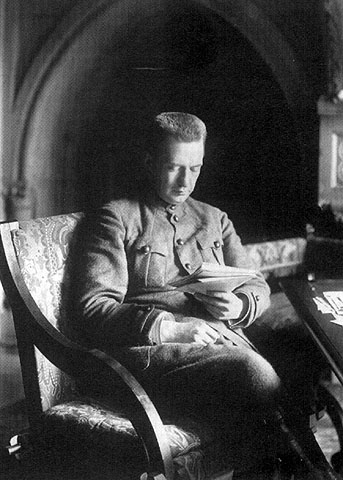
1917au21:Petrograd | Library of the Imperial Winter Palace
Aleksandr Fedorovich Kerenskii,
Photograph by K. Bulla
<>1917au27:Aleksandr Kerenskii sent telegram condemning
Kornilov [McC2:37-8]
- Kornilov replied [38-9 (w/observations of N. Ukraintsev, member of special Committee of Inquiry,39-43)]
- The scramble to resist an apparent imminent military coup d'état mobilized many who were willing to
fight against Kornilov but not for Kerenskii
- Kerenskii made some effort to explain
the Kornilov Affair [RWR:96-100]
- Kerenskii spent many subsequent years in that effort
\\
*1987| J0rgen L. Munck, The Kornilov Revolt: A Critical Examination of Sources and Research
<>1917au28:Simbirsk provincial Commissar [F/] reported [RRC1,3:511-12]
- On that day, Kornilov [pix] issued an
appeal to the Russian people declaring that "our great Motherland is perishing"
- He declared "that the Provisional Government under the pressure of the Bolshevik
majority of the Soviets, acts in full agreement with the plans of the German
General Staff, simultaneously with the impending descent of hostile forces on
the Riga coast, destroys the Army and upsets the country from within"
- He continued, "Let all in whose breasts beat Russian hearts, all who believe in God
and His churches pray to the Lord God for the greatest miracle: the salvation of
our native land"
- Then he made this personal declaration = "I, General Kornilov,
the son of a Cossack peasant, declare to all that personally I want nothing
except the preservation of Great Russia, and I vow to bring the people, through
victory over the enemy, to the Constituent Assembly, at
which the people will itself decide its own fate and choose its own form of
government" [Chamberlin,1:462]
<>1917au31:Petrograd Soviet heard SDs(b) resolution on need to mobilize
against Kornilov [Chamberlin,1:462-4]
<>1917se01:Aleksandr Kerenskii organized "Directory" or "
Council of Five"
[McC2:43-4] to replace the unraveling Provisional Government
"
Second
Coalition"
- Kerenskii declared Russia now to be a republic [McC2:44]
- Kornilov was arrested [GRH:533-9]
- Military dictatorship appeared to be quashed, but what about civilian
dictatorship?
<>1917se02:Woodrow Wilson
letter to Colonel Edward House called for creation of "American Inquiry" or "Peace Inquiry Bureau"
*--This a group of intellectuals included the young scholar-journalist Walter Lippmann
*--Lippmann played the central role over the next four months in the composition of Wilson's "Fourteen Points"
[Mayer:334-9]
<>1917se03:Soviet Central Executive Committee called for Democratic Conference
[ID]
*--The Central Committee of the Social Democratic Party (bolsheviks) supported
<>1917se03:Kronstadt| On the eve of SOVIET REVOLUTION the para-military Red Guard
organized [McC2:132-4 | GRH:580]
- Documents related to the preparation and execution of the SOVIET REVOLUTION
in September and October [HCV:405-47]
- Russian author Il'ia Ehrenburg wrote about revolutionary violence [RWR:73-5]
- On this same day, loyal units in the army appealed to Provisional Government: "Either restore the army by restoring
order in the rear [in Petrograd], or make peace and bow to the victorious German imperialists. There is no
other alternative" [GRH:400-1]
<>1917se04:Leon Trotsky, out of prison, quickly turned his attention and energy to the Petrograd Soviet
<>1917se09:Social Democratic Party (mensheviks) & Social Revolutionary Party
leaders resigned from Central Committee of Petrograd Soviet
[GRH:577-9]
- SDs(m) and SRs wilted in the intense political heat of revolution
- Regional Soviet met in Finland with a Social Democratic Party (bolsheviks) [SDs(b)] majority
- SDs(b) were angling toward a revolutionary strike against the Provisional Government
- SDs(b) were grabbing the attention of independent workers' groups
- 1917se:Petrograd Factory and Mills Committees [Fabrichnye i zavodskie komitety], conference3,
resolution [DRR:69-71]
- All-Russian conference of Factory and Mills Committees resolution
[E-TXT, Reed,3:1] [Reed LOOP]
<>1917se11:se14; From hiding in Finland, Lenin called for an uprising
back in Petrograd [McC2:113-15 | RWR:106]
<>1917se14:se22; Petrograd| All-Russian
Democratic Conference [GRH:542-57]
- 1917se17:Volia naroda [The Will of the People, a Social Revolutionary Party newspaper] editorial [Jones:62-3]
- 1917se19:The Conference decided to convoke and dissolve itself into a Provisional Council of the Republic,
All-Russian Democratic Council, or "Pre-Parliament" [GRH:563-67]
- 1917se19:Moscow| Soviet election, Social Democratic Party (bolsheviks) Executive Committee w/Nogin=president
- 1917se21:Petrograd Soviet resolution on question of political power rejected the All-Russian Democratic Conference in favor of a
Congress of Soviets [GRH:582-4]
- 1917se23:All-Russian Democratic Conference, met [GRH:564-7]
- On same day, the planned All-Russian Soviet meeting was cancelled because of opposition within military [GRH:603-4]
- 1917se24:Social Democratic Party (bolsheviks) walked out
- Sensing the maturation of a revolutionary situation, Lenin returned in secret from Finland to Petrograd
<>1917se25:Aleksandr Kerenskii
formed "
Third Coalition"
cabinet [GRH:558-63 | McC2:45]
*--Petrograd Soviet Executive Committee elected Leon Trotsky president [GRH:584]
*1917se26:Petrograd Soviet resolution re. All-Russian Democratic Conference [GRH:567 | Chamberlin,1:464]
<>1917se28:Novaia zhizn'
[The New Life] reported the reasons why the SDs Menshevik faction [SDs(m)] was falling
apart [E-TXT]
<>1917oc01:Lenin urged immediate seizure of power [RWR:107]
<>1917oc02:oc25: Pre-Parliament (All-Russian Democratic Council) opened for 23 days
*--Eyewitness accounts of this ill-fated institution,
forcibly closed by Soviet paramilitary [WRR:179-92]
<>1917oc06:Delo naroda [The People's Cause],
an SR newspaper, raised complicated issue of relationship between revolutionary and irregular political
institutions -- the Soviets -- and the planned and long desired national Constituent Assembly
[E-TXT]
- 1917oc06:Petrograd | Provisional Government announced the formal dissolution of the Fourth State Duma [Russian GDR:512]
- 1917oc06:Petrograd Soviet resolution against evacuation of Petrograd
- The Soviet feared that opponents might be willing to surrender Petrograd, the home of radical opposition, to
the Germans [GRH:580-2]
<>1917oc09:Petrograd Military HQ seemed to confirm
the fear that Russian Imperial officialdom was willing to surrender radical Petrograd to the German enemy when it
ordered part of the increasingly politicized Petrograd garrison to the front. Soldiers refused
[GRH:587]
- Petrograd Soviet organized Defense Committee with Left-SR party member Pavel Lazimir as president
[GRH:587-8; 594-7]
- 1917oc10:Social Democratic Party (bolsheviks) Central Committee resolution, composed by Lenin, urged
a revolutionary military attack on the Russian Provisional Government [Sukhanov |
DRR:99 | McC2:50-9 | WRH:600]
- 1917oc:Russian Army Intelligence Report on the breakdown of military discipline
[B&F:24-6]
- War and revolution were fusing. International war was becoming also internal war
- 1917oc11:Leo Kamenev &
Grigorii Zinoviev penned letter of opposition to planned SDs(b) insurrection
[McC2:115-17 | DRR:100-2]
- 1917oc11:oc13; Congress of Soviet of Northern Region
[GRH:598-602]
- Trotsky called for all power to the Soviet in order to save Petrograd & the Revolution
- 1917oc12:Soviet Defense Committee was renamed "Military-Revolutionary Committee" [F/MRC]
[GRH:588-9]
<>1917oc12:Congress of Public Men organized, a conservative group alarmed
by mounting disorder
<>1917oc13:de05; Baltic Fleet navy
diary [VRX:131-88]
- 1917fa:Agrarian unrest again on the rise [McC2:62-6, 71-72]
- Russia was physically and psychologically exhausted by WW1 [GO above]
- The Soviet of Workers, Soldiers and Peasants Deputies was on the verge of declaring war on the war
- Russia was in fact unable to attack or defend itself in either domestic internal war or international
external war on the Eastern Front [McC2:45-8 on foreign affairs]
<>1917oc13:Within the Petrograd Soviet, soldiers
organized a department of Workers' Guard and established a functioning HQ for its operations
*--The Workers' Guard planned a city-wide conference for late October
<>1917oc14:Soviet Central Executive Committee met (Gotz = president)
[GRH:591-2]
<>1917oc15:Petrograd newspapers discussed anticipated Social
Democratic Party (bolsheviks) "move"
<>1917oc16:Petrograd Soviet (Kamenev=president)
agreed to send observers to a conference in Pskov called by general Cheremisov, commander in chief of the Russian WW1 northern front
*--Soviet also approved Lazimir's report on
creation of the MRC [GRH:589-90]
*--Trotsky spoke on the MRC and other issues [McC2:117-21]
*--1917oc18:The MRC began assembling itself
<>1917oc16:Social Democratic Party (bolsheviks) Central Committee met [Jones:64-76]
<>1917oc17:Lenin discussed revolutionary military with
Nikolai Podvoiskii & Vladimir Antonov-Ovseenko &
other MRC activists [DRR:107-110 | Jones:108-128]
<>1917oc18:Petrograd Soviet newspaper Izvestiia
published editorial vs. Social Democratic Party (bolsheviks) and their planned military revolutionary
strike against Provisional Government, Central Executive Committee & Council
of the Republic (All-Russian Democratic Conference?) [GRH:605-6]
<>1917oc19:Petrograd Soviet (Leon
Trotsky president) [GRH:613]
*--From the front on this day came an appeal from a pro-Soviet Committee of the First Army =
Either provide us with our necessities and we will save the country and the revolution and will lead the land to a
peace on democatic principles, or say, "We are not in a position to do this and you had better throw yourself on the
mercy of the victory". We realize that you, too, have insurmountable obstacles, but know this! We appeal to you for
the last time. We place ourselves at your service. We are ready to means of force to make the rear [IE=government in Petrograd]
come to our aid, and to compel the conscious or unconscious foes of the revolution to grant our requests [GRH:402,
with minor adjustments by SAC editor]
<>1917no02(NS):English statesman Arthur James Balfour
sent public declaration in favor of the Zionist plan for a Jewish National Home [Israel]
to head of the great European banking family, Lord Rothschild
[E-TXT | BNE:298]
*--England continued to plan independently of other Allies for the future disposition of
Ottoman Turkish Empire holdings
*1917no02:USA and Japan exchanged notes, known together as the Lansing-Ishii
Agreement [E-TXT],
which acknowledged Japan's "special interests" in China, but reaffirmed the Open
Door policy in China
\\
*--LOOP on Southern Front
<>1917oc20:oc23; Red Guard conference [Articles of
Service:Chamberlin,1:465-7; break w/Petrograd military district:467-8]
- Petrograd, Smolyi Institut| MRC was also now activated [DRR:116-7]
- 1917oc21:MRC organized "Bureau" (Left-SR Lazimir = president, Podvoiskii = vice president, Antonov-Ovseenko = secretary)
- Civilian political activists were designated as a commissars and assigned to each military unit
- Lazimir led delegation to Petrograd GHQ
- Polkovnikov understandably opposed MRC command over his Petrograd garrison [GRH:593-4]
<>1917oc22:Nikolai Sukhanov
[ID] described how Trotsky aroused the peoples
[P20:111]
<>1917oc23:Newspaper of the Petrograd Soviet,
News [Izvestiia] discussed the need to transform Soviets into permanent
governmental institutions [Reed,2:3]
<>1917oc24:Council of the Republic,
Aleksandr Kerenskii
speech [StH:77-87]
- On this day, Lenin wrote letter to Social Democratic Party (bolsheviks) calling on them to take power [WRH:600-1]
- Petrograd Soviet (Trotsky=president) [McC2:124-5
| GRH:616-17]
- Social Democratic Party (bolsheviks) printing press again seized by Provisional Government military
- Petrograd MRC circular sounded alarm [McC2:121-2 | DPH:375-6 |
DRR:121-2 | Chamberlin,1:469-70]
- Putilov Factory workers discussed MRC [RWR:108]
- Minutes of Social Democratic Party (bolsheviks) Central Committee meeting [DRR:122-5]
- Stankevich described events of the day [McC2:122-4]
- 1917no06(NS):USA magazine The Nation reported on and strove to explain the Bolshevik rebellion against the
Provisional Government
[E-TXT]
<>1917oc25:(NS no07) "
The Soviet Revolution"
, aka "
The
Bolshevik Revolution"
or "
The Communist Revolution"
or "
The October Revolution"
or -- throughout the
Soviet period of Russian history -- "
Great October"
<>1917oc25:Newspaper of the Petrograd Soviet, News [Izvestiia],
editorial vs. Social Democratic Party (bolsheviks) [GRH:614-16]
*1917oc26:SRs published condemnation of Bolshevik/Soviet
seizure of power [W]
<>1917oc26:oc27; Saratov (provincial urban administrative center on the middle-Volga) felt the
wave of the Soviet Revolution [RWR:117-20]
<>1917oc27:Anti-Bolshevik print media
suppressed, this the original act of Soviet censorship
[SGv:18-19 | PS&C:130-1]
*--Related decree [McC2:190]
*--"Committee for the Salvation of the Motherland" appealed against the Soviet Revolution
[Chamberlin,1:478-9]
*--Moscow Conference of Businessmen passed resolution [Reed,1:5]
*--Anti-Soviet views appeared with increasing frequency, EG=Writer Aleksei Remizov
[ID] published The Lay of the Ruin of the Russian
Land [RWR:126 | See his Selected Prose], an updated version of
1230s:Russian folk lament [ID] about Mongol ruination of Kievan Rus'
<>1917oc27:oc31; general Krasnov moved military
forces toward Petrograd
<>1917oc28:Bourgeois newspaper reaction
to October Revolution [Reed appendix to
ch3,#2=TXT] [Reed LOOP]
<>1917oc29:All-Russian Executive Committee of
Railroad labor unions sponsored conference
of socialist parties (SDs, SRs, etc.)
- The labor movement supported coalition of all progressive political parties with
the new Soviet revolutionary state
- The Bolshevik Party Central Committee [F/] could participate but not dominate
- Organized wage-labor opposed the Bolshevik idea of single-party rule
- In view of this, was the so called "dictatorship of the proletariat" inevitable? Was Stalinism inevitable?
- In the LOOP that follows, SAC combines the person with the "
ism"
-- "
Stalin"
with "
Stalinism"
.
Be cautious about this combination
<>1917oc30:1917no01; Aleksandr Kerenskii
military move against Bolsheviks failed [WRR:252-79]
- Kerensky fled the revolution in a car supplied by the USA Embassy
- Over the next half century as a political emigre Kerenskii tried to explain
and justify his role in the Revolution [ID]
- Kerenskii's five months near the center of events was over, but he helped gather one of the best anthologies of
translated primary documents on these fateful months [ID]
<>1917oc30:Bolsheviks announced new social insurance policy
[ID]
<>1917no02:Soviet Decree on the
right of the peoples of the old Russia Empire to revolutionary national self-determination (signed: Joseph
Stalin & Vladimir Lenin) [McC2:191-3 |
CCC2,2:1119-20 | DRR:159-61]
- Within days of the October Revolution, the emerging Soviet political system
had to address traditional problems of law and order and to create new revolutionary institutions
capable of those timeless tasks of governance [McC2:176-84]
- The two signators sought a policy on how to treat the scores of
non-Russian nationalities in the disintegrated Russian Empire, many of whom now came under Soviet authority
- Stalin was still a secondary figure in the now victorious Bolshevik Party
- But Lenin valued his loyalty
- And, for purposes of the new policy on national self-determination and ethnic
inclusiveness, Lenin appreciated Stalin,'s non-Russian ethnicity
- Years earlier, Georgian-born Vissarion Djugashvili took the Russian revolutionary name Stalin implying "man of steel"
\\
*1990:Graham Smith, ed., The Nationalities Question in the Soviet Union
<>1917no02:Social Democratic Party (bolsheviks) Central Committee
rejected coalition government
<>1917no04:Gori Infantry Regiment #202 issued revolutionary
demands [RWR:115-17]
<>1917no04:Soviet of People's Commissars
[Sovnarkom] ultimatum to Ukrainian Central Rada [Chamberlin,1:486-8]
<>1917no07:Kiev| Central Rada issued its
3rd Universal declaration, a proclamation of Ukraine as autonomous "
Peoples Republic"
,
though not fully independent of the Russian Republic, indeed standing with it in these hard times
[read down in E-TXT
| Chamberlin,1:479-82]
<>1917no08:Russian Orthodox
Church Patriarchate restored with appointment of Tikhon
*--At the same time the nearly 200-year old bureaucratic
office, the Holy Synod, was abolished
*1917:1918; Liudmila Gerasimova urged Orthodox Church Council to recognize the role
of women in church administration and restore the office of Deaconess [DRW:283-6]
<>1917no08:Trotsky reported on the international
situation [RFP3:96-9]
- 1917no09:(NS no22) Russian Bolshevik leader Leon Trotsky
released tsarist secret treaties to the international community, to great
embarrassment of other European leaders [RFP3:99-101]
- Among other embarrassing disclosures was the secret "Sykes-Picot Agreement"
[ID] in which the English and French promised the tsarist Empire that it would be granted control
over Istanbul (Constantinople) and the Straits (on the WW1 Southern Front) if it stuck with the war to the successful end
- European imperialist diplomats were much chagrined, but USA President Wilson was scandalized
- Shocked, I tell you, shocked! Well, maybe authentically so
- 1914no14:Russian soldier railed against officers and elites [RWR:115-17]
- Ottoman Turkish Empire was on its last legs
\\
*--Mayer:18
*--LOOP on Southern Front
<>1917no12: Constituent Assembly election
- Documents related to political campaigns and elections to local Dumas and the Constituent Assembly
[HCV:3710495]
- Bolsheviks were reluctant to disallow this election, a dream of generations of political
opposition in Russia
- They did limit campaigning and marginalized non-revolutionary political parties
- They saw to the arrest of some leading KDs, EG=Fedor Kokoshkin
(who was later murdered in a detention hospital, terminating a
remarkable 12-year political career)
- Bolsheviks did well in some cities, but SRs emerged from this
hedged election as the numerically dominant political party in Russia
- Daniel Kaiser compiled statistics on Constituent Assembly elections
[E-TXT]
<>1917no14:Soviet Decree "On Workers' Control"
(Vladimir Lenin & Shliapnikov) [Bunyan1:4-7 |
Chamberlin,1:482-4 |
DRR:161-3 | McC2:233-5 | DPH:379-80 |
SGv:405-]
- The decree institutionalized a revolutionary managerial role for laborers in all vital realms of industry
- This brief period of wage-labor management in revolutionary Soviet industrial
plants pointed in a different direction than the emerging contemporary "managerial revolution" in the European and global market economy
- But for how long......?
- This moment encourages many to argue that Stalinism
was not an inevitable outcome of the Soviet Revolution
<>1917no18:The Left-SRs joined
Lenin and SDs(b) on the governing Soviet of People's Commissars[Sovnarkom]
*--Thus, a semblance of coalition government was created
<>1917no19:1917no28; Ten-day conference of
new party, Left-SRs
<>1917no22:Provisional armistice on the Eastern Front of WW1, de02:Armistice
confirmed
<>1917no28:Soviet decree ordered arrest
of Constitutional Democrats [Partiia narodnoi svobody; Kadets or KDs]
<>1917de:Perm Province came under the influence of a
Bolshevik "
agitator"
[RWR:122-4]
*--As 1917 wound down, an anonymous Russian official kept a diary [RWR:127
<>1917de:German prison in Breslau described by radical Social
Democrat Rosa Luxemburg who was there because of her WW1 pacifism [Eye:483-4]
- Luxemburg also pondered the Europe-wide meaning of the Soviet Revolution
- In the next months, the last of her life, she worked on a study of "The Russian Revolution" (not published
in her lifetime) [E-TXT]
- Luxemburg's "
Russian Revolution"
was later translated and published in
misleading reverse chronological order with her 1904 essay "Leninism or Marxism?" [ID]
<>1917de01:Novaia zhizn'
[The New Life] carried an article by ex-Bolshevik V.A. Rudnev, criticizing Lenin and single-party
rule [E-TXT]
*--New Life was a Menshevik-Internationalist party publication. Maxim Gorky was the leading figure
*--Maxim Gorky's own harsh evaluations of early Soviet politics were published
in Untimely Thoughts: Essays on Revolution, Culture and the Bolsheviks, 1917-1918
*1919se6+:Gorky correspondence with
Lenin [RWR:]
<>1917de01:Moscow decree on organization of Supreme Soviet of National Economy
[McC2:230-2 | MDF:119]
<>1917de06:[de19 NS]; Soviet announcement of
Brest-Litovsk armistice or cease-fire with Germany on
the Eastern Front of WW1
- The Soviets simultaneously appealed
to the toiling, oppressed, and exhausted peoples of Europe against WW1 and the
leaders who had gotten them into that war
- Traditional European diplomatic community was shocked to see how the
Soviet government took open steps
to overthrow governments it sought to join in diplomatic talks [RFP3:101-4 |
Senn,2:]
<>1917de07:Soviet Decree on
revolutionary state police, the "Cheka" [DRR:174-5
| McC2:181 | B&F | MDF:119 | SGv:237]
- Cheka is an acronym based on Russian initials "CH" and "K" which stood
for "Extraordinary Commission"
- Felix Dzerzhinskii, a
twenty-year veteran member of SDs, became director of the first Soviet-era
political police force
[W]
- Another hint at Stalinism before Stalin came to power
<>1917de07:Sovnarkom allocated 2M rubles for the needs of the revolutionary
international movement [RFP3:104]
*--Bolsheviks felt world
revolution was essential to their success since, as they described it, the
"semi-Asiatic" Russian mode of production had not developed all the objective
conditions necessary for the achievement of socialism or communism
<>1917de14:Decree on Nationalization
of Banks [Chamberlin,1:489 | McC2:232 |
CCC2,2:1120-1 | MDF:119]
<>1917de16:Soviet decree on organization of Red Army
[McC2:140-1 | Chamberlin,1:489-90 | MDF:119]
- Formation of revolutionary military force in the form of a standing army,
rather than an armed citizenry, seemed to contradict Lenin's oft-repeated
assurance that his revolutionary Russia would tolerate no standing army and thus
would guarantee the Soviet revolution from slipping back into the pre-revolutionary
Russian managerial "semi-Asiatic mode of production"
- Two full months of tense clash followed among Soviet activists who, on the one hand, wished to create
a new revolutionary army of worker and peasant citizens and, on the other, activists who wished to create
an army that could prevail under standard 20th-century battlefield conditions
- The latter faction felt that modern managerial concepts of military command
and structure were needed
- And the latter faction would triumph when Trotsky became War Minister, the Red Army began to
professionalize
<>1917de20:Decree on civil marriage &
Finnish independence
<>1917de22:Russian-Polish border town
Brest-Litovsk, site of German-Russian peace talks. Revolutionary Russia's
foreign minister Joffe offered six points re. peace [Mayer:296-304 (-312)]
- No forcible annexation of territories seized in the war
- Restore national independence where it was terminated during war
- National groups independent before the war should be allowed by referendum to
decide question of independence
- Multi-cultural regions should be administered so as to allow all possible
cultural independence and self-regulation of minorities peoples
- No indemnities. Personal losses should be compensated out of international
fund
- Colonial question should be decided according to points 1-4
German Foreign Minister Richard von Kühlmann and Austro-Hungarian Foreign Minister Count
Ottokar Czernin, in all their old-world splendor, were met by leather-coated
representatives of revolutionary Soviet power who at first brushed off the Central
Power dignitaries, walked past them to the German soldiers who formed the
dignitaries' military escort, and distributed incendiary pamphlets to German
troops. The Eastern Front looked like it was shifting from
international war to revolutionary war
\\
*--Mayer:302 compares Joffe's six points with Lenin's
views on Imperialism [ID]
*--Mayer:303-4 highlights Rbt Lansing's fear of
revolutionary potential as WW1 ended
<>1917de26:Decree of Sovet narodnykh deputatov [Sovnarkom; Council of
People's Deputies] re. Rights & Duties of Soviet [MDF:119]
<>1918:1919; Russian writer Vasilii Rozanov, The Apocalypse
of Our Times [cf. Edie,2:286-304]
<>1918:Russian poet Aleksandr Blok,
"The Intelligentsia and the Revolution" [Raeff3:364-71]
*--Blok's most brilliant twenty years were at a close
<>1918:Russian feminist revolutionary
Aleksandra Kollontai, "The Family & the Communist State"
[Wm. Rosenberg,Bolshevik:79-88 | RWR:149-52]
- 1918:1919; On women's welfare, with notable reference to revolutionary
accomplishments for women in Russia since the 1905 Revolution
[StH:157-68]
- 1921:"The Fight Against Prostitution" [Rosenberg:96-106]
- 1923:"Make Way for the Winged Eros" [Rosenberg:179-84]
<>1918:German
sociologist Max Weber delivered a lecture which treated with
a special flare the conflict between scholarly detachment and engagement with
everyday life, "Politics
as a Vocation" [CCS:361-90 | CCS,1:651-82]
<>1918ja04:USA President Woodrow
Wilson's Peace Inquiry Bureau position paper "The War Aims and Peace Terms it Suggests"
[Mayer:339-44]. GO ja05:British Prime Minister delivered his views on war aims
<>1918ja04:Ukraine invaded by military forces
concentrated in Kursk and loyal to Russian Social Democratic Workers' Party (bolsheviks) [ SDs(b) ]
*--Two months of infighting among various Ukrainian political factions, all
trying to find just the right relationship to occupying German forces, was about to turn in favor of SDs(b)
<>1918ja05:London Trades Union Congress heard address by
Prime Minister David Lloyd George, in which he offered British wage-laborers a comprehensive and progressive statement of British war aims
- In part Lloyd George was reacting to the widely influential Trotsky
invitation to all Allies to agree on progressive war aims and to
Joffe's "Six Points" [ID]
- Progressive war aims were gaining slow assent among allies. More than a
half year before the Trotsky invitation and before Lloyd George's
progressive statement of British war aims, the pre-Bolshevik Petrograd
Soviet issued the first widely circulated universal invitation to all Allies
to end the war on terms such as those now gaining
ascendancy among allied belligerents
- The broad but slow-working influence of this original invitation is often mistakenly interpreted
as Bolshevik or Leninist influence on European war-time politics
- Historians sometimes find it hard to accept that the majority of Europeans, not just "radicals"
but especially those in uniform and those working in wartime factories, wanted this senseless war
to be brought to a rapid but positive conclusion
- Not all Allies objected to the possibility that the war might be ended as a result of talks
at Brest-Litovsk, but they were much alarmed at the thought that negotiations
there might bring an end to the war only on the Eastern Front, thus freeing the
Central Powers to concentrate on the Western Front
- Perhaps hoping to encourage quick and favorable termination
of the war on the Western Front, Lloyd George strongly hinted that German
wartime gains in eastern Europe might be protected by the Western allies at war's end
- England and France now encouraged German successes against the ex-ally
of "The West", but not if it threatened them
- Lloyd George was willing to sacrifice old Russian Imperial territory to gain an advantage
for the western Allies
- But David Lloyd George did also express what was becoming
an emerging consensus among those who would practice the "New Diplomacy" = "government with
the consent of the governed must be the basis of any territorial settlement in the war"
\\
*--Mayer:323-8
<>1918ja05:ja06; Russian delegates to the
Constituent Assembly, elected almost two months earlier [ID], now met for one
long day and declared Russia a republic [RWR:210-23 |
Eyewitness accounts = WRR,14]
<>1918ja07:ja14;
All-Russian Congress of Workers' Unions [professional'nye soiuzy; Trade
Unions] met for first time [Bunyan1:12-15 |
RWR:145-8 & 183]
- Declaration of the Rights of the Working and Exploited People
- Significant factional disagreements on labor policy emerged, notably
that of Solomon Lozovskii (
[ID] = a union leader dismissed from the Social Democratic Party
(bolsheviks) the week before the Congress) and David Riazanov (an emerging
central figure in the Soviet scholarly study of Marx and his legacy)
- Riazanov argued that Russian workers were not ready to perform this function
- These policies, he emphasized, prematurely jettisoned managerial specialists and undermined the administrative
and organizational role of unions
- 1917ja11:Lenin reaffirmed that workers' control was Soviet policy for wage-labor
[Bunyan1:15-16]
\\
*1963mr:SlR#22,1:47-63| Paul Avrich, "The Bolshevik
Revolution and Workers' Control in Russian Industry"
<>1918ja07:Lenin's 21 theses on the need
for
immediate peace with Central Powers [RFP3:104-111 | Senn,2:38] included the following =
The peace negotiations at Brest-Litovsk have made it completely clear ... that in
the German government (which completely directs the other governments of the Quadruple Alliance) the
military party has taken over, and it has essentially presented Russia with an
ultimatum. [...] The ultimatum is such: either more war or an annexationist
peace, i.e., a peace on the condition that we yield all land occupied by us, the
Germans keep all land occupied by them and impose upon us an indemnity
(externally disguised as payment for the maintenance of prisoners) in the
neighborhood of three billion rubles, to be paid over several years.
*--Lenin argued that the Soviets should accede and take this bitter pill. Further war
would be even more disastrous. The Eastern Front was winding down
<>1918ja08:USA Congress|
Woodrow Wilson address outlined "Fourteen Points"
[TXT] [Mayer:352 mid-367 |
BNE:215-19]
- The first four paragraphs show clear impact of Soviet negotiations to end the war, and feed directly into a
bold statement of US war aims [ID]
- French Premier Georges Clemenceau was forced to budge from his significantly more conservative
"Old Diplomacy", based on traditional European power-politics and imperial maneuver
- As a central figure among the Allies, Clemenceau set out to blunt the momentum toward those radically
new ways of terminating wars which were spilling forth from revolutionary Russia and USA
- Clemenceau became the main champion of what Arno Mayer labels "parties of order"
- Events at Brest-Litovsk hastened Allied deliberation on war aims, a deliberation
that had not gotten seriously under way after more than three years of war
\\
*--Mayer describes Allied views on war aims as of this time [TXT]
*--War aims had become a hot issue late in the course of WW1, largely in the
9-months following Russian revolutionary statement of war
aims
<>1918ja09:Kiev| Central Rada 4th
Universal declaration acknowledged that the revolution was entering a new and stressful phase
[read down in E-TXT]
- The 4th declaration no longer acknowledged any degree of subordination to the old
"All-Russian" central political power in Petrograd
- The 4th declaration asserted the independence and sovereignty of the Ukrainian National Republic (UNR)
- UNR declared "independence, subject to no one", a free, sovereign national state of the People of Ukraine
- The Ukrainian Central Rada was headed by Mykhailo Hrushevskii [Khrushevskii, Grushev'skyi], a historian and
moderate social-democrat
- The independent Ukraine seemed in perfect harmony with Soviet expressions of enthusiasm for "national self-determination",
an enthusiasm increasingly shared among certain of the allied powers and among earlier subordinated peoples of war-torn WW1 world
- However the German high command, until it was defeated nearly one year later, had other ideas
- And the victorious Bolsheviks in Petrograd tolerated independence as it arose in the disintegrating Empire when they could do
nothing about it, but they showed no serious inclination toward any sort of thoroughgoing national independence or "federated"
relationships in emerging Soviet Russia =
<>1918ja16:Kiev taken by Bolshevik military units
who seemed temporarily to be in charge of Ukraine
[McC2:141-2]
- WW1 was expanding into domestic civil war on the Eastern and Southern fronts
- Within a year (1919), victorious Western-front allies, who gathering at the Paris Peace Conference, neglected Ukraine,
allowing it to fall under Soviet jurisdiction
- The seizure of Kiev marked the earliest beginnings of a horrendous and
nearly 3-year-long period best called Revolutionary Civil War
- This period is best kept in close analytical relationship to European Allied military intervention in
the Russian Revolution [RWR:238-70]
- Does this moving MAP keep the
relationship between civil war and Allied military intervention clear?
It's good to let the moving map LOOP several times
- Veterans of the previous era of Russian political struggle against tsarist
absolutism now drifted away from the capitals where Soviet power was having greatest success
- They often found themselves associated with armed forces that were anti-Bolshevik but
not necessarily liberal or democratic
- With defeat of the anti-Bolshevik cause, the leader of the KDs, Miliukov (on the national scene since
1904) and other veterans of early 20th-century efforts at liberal revolution in Russia, fled into exile
- These events seemed to represent the Russian failure to achieve what SAC calls the first phase of the
European Revolution [ID], a
century-long Russian struggle to achieve something of
the European liberal political transformation (perhaps not revived again until after seventy years of Soviet rule in
Russia [EG] )
- Liberalism may have faded from the scene in Russia at this time, but this first phase of the European Revolution
continued its troubled existence in other parts of Europe in a period when both liberalism and
the second phase of the European Revolution [ID] were coming increasingly
under pressure from the waxing third phase of the European Revolution [ID]
- 1917no:Rostov na Donu (on the WW1 Southern Front)| A Volunteer Army formed up against the Soviet Revolution
with General Alekseev in command
- Military leaders there were not often supporters of Duma or Constituent Assembly
ideals [ID] of representative government
- Often they had been associated with the Kornilov affair [ID]
- Kornilov himself, along with other anti-revolutionary military leaders, escaped to join
the struggle against Soviet power
- 1918mr31:Kornilov was killed in battle [MGwrx:21-3]
- In these final months of WW1, the complex relationship between "internal war" [i.e., revolution] and
"external war" [i.e., old fashioned armed conflict between nation states]
characterized the situation in the disintegrated territories of the old
Russian empire. Two intertwined and tragic stories unfolded =
- Revolutionary Civil War [McC2:147-64]
- Allied intervention
\\
*--Fogleson,David on USA intervention
*--LOOP on Southern Front
<>1918ja19:Tikhon,Patriarch of the Russian
Orthodox Church, pastoral letter condemned Bolsheviks [Chamberlin,1:495-7 |
McC2:193-5 | Curtis, Russian Revolution:177-9]
<>1918ja23:Decree on relationship of Russian
Orthodox Church to the new revolutionary state [Chamberlin,1:497-8]
<>1918ja24:Ukraine| Central Rada signed WW1 treaty w/Germany
*--1918ja26: Central Rada toppled by military forces loyal to the Bolshevik Party
*--Revolutionary Civil War expanded in Ukraine
<>1918ja27:Soviet decree on socialization of
agricultural land under its control [McC2:248-51]
<>1918ja28:Moscow Congress of Soviets, Resolution#3
established Soviet style federal government [B&F:396-7 |
DPH:427-9]
*--On this day, a decree annulled state debts inherited from the old regime
[Chamberlin,1:498-9 | McC2:235]
*--Disavowal of national debts much perturbed international financial interests
\\
*--LOOP on "finance"
<>1918fe01:fe13; There was
no 1918:fe01:fe13 in Russian history
- Thirteen days were skipped in Russian history in 1918. The day after ja31 was by decree fe14. All
will be releaved to note that Russians did not have to do without Valentine's
Day (fe14) in that otherwise chaotic revolutionary year
- Chronologically this "great leap forward" happened because Soviet authorities replaced the
historical Russian Julian calendar (Old Style or OS) with the then-standard
European Gregorian calendar (New Style or NS) [McC2:255-7]
- SAC strives to follow this convention=
- Dates up to 1700 are NS conversions of an even more ancient Orthodox calendar
which was in use up to that time. Then =
- 1700:Tsar Peter replaced the Orthodox calendar with the Julian calendar (OS),
widely used in Europe but just then on its way out. In this
early modern period, Europe was shifting to the Gregorian (NS) calendar
- Since Roman days, OS had been falling behind the actual planetary timing of seasons and
years. NS adjusted for that and structured itself so as not to fall behind orbiting of the earth
around the sun, at least not so obviously as OS
- At the moment Peter I adopted OS in Russia, NS was eleven days
ahead
- SAC tries to adhere to that OS calendar for Russian events, despite the
fact that it continued to fall further behind
- As each century turned, on the double zero year (e.g., 1800 and 1900), OS fell one day behind NS
- OS was behind NS eleven days in the 1700s, twelve in the 1800s, thirteen in the 1900s
- Why did OS fall behind NS?
- The NS calendar does not observe leap year on the regular four-year cycle in those years that end in
two zeros, but OS does
- Thus, from 1700 to 1801 Russia celebrated Christmas on de25:OS (ja05:NS) and New Years on ja01:OS
(ja11:NS). In the next century, OS Christmas and New Years seemed yet one futher day later on NS. At the
dawn of the 20th century, those holidays appeared on NS to fall on ja07 and ja13
- 1918fe14:Russian calendar "backwardness" came to an end for all secular purposes, but the Orthodox Church
continues to this day to use OS
- For those fascinated by this ultra-trivia, SAC digs a bit further into the issue =
- On the OS calendar, all years divisible by 4 are "leap years" [bisexxtile
years]. That means February is granted an additional
day, namely fe29
- On the NS calendar, years that end in two zeros (century years, EG=1900 or 1800) while divisible by four
and therefore due to be leap years in the rhythm of OS, are not counted as leap years. NS does not grant an extra day to its February
in double-zero years.
Thus double-zero years on NS are one day shorter than such years on OS. Those NS years end on day earlier
than on OS. Os can be
said to "fall behind" NS one day every century
- But that's not the full extent of the NS adjustment to OS
- On years ending in three zeros (millennial years, EG=2000) the NS calendar does
observe leap year, just as does OS
- That means OS does not fall behind NS one more day in a millennial century year
- In other words, in both the 20th and the 21st centuries, the
Russian Orthodox Church OS calendar is 13 days "behind" NS
- Orthodox Christians celebrate Christmas on ja07:NS and New Year on ja13:NS, just as they did
in the 20th century
- For those still engaged in this obscure miniature history, here are yet a few more
entries toward a brief chronology of the European calendar =
- 046BC: Julius Caesar decreed Julian Calendar [OS]
- 1582oc05:1582oc14; Vatican City Rome skipped over these ten days in order to adjust for the accumulated
inaccuracies in the Julian Calendar
- 1582oc15:Vatican City, Rome| Pope Gregory XIII, guided by a panel of
astronomers, then introduced a more accurate calendar, eventually named the
Gregorian Calendar [NS]. This NS calendar introduced the more complex system
of “leap year” described above. The earthly rotation around the sun would now be kept in
better synchronization with the calendar, or shouldn't we say the calendar was put in better synchronization with
actual planetary motion?
- 1752se:England, Ireland the New World colonies (future USA) adopted the Gregorian Calendar [NS] and had to
cut 11 days out of their September. Don't fret, there was nothing like "
Labor
Day"
to be missed at this time
<>1918fe18:German-Russian
WW1 hostilities resumed after
Germany denounced Soviet diplomatic initiatives. Germany abandoned negotiations at Brest-Litovsk
<>1918fe19:Lenin pleaded
for acceptance of peace and harsh German demands, but the Party rejected his plea
*--Two more weeks of German/Austrio-Hungarian advance finally convinced everyone that
peace was necessary [McC2:142-4] GO mr03
<>1918fe19:Russian Federated
Soviet Republic passed "Fundamental Law of Agricultural
Land Socialization" [CCC2,2:1121-2]
<>1918fe22:Social Democratic Party (bolsheviks) [SDs(b)] accepted the offer
by Western-Front Allies (France, England and USA) to aid them on the Eastern Front
*--All this presumed that the Soviets were going to continue the war effort against Central Powers. However =
<>1918mr03:German-Russian Brest-Litovsk treaty =
*--World War One on the "Eastern Front" was ended with this treaty [W]
*--WW1 on the "Western Front", however, was not ended for another 8+ months
*--WW1 on the "Southern Front" continued active for three more years in a time of Revolutionary Civil War and Allied intervention
- After three years and seven months of world war,
the international war against Germany and Austria on the Eastern Front was quiet
- Revolutionary Soviet negotiators had stalled for three months, but now
were forced to accept the damaging peace settlement offered by victorious Germany
- Bolshevik Party secret resolution and expression of opposition [Chamberlin,1:499-502]
- Left-SRs were much opposed to the treaty
- German troops occupied large parts of the Baltic provinces and Polish-speaking imperial territory
- 1918mr12:German troops occupied the vital Black-Sea port Odessa
- Austro-Hungary occupied a large swath of old Russian Imperial territory, even
into Ukrainian lands
- 1918mr:1918my; Imperial Russian territories of Belorussia [Belarus
on the Eastern Front], Georgia [Gruziia], Armenia, and
oil-rich Azerbaijan [on the Southern Front] had ideas of their own. They
declared independence from Russia, but Turkey moved swiftly into these territories
- Nearly four years of world war and revolution had exacted its heavy toll
from the Russian people, and now there would be three years of Revolutionary
Civil War. Suffering was widespread [RWR:170-83]
- In eastern Europe, international war was becoming REVOLUTIONARY,
and the Soviet international revolution was becoming a WAR
- 1918mr05:English military landing at Murmansk on White Sea just two days after Germany and Russia
signed the Brest Litovsk Treaty
- When WW1 ended on the Western Front eight months later, Russia was
able to disavow its own treaty of peace with Germany, but Revolutionary Civil War raged on
- Over these weeks, Allied intervention intensified
\\
*--Reynolds.SHATTER:191-218
*--Website "Azerbaijan International"
covers this critical period
*--LOOP on Southern Front
<>1918mr06:mr07; Moscow| Communist Party Congress #7, re. peasant affairs
and agricultural land policy [Chamberlin,2:478-81]
*--Documents related to events in the countryside [HCV:277-303]
*--Bolshevik Party [SD(b)] changed its name to Communist Party
<>1918mr15:Left-SRs
withdrew from the institutions of People's Commissars, though they held onto local positions for the time being
- In these days, Trotsky became Commissar for War and President of the Supreme
War Council
- He urged the introduction of "bourgeois" methods, anything that could contribute to the
practical possibility of national survival
- Or might we say that the emerging USSR was simply responding to the ubiquitous European and
now half-century-long global trend toward military-industrialism
- If so, it still might be necessary to acknowledge that the USSR responded under circumstances
and within a political-cultural world that rendered military-industrialism especially inclined toward
restoration of "
old regime"
ways and, by implication, retreat from revolutionary ideals
- The strategic shift, from somewhat idealistic ideological projection to harsh actual policy, contributed to
- the rise of "military-industrial" structures and practices
in USSR (managerial economic and social mobilization to meet a perceived military crisis), and thus
- the rise of Stalinism
\\
*--Erickson,John| "The Origins of the Red Army" in Pipes.RR:286-325| From
late December, 1917 [ID], through the first two months of 1918, many partial steps were taken to form up a
viable revolutionary Red Army, but it was only now that the real task of building a new army based on
proven practical military principles got underway
*--Merkle describes the managerial concepts underlying these wartime decisions
[TXT]
<>1918mr16:Kiev,Ukraine| Central Rada ratified the Constitution of
the UNR and elected Hrushevskii president
- That same day, German occupiers staged a coup d'état which abolished the UNR and elevated
Ukrainian General Pavlo Skoropadski into the position of military ruler, puppet "Hetman" of the occupied Ukrainian State
[Wki ID
- For the Germans, Ukraine meant wheat and immediate access to oil-rich Romania
- Also Germany could not ignore the expansionist opportunity provided by the political vacuum opening in the Caucasus
- The Ukrainian Central Rada had functioned variously for only one year
- Ukrainian POWs were released from German captivity to form "Bluecoats" [Sin'ozhupanna] to fight
with anti-Bolshevik forces in the expanding Revolutionary Civil War
[lxt
and YouTube
NB! in YouTube footage the frequent appearance of German military officers, the sponsors or "handlers" of Sino'zhupanna)
- Bolsheviks retreated in Ukraine [MGwrx:16-19]
- Revolutionary Civil War and renewed German offensive continued to rage in Ukraine
- German and Soviet Brest-Litovsk Treaty had ended WW1 on the Eastern Front, but Germany kept active as an interventionist power
on the Southern Front
<>1918mr21:Germany launched last WW1 offensive on Western Front
<>1918ap05:Siberia, Vladivostok|
Japan military landing complicated the question of Revolutionary
Civil War as outside intervention entered into the equation of domestic struggle
<>1918ap10:Russian consumers' co-operatives [McC2:239-41]
<>1918ap22:Soviet Decree on compulsory
military training [McC2:144-7 | Chamberlin,1:502-4]
- The newly renamed Communist Party [a name of broader geo-political implications than SDs(b)] was preparing
itself for armed struggle, whether with international (inter-state war) or domestic foes (civil war)
- 1918ap22:Soviet Decree on Nationalization of foreign commerce [Chamberlin,1:504-6]
- These decrees were followed in two months by a second set of decrees [ID] aimed to
support wartime mobilization
- 1918ap29:Trade Unionists criticized Soviet government, expressing wage-labor
discontent [McC2:236-7]
- 1918my:Economic crisis was clearly linked to political crisis [Bunyan1:16-25]
- 1918my01:Anatolii Lunacharskii described the first Soviet May Day Celebration [RWR:148]
<>1918ap22:1921mr18; Caucasus| Transcaucasian Federation
waxed for nearly 2 years, then over its final year broke into national components (Armenia,
Azerbaijan, Georgia) and was gathered into the emerging Union of
Soviet Socialist Republics [USSR]
- This region was a central component of the Southern Front. It now emerged out of WW1 in a time of Revolutionary Civil War
- 1920sp:1920wi; Federation fell apart under separatist pressure and in
the face of invading forces (Turkey,
White Armies, Allied interventionists)
- 1921mr:Soviet victory in Caucasus, the last big military moment there before the declaration of the new USSR
[ID]
\\
*--Pipes.FORMATION::193-241
<>1918my09:Soviet Congress of the Supreme Council of
the Public Economy issued a Decree on food [Chamberlin,1:509-11 | Senn,2:]
<>1918my:Moscow| "Natsional'nyi tsentr" [National Center]
organized against Soviet government and in the hope of uniting all anti-Bolshevik forces
*--Old Zemstvo constitutionalist Dmitrii Shipov became first president
of the "National Center"
*1918my10:my18; "
Don Republic"
formed when anti-Soviet Cossacks overthrew the revolutionary "
Don Soviet Republic"
[MGwrx:2-16 | Wki with map]
*1918my16:1918my19; Saratov | Red Army mutinied, adding an urgent note of
revolutionary Bolshevik institutional instability as
Revolutionary Civil War loomed
<>1918my16:USA "Espionage Act" amended
[W]
<>1918my23:Siberia, Cheliabinsk| Soviet authorities ordered
that the mutinous Czech and Slovak legions [ID] be
disarmed and broken up [MGwrx:50-51]
- These legions arose earlier out of the Czech and Slovak movement for independence from
Austro-Hungarian domination
- The movement was inspired by the growing hope that Allied victory in WW1 could
create a modern bi-national Slavic nation-state "Czecho-Slovakia"
- The legions at first joined Russian armies in the war against the Central Powers on the Eastern Front
- After the Soviet Revolution and withdrawal from WW1, the legions sought to fight on,
perhaps on the Western Front
- Circumstances blocked their quick relocation
- Soviet authorities feared they might soon join the Allied military intervention against Soviet power
- Now Soviet officials decided the Czechs were to be disarmed and shipped by Trans-Siberian Rail to Vladivostok and by sea to
the Western Front
\\
*--Wki
<>1918my30:Siberia, Tomsk | Western Siberian Commissariat established to
secure Soviet power there
<>1918je09:Decree on Red Army
[Chamberlin,2:465]
*--A second round of mobilization decrees now followed the first [ID]
*--Two more decrees followed quickly as Soviets geared up for military struggle
against anti-revolutionary forces =
<>1918je11:Decree on Committees of Poor Peasants
(Kombedy) [Chamberlin,2:465-8 | McC2:247-51 |
SGv:312-2]
*--Kombedy squads combed the countryside in search of grain to be confiscated and used in the most vital governmental,
military and industrial centers
*--Food shortages became a major revolutionary war-time problem [MGwrx:19-21]
*--Kombedy grain confiscation described by agent [RWR:157-60]
*--Coherent policy on agricultural land, on rural life in general, was
delayed by the Revolutionary Civil War
<>1918je13:Nizhnii Novgorod Province came under Soviet
authority [RWR:124-6]
<>1918je28:Soviet Decree on Nationalization
of manufacturing, industry, transportation, etc [Chamberlin,2:468-70 |
CCC2,2:1122-4 | MDF:119-20 | SGv:34-6]
*--Worker unrest spread through the spring and summer [RWR:223-33]
*--Revolutionary Civil War compelled thoroughgoing state centralization of
national economic life in connection with wartime mobilization
*--Industrial economic centralization was an important component of what came to be called "War Communism"
*--Economic centralization was a source of popular discontent.
It was a product of the Revolutionary Civil War, and it would stretch on well
after
*--In the long run (20 years later) economic centralization contributed to the rise of Stalinism in the Soviet Union
<>1918jy01:Official Communist Party labor
union condemned industrial worker strikes
*--Independent trades unions and workers' control of industry were now a thing
of the past [Bunyan1:25-51]
*--The fate of wage-labor was shaped by conditions of Revolutionary Civil War and foreign intervention
*--These conditions were also a frosty hint of future "Stalinism"
<>1918jy02:European Allies
worked to coordinate military intervention in the Russian Revolution
*--NB! earlier landings on territories of old Russian empire in Murmansk in the White Sea
region [ID] and Vladivostok in the region of the Sea of Japan [ID]
<>1918jy06:USA. Woodrow Wilson
decided to send troops to Russia
- Allied military intervention in Russia aimed to keep Eastern Front open and/or
to crush Bolshevik Revolution
- Michael Kettle, Russia and the Allies, 1917-1920, v2, "The Road to Intervention:
March-November 1918" (lengthy paraphrases from Kettle's correspondence from ENG FO archives, etc.)
- Soviet version [ORW:186-9]
- Winston Churchill's version [RFP2,1:93-111]
- American radical opinion felt the attack on Russia was an attack on progressive
political movements everywhere
- The beginnings of the "Cold War" might be found in the era of foreign intervention in Russia and the
attendant anti-Bolshevik hysteria-mongering = United States Senate, Committee on the Judiciary,
Bolshevik Propaganda: Hearings (1919) [E-TXT#1 |
E-TXT#2]
\\
*--Theodore Draper, American Communism and Soviet Russia: The Formative Years (NYC:1960)
*--Peter G. Filene, Americans and the Soviet Experiment: 1917-1933 (1967)
*--Peter G. Filene, ed., American Views of Soviet Russia, 1917-1965 (1968)
*--Stephen P. Gibert, Soviet Image of America (1977)
*--Paul Hollander, Political Pilgrims: Travels of Western Intellectuals to the Soviet
Union, China, and Cuba, 1928-1978 (1981)
*--Christopher Lasch, American Liberals and the Russian Revolution (NYC:1962)
*--Robert K. Murray, Red Scare: A Study in National Hysteria, 1919-1920 (1955)
*--Marvin M. Berman, The Treatment of the Soviet Union and Communism in Selected World History Textbooks, 1920-1970
<>1918jy06:Murmansk,
a far northern region of Russia, near Norway and Finland | Invading English
interventionist forces reached agreement with local Soviet
\\
*--LOOP on Southern Front
<>1918jy06:1918jy08; Moscow | Left-SRs
rebelled against Communist Party rule
<>1918jy06:1918jy23; Yaroslavl
[map] gripped in public disorder
- Boris Savinkov headed up an anti-Bolshevik party, 'Union for
the Defense of the Motherland and Freedom" [Soiuz zashchity rodiny i svobody]
- He played an important role in organizing summer insurgencies in the cities Murmansk and Yaroslavl
- The Revolutionary Civil War already showed a great multiplicity
of "fronts", badly organized and scattered around the fringes of an increasingly centered and well mobilized
new Soviet state
<>1918jy10:Soviet
All-Russian Conference#5 expelled Left-SRs and declared that the new revolutionary state was named the
"Russian Socialist Federated Soviet Republic" (RSFSR)
- A new constitution was adopted [SGv:37-50 |
DPH:429-31]
- RSFSR and the brief Transcaucasian Federation [ID] were the
core of the larger federated union that emerged over the next 2 1/2 years = the
Union of Soviet Socialist Republics (USSR)
\\
*--Wki
<>1918jy16:Russian ex-tsar Nicholas II and his family gunned down
in Ekaterinburg captivity [McC2:189 | RWR:130-4]
*--Pavel Medvedev described event [Eye:485-7]
<>1918jy16:jy17;Private letters from a Bolshevik activist
[RWR:134-7]
<>1918jy17:USA President Wilson's
instructions to his commander in Siberia, General William Graves [RFP2,2:3-6]
*--Graves, America's Siberian Adventure: 1918-1920 (1931, reprint, 1941)
<>1918jy28:USA-Soviet diplomatic break when Ambassador
David Francis sailed away from a port on the White Sea near Arkhangel'sk
- No USA ambassador in Russia for 15 years
- David Rowland Francis, Dollars and Diplomacy: Ambassador David Rowland Francis and the Fall of Tsarism, 1916-1917
- ----------. Russia From the American Embassy
\\
*--Harper Barnes, Standing on a Volcano: The Life and Times of David R. Francis (2001)
<>1918au02:1919je07; Arkhangel'sk
[map] English proclamations to Russians aimed to enlist domestic forces in
the cause of Allied intervention and defeat of Soviet power [VRX:300-18]
*1918au02:Arkhangel'sk | Anti-Soviet Chaikovskii government established
under British protection
*--England definitely saw a role for itself in the Revolutionary Civil War
<>1918au02:Vladivostok [map]
Japanese forces moved along Trans-Siberian railroad into Siberia
*--Next day: English forces landed at Vladivostok
*--USA was soon involved in Siberian intervention
<>1918au07:Kazan and its gold reserves taken by people's military
<>1918au15:USA formally severed diplomatic relations with revolutionary Russia
<>1918se04:Arkhangel'sk | USA landed military force
with other interventionist Ally England
*1918se05:"Red terror" on the rise [McC2:186-9]
<>1918se23:Ufa, a city at the southern tip of
the Ural Mts. [map], ruled by "White" government
*--Documents related to various aspects of "
White"
government rule
during the Revolutionary Civil War [MGwrx:16-19]
*--Revolutionary civil war approached its year of greatest crisis
<>1918se30:Bulgaria agreed to the Armistice of Thessalonica, removing itself
from WW1 over a month before hostilities ceased on the Western Front [French cavalry officer described the "Allied" victory,
Eye.WW1:426-7]
*--France represented the Allies in Thessalonica
*--Russia, in the grips of Revolutionary Civil War, was given no role
*--Bulgarian tsar Ferdinand abdicated
\\
*--Wki
<>1918se:Regional Soviet officials in the
middle Volga R. region (with its heavy Islamic population) forbad local party
activists from convening a congress of Muslim clergy. Even though the Communist
Party wished to show itself to be unlike earlier imperialists, it could not
bring Islamic clergy into its midst any more than it could bring Orthodox
priests into its midst
[RWR:137-8]
\\
*--LOOP on Southern Front
<>1918oc:Russian Orthodox Church Patriarch Tikhon
placed under house arrest
*--The previous critical sixty years of
reform had not prepared the Russian Church to survive the revolutionary era
without devastating loss of official stature in the emerging Soviet Union
*1919de:Believers continued to defend their church, demanding to teach the Catechism [RWR:139]
*1920fe:Kostroma citizens denounced closing of their church [RWR:164-6]
<>1918oc01:Damascus fell to Arabic troops led by T.E.Lawrence
[Eye.WW1:428-30]
<>1918oc03:Germany, in the waning weeks of WW1
on its Western Front, moved toward creation of a liberal republic when
Prince Max of Baden was appointed German Chancellor
<>1918oc18:Russian industrial worker control in factories
abolished, ending wage-labor self-management [SGv:406-7]
*--More than a hint of coming Stalinism in the
Revolutionary Civil War policies of the new and
beleaguered Soviet state
<>1918oc26:German chief of staff Erich Ludendorff dismissed
<>1918oc30:Czechoslovak Republic
declared its existence, a new bi-national (Czech and Slovak) Slavic nation-state, carved from
the hide of the old Austro-Hungarian Empire, just as the several Balkan peoples sought
independence from Austro-Hungarian and Ottoman Turkish imperialist dominance
- Within a few weeks, T.G. Masaryk [pronounced MASarik] was elected first president
of the new nation-state Czechoslovakia [technically a bi-nation-state, but encompassing many
more than two ethnicities]
- Edvard Beneš [pronounced "BENesh"] became Foreign Minister and launched an
"international" move to create the "Little Entente" which eventually drew together
into close alliance with France the following emerging nation-states =
- Czechoslovakia
- Kingdom of Serbs, Croats and Slovenes [eventually known as Yugoslavia], and
- Romania
Eventually these three drew close to France in a move intended at first to block restoration of Hapsburg rule in
Austria and Hungary, and then to counter the rise again of German militarism
\\
*--Wki
*--LOOP on Czechoslovakia
<>1918oc31:Soviet Social Security plan enacted
[Rimlinger one-paragraph ID]
<>1918no06:Polish Republic
was declared under the leadership of Pilsudski
[Wki] who set about instantly
to wage war in order to restore pre-partition borders
[ID]
*--Pilsudski sent troops to the east into the territories of the old Russian Empire, now fragmented and
locked in Revolutionary Civil War
<>1918no07:In the
days just prior to the cessation of active war-time hostility along the Western
Front, England and France issued a joint declaration on "national liberation" in
old "Near Eastern" territories of the Ottoman Empire [BNE:298-9]
- Through the previous summer, England made efforts on its own to occupy the whole
eastern and southern territories of the Ottoman Empire
- Now England was feeling the strain of its war-time strategies and was forced to compromise with the
equally ambitious imperialist power France
- Ottoman Turkish collapse provided many opportunities for England and France
- The way European powers played out their rivalries in these newly "liberated" territories seriously shaped the
20th-century future of Syria and other states within that broad swath of
AfroAsia, the location and objective of great-power combatants on the WW1 Southern Front
\\
*2013:John D. Grainger, The_Battle for Syria, 1918-1920
*--LOOP on "Syria"
<>1918no08:Germany, Munich|
Political meetings, described by the great German poet Rainer Maria Rilke
*--The great Heidelberg University Professor Max Weber spoke
*--News of the election of Kurt Eisner as president of the Munich Soviet of Workers, Soldiers and
Peasants Deputies revealed that, here on the first anniversary of the Russian Soviet Revolution, a
Bavarian Republic was declared [Eye.WW1:435-6]
*1918no09:Berlin | On the next day, rebellion brought down the decrepit
Hohenzollern imperial monarchy and also the incipient liberal regime
- Social Democrat Friedrich Ebert was selected as German Chancellor
- Speaking from the balcony of the Reichstag, Philipp Scheidemann proclaimed Germany a republic
- In Munich and Berlin here in the last days of WW1, powerful pre-war social-democracy seemed to be on the rise again
- But now German Social Democracy drew inspiration from the Russian Revolution and moved toward projects more
radically "leftist" than earlier
- And angry soldiers and middle-level military commanders moved toward projects more radically "rightist" than earlier
\\
*2008de:Article about Kurt Eisner
*--Read Mayer [TXT] from hop point to end of e-txt, a big and important reading
*:|Sheehan.WHERE:69-91
*:|Ryder.GREV
*--Wki#1 |
Wki#2
<>1918no11:Germany,
no longer the Empire [Reich] it was at the start of World War One, now signed Armistice with Allies
- WW1 was now over on the Western Front, bringing to an end in "The West" to a catastrophic epoch of
European imperialist self-destruction that burst into military conflict
six years earlier
- WW1 ended on the Eastern Front eight months earlier with the Brest-Litovsk treaty
[ID]
- WW1 did not cease on the Southern Front for yet another 2 and one half years
- Mayer:7 enumerated three most striking WW1-caused
changes in the relationship of the greatest "European" powers =
- The defeat of German expansionist ambition
- The industrial-military rise of America and Japan [NB! Mayer's expression "industrial-military"]
- The military eclipse of Russia
- Russia and Germany were devastated and marginalized
- NB! Mayer's list above does not include changes along the AfroAsian or middle-eastern "Southern Front"
(EG=the fall of the Ottoman Empire), nor does he consider the mauling of the Austro-Hungarian Empire worthy of
inclusion on his efficient 3-part list
- USA seemed at this point uniquely in a position to play a positive role in the reconstruction of war
ravaged Europe
- No European was yet ready to take note of or show respect for Japan,
the other industrialized nation that, like USA, survived WW1 intact
- PARIS PEACE CONFERENCE followed, and it imposed the Versailles Treaty on Germany
\\
*2018no09:Al Jazeera | Remembering World War I in the Middle East
[E-TXT]
<>1918no12:Austrian Habsburg Emperor Charles I abdicated
- Then Austria proclaimed itself united with Germany
- On that same day, however, a German revolutionary government was proclaimed [DPH:405]
- 1918:1933mr07; Austrian Social-Democrats came to power for fifteen years
- Noteworthy Austrian social welfare reforms were introduced under
predominantly Social-Democratic authority
- English writer John Lehmann described Public Housing in Vienna [P20:184]
<>1918no13:Moscow | Congress
of Soviets #6 repudiated the Treaty of Brest-Litovsk [ID],
two days after the armistice was signed on the Western Front
<>1918no18:Siberia, Omsk | Just a week after hostilities
ceased on the WW1 Western Front, a Coup d'état brought Russian Imperial-naval Admiral Aleksandr Kolchak
[W-ID] to power far from the open seas
*--As the Russian Revolutionary Civil War became increasingly complex, Kolchak
had been driven back to the vast remoteness of Siberia from his old WW1 Southern
Front naval post in Odessa on the Black Sea
*--Kolchak's Siberia soon became an implausible but nonetheless important anti-Soviet rallying
point in the Revolutionary Civil War
*--Kolchak's bizarre ascendancy provided a focal point for the many diverse Russian factions,
those who hoped that the
defeated Russian Empire -- or its brief, ineffective and now overthrown Provisional Government -- might
still be given a role in the Paris Peace deliberations. These factions believed
Russia should be a part of the impending and daunting task of pulling pre-war
Europe back together
\\
John M. Thompson, Russia, Bolshevism, and the Versailles Peace|>Thompson.VERSAILLES:ch#9(309-314 summarizes
the complex issues connected with Revolutionary Russia in the Paris Peace Conference that created and imposed the Versailles
Treaty on "defeated" Germany), ch#3 & ch#8 (these two chapters account the miserable efforts to solve the Russian issue
over the months leading up to the Versailles Treaty [ID])
<>1918no26:Far southern Ukraine, at
the mouth of the Dnestr River (on the old but notably still sparking WW1 Southern Front), that
strategic Black Sea harbor city Odessa was occupied by 10,000 WW1
interventionist troops under French command and made up of French, Greek and Polish units
- Over the following weeks, these interventionist forces in Odessa and Crimea -- now that they were free
from engagements along the Western Front -- grew to almost 45,000 troops
- The French appointed Russian "White-Guard" general Grishin Almazov as Odessa Governor-General and
administered the occupied territory through him
- Almazov was an important commander in Russian General Anton Denikin's anti-Soviet Revolutionary Civil War
Volunteer Army [lxt of Denikin (center) and his staff]
- French General Borius led the first occupying forces and issued a proclamation which
explained that invaders were there "in order to give the healthy and patriotic [Russian]
elements the possibility to restore order". In so many words the proclamation said, "We're fighting
on Denikin's side; we're doing it all for you"
- French Colonel Freydenberg, Chief of Staff to General D'Anselme who was commander of French occupational
forces, was skeptical about this intervention
- In part under the influence of recent French troop rebellion on the Western Front, Freydenberg
remarked that no French soldier who had survived the Marne [ID]
or Verdun [ID] would risk death in Odessa
or anywhere else in Russia
- English and French intervention along the Southern Front
[EG], and the Japanese in the Siberian far east, internationalized and further
militarized the Russian Revolutionary Civil War
\\
*--Chamberlin,2:165-7 [ch28 "Allied Intervention",
in this specific case the French in Odessa]
*--LOOP on Southern Front
<>1918de14:Ukraine Directory (a legislative institution that
evolved out of the old Central Rada [ID] ) cooperated with
Ukrainian (ex-Imperial Russian) military leaders to overthrow the pro-German Ukrainian leader Skoropadski
*--Simon Petliura came more nearly to the center of those Ukrainian military leaders who opposed German and Soviet dominance
over Ukraine
*--Into the fall of 1919, Petliura and his associates were willing to work closely with the western European interventionists,
particularly with France and England, in the hopes they could hold onto power and create a greater and emerging
independent Ukrainian nation-state
*1919ja:Ukrainian "National Republic" (UNR, earlier created in the eastern "Ukrainian" territories of the collapsed
Austro-Hungarian Empire and in southern territories of the emerging new Polish nation-state) united with the
broader UNR (created in largely Ukrainian speaking western
territories of the collapsed Russian Empire)
[lxt]
\\
*2016oc26: Независимая газета| "В Киеве установят памятник Петлюре" [E-TXT]
<>1918de02:Soviet Committees of Poor Peasants
(Kombedy) were liquidated, bringing an end to one of the most unpopular
Bolshevik domestic policies in the Revolutionary Civil War period
<>1918de14:English general elections brought strong-man
David Lloyd-George, war-time Minister of Defense and Prime Minister, and his Coalition to center
- In the immediate post-WW1 era, the English Labour Party moved into an open oppositional stance, motivated by war-time conditions and
inspired by the Soviet Revolution
- This large and active political party issued a platform, "Labour and the New Social
Order" [BPE:503-21]
- English wage-labor movement, now centered in the Labour Party,
adopted radical and social-democratic positions in the post-WW1 years
<>1918de18:Batumi on the far eastern shore of the Black Sea
[map] was the site of an English interventionist military landing,
in a situation not unlike and not altogether independent of the French landing in Odessa [ID]
- 1918de:London meeting of petroleum companies at the time of the British invasion and occupation of Batumi| Chairman
of four Caucasian oil companies outlined the situation with greater clarity than was the custom with military and
diplomatic leaders =
In the Caucasus, from Batumi on the Black Sea, eastward to Baku on the Caspian, and from Vladikavkaz [on the northern
slopes of the Caucasus in Russian Stavropol frontier territories] southward to Tiflis [the historical "capital" of the
Georgian peoples], to Asia Minor [Syria], Mesopotamia [Iraq] and Persia [Iran], British
forces have made their appearance, and have been welcomed by nearly every race and creed, who look to us to free
them -- some from the Turkish yoke and some from that of Bolshevism.
The oil executive's statement moved quickly from the liberationist benefits for locals to imperialist
benefits to the British all along the clearly articulated east-west axis of its AfroAsian empire and at
the center of the WW1 Southern Front. The oil executive finally expanded his reverie beyond the Caucasus
to Russia (though he probably had in mind the Baku oil fields) =
Never before in the history of these islands [IE=British Isles] was there such an opportunity for the peaceful [sic!?] penetration
of British influence and British trade, for the creation of a second India or a second Egypt, but the feeble voice
of our politicians, under the heel of democracy, drown all such aspiration [...]
The oil industry of Russia, liberally financed and properly organized under British auspices would, in itself, be a
valuable asset to the Empire [Chamberlin,2:168 quotes US scholar and traveler
Edward Alsworth Ross, The Russian Soviet Republic (1923):235-6]
- The southern slopes of the Caucasus, from the eastern Black Sea shores to the western Caspian Sea shores,
from Batumi to Baku, now came under British "protection"
- Armenian, Georgian and Azery
peoples along those southern Caucasus slopes were awakening to the possibilities of their own independent "national
self-determination", free from English occupation, free from early Soviet and later USA doctrines on that question
- Successful projection southward of revolutionary Soviet Red Army power into the Caucasus against the White-Guard commander
Denikin further complicated the lines of domestic revolution, international war
and Allied intervention in this region
- The Revolutionary Civil War dissolved into the final denouement of WW1 on the Eastern Front and most tellingly
along the Southern Front
- Only now the combatants were all scrambled = Old Allies were now at one another's throats
- The freakish set of alliances that grew out of the 19th-century Berlin Conference
[ID] were fragmenting, as they had from the get-go
- The 1914 geo-political origins of the Great War were embedded in what we are calling the
Southern Front, in areas of Austrian ambition in the Balkans and eventual Italian/Austrian battle
- The final two years of Revolutionary Civil War were rooted in the same
vast region and in the same imperialistic ambitions that motivated WW1 at its beginning, only now dominated by
a new struggle among nations to gain physical and financial control over the great oil fields of AfroAsia
- WW1 originated and terminated on the Southern Front. The Russian Revolutionary Civil War ended there too
\\
*--LOOP on Southern Front
<>1918de20:Germany | Berlin conference of workers and
soldiers deputies demanded nationalization of those industries within which soviets had been created
by wage-laborers (especially war veterans -- soldiers mainly being workers temporarily
in uniform). These soviets imitated the Russian revolutionary model [ID]
\\
*--LOOP on "finances"
<>1919:Germany, Weimar | Walter Gropius created school
of applied art and architecture called "Bauhaus" [CWC:398-413]
<>1919:German (Czech-born) Social Democrat Karl Kautsky
criticized Bolshevik politics in Terrorism and
Communism
*--Kautsky distinguished his social-democracy from Soviet-style socialism
[CCS:921-44 | CCS,2:533-56]
*--Trotsky was quick to respond [excerpts from the full polemic =
PWT2:300-4]
<>1919:German (Czech-born) political theorist Joseph Schumpeter published
Soziologie des Imperialismus [CCC3,2:1089-1109]
<>1919:Moscow Communist Party renounced all unequal tsarist treaties and
denounced
Russian imperialism in general
<>1919wi:Soviet political police
[Cheka] arrested anti-Soviet
Revolutionary Civil War political leader Dmitrii Shipov
*1920:Shipov's death marked the end of a significant but now
extinguished 20-year political career
<>1919ja05:ja11; German Spartacist Party
[Spartakusbund], a radical spin-off from the main body of German Social Democrats,
revolted in Berlin
*--Klara Zetkin, Rosa Luxemburg, Karl Liebknecht, and Franz Mehring, Spartacist Manifesto
[Gruber,1:104-14 | BPE:521-4]
*1919ja15:Luxemburg and
Liebknecht were arrested, On their way to jail, they were murdered
by Free Corps police [W]
<>1919ja10:fe04; German city Bremen declared self a Soviet Republic and
survived 4 weeks
<>1919ja12:Soviet
Republic Foreign Affairs Commissar Chicherin memo to USA State Department about intervention and need for peace talks
*--Chicherin refuted the five leading justifications made in USA for intervention
*--Chicherin affirmed that "we are ready to eliminate everything which may be an obstacle
to [...] normal relations" [RFP2,2:27]
<>1919ja18:1920au10; France | Paris Peace
Conference [W] met for 18 months
and imposed five major treaties on "defeated" Central Powers [ID]
unilaterally shaped the long-term future of many other people in the regions of "defeated" Central
Powers
- The angry, insecure, disharmonious and (except the USA) damaged "Western" Allies set out
to remake war-torn (WW1) Europe (Western, Eastern and Southern fronts) on their own
- None of the Central Powers were invited to the conferences until their settlement was
determined and ready for imposition by "victorious" Allies
- None of the dozens of other peoples grappled in this destiny-changing
geo-political imposition were consulted
- Ex-ally Russia, now a revolutionary Soviet state, did not participate in any of these deliberations
- However, throughout their fateful post-WW1 deliberations, the diplomats in Paris maintained close contact
with Russians who represented the "White-Guard" opponents of the Soviet Revolution who sought to restore the old
Russian Empire
- See *2014fe:Arbeitsbereich Geschichte, IOS Mitteilungen#64| Svetlana Suveica, " 'Russkoe Delo' and
the 'Bessarabian Cause': The Russian Political Émigrés and the Bessarabians in Paris (1919–1920)' [Be patient =
F/L'vov'/ & F/Maklakov/ in E-TXT
and read pp. 1-20]
- For many years thereafter these same Allies excluded Soviet Russia from membership in their League of Nations
- Might the Versailles Treaty (link below) have worked out better if the Central Powers and Soviet Russia
had participated in deliberations?
- Might there have thus been no need for the Communist Party of the Soviet Union to form up the Comintern [ID]?
- Compare and contrast parallel diplomatic visions of a better Europe, first more than a century earlier
at the Congress of Vienna [ID] and then now =
- The five major treaties designed at the Paris Peace Conference,
each named after a Paris "suburb", sought to put the world back on is feet after WW1
- The predominant political-economic model was that of 19th-c imperialist globalism, rather than
older Russian, Austrian, Ottoman and even German imperial models, also rather than the newer "Wilsonian"
or "14-points" model =
- 1919je28:Treaty of Versailles was forced
on Germany, the first of the major settlements
- 1919se10:Treaty of Saint-Germain was settled on Austria,
setting free Poland, Czechoslovakia, Yugoslavia and Hungary as independent nation-states
- 1919no27:Treaty of Neuilly was
settled on Bulgaria, the least of the Central Powers, which was forced to relinquish its Aegean Sea territories, to
pay excessive reparations to the victorious Allies, and to accept the independence of Yugoslavia
- 1920je04:Treaty of Trianon [W] was
settled on Hungary, stripping it of huge territories in Czechoslovakia,
Yugoslavia and Romania
- 1920au10:Treaty of Sévres
[MAP NB! 1920 projection of Armenian and
Kurdish territories, and NB! the dark line delimiting the Turkish national boundaries finally settled in 1923, after Turkey rejected
the Treaty of Sévres]. The victorious Allies sought unsuccessfully to settle this treaty on what
remained of the old Ottoman Turkish Empire (where the Covenant of the League of Nations, ARTICLE 22 on "Mandatories"
[ID], was applied with especial vigor =
- The third and fifth of these treaties above -- Neuilly [W]
and Sévres [W] -- can be thought of as
Western Front Allies moving to shape the post-WW1 Southern Front without much direct participation of other Allies or of the
peoples of these areas. They were acting in greedy disorder and haste, even before the end of WW1 hostilities there
- No serious input was sought from any of the "great powers" involved in WW1
fighting on the Southern Front (except Italy)
- Germany, Austria, Hungary, Turkey and Russia were given no role
- Western Allies did not pull their troops away from the Eastern Front and particularly not from
the Southern Front until 1920 [EG#1 | EG#2]
- Only Turkey managed to reject the boundaries and conditions set in Paris, to the great
disadvantage of the Armenians and Kurds
- The Kingdom of the Hijaz [Hedjaz, Hejaz, later Saudi Arabia] became an independent entity
(under English authority)
- Britain controlled Palestine [future Israel] and Mesopotamia [Iraq] as mandates
- France assumed Mandate authority in what was to become Syria
- Greece functioned as something like an English "satellite" state and was
assigned administrative control over Smyrna for five years
- Thereafter, a plebiscite was to be held to determine what the locals wanted
- The Greeks also gained Thrace and various Turkish islands
- The Treaty of Neuilly also granted significant Bulgarian territories ("Macedonia")
to the Greeks whom the British thought of as their wards
- Italy gained Rhodes and the Dodecanese
- Armenia was granted its independence in a severely constricted
eastern portion of the lands Armenians had historically populated
- The emergence in the heartland of the crumbling Ottoman Empire of a new nation -- Turkey --
made the ambitious allies England, France and Italy very nervous
- But it was the "victorious" western European Allies, not the Turks, who determined that the Straits (Dardanelles
and Bosporus, linking the Black Sea with the Aegean and Mediterranean seas and running through a central region of
the emerging Turkish nation [MAP] )
were to be internationalized and demilitarized
- By now the casual and possibly insincere earlier agreement about handing these vital Straits, plus Istanbul,
over to Russia was null and void [ID], so under the terms of the
1916:Sykes-Picot Agreement these globally strategic Straits were "internationalized" and "demilitarized"
- The new Turkish nation-state had other ideas and refused to accede to the terms imposed by the Sévres
Treaty. GO 1923jy24
- AfroAsia here along the WW1 Southern Front was shaped by Western Allies with
little regard for the needs and aspirations of the peoples who lived in this vast and vital area
\\
*--Moving MAP tracks Paris Peace Treaties
*--MacMillan.PARIS is described
in the publisher's blurb thusly =
Woodrow Wilson at first held center stage. His Fourteen Points seemed to promise to fulfill so
many people's dreams. He was stern, intransigent, impatient about security concerns and idealistic
about the League of Nations. Wilson was not alone = David Lloyd George, the British prime minister,
brought the future Prime Minister and already influential defender of Empire, Winston Churchill,
and the great political-economist John Maynard Keynes.
Lawrence of Arabia joined the Arab delegation. Ho Chi Minh, a kitchen assistant
at the Ritz, submitted a petition for an independent Vietnam. For six months,
participants carved up bankrupt empires and created new countries, pushed
Russia to the sidelines [IE=WW1a shaped WW1c], alienated China, and
dismissed the Arabs. They struggled with Kosovo, Kurdish, and Jewish issues ||
It is said that the peacemakers failed dismally; above all they failed to
prevent another war || But MacMillan argues that they have been made scapegoats for the
mistakes of those who came later [IE=WW1c should not be blamed for WW2] MacMillan
refutes received ideas about the path from
Versailles to WW2. She refutes the idea that reparations imposed on Germans were largely
responsible for WW2 [but maybe her strongest point is that WW1a shaped WW1c,
IE= the big political-economic picture of international relations as of 1914 were not yet
changed as of 1919 [the war had changed much, but diplomatic practices that
brought the war had not really changed. Wilson, after all, failed]. EG=Imperialism was just
beginning its precipitous decline at the end of WW1. We might even say that
growing insider-elite and statist centralization of domestic political life,
which flourished after 1919, was already an emerging feature of pre-1914
domestic political practice. WW1 accelerated that trend (CF=SAC notion of
the third phase of the European and
World Revolution) ]
*--Mayer.P&D:229-337 [wrx&REV] helps us
see how the pre-WW1a concern about revolutionary radicalism carried over in
the post-WW1c period of Paris Peace deliberations
*--Wki
*2014ja23:Al Ahram (an Egyptian on-line newspaper) told the story of Egypt in WW1
[E-TXT]
*--LOOP on Southern Front (reminds us that WW1 might
best be thought to continue there until well after the Paris Peace deliberations)
*--LOOP on "Political-Economy"
<>1919ja25:1942; The Versailles Treaty contained
the Covenant of the League of Nations [TXT] [Excerpts =
BNE:257-60 | CCC2,2:1219-31 |
DPH:451-61]
- The League established Geneva as its institutional headquarters
- The idea for a League was not solely that of President Wilson. General Jan Smuts,
Léon Bourgeois [ID], and Lord Robert Cecil
[ID]
also promoted creation of the League
- Purpose = to maintain peace, arbitrate international disputes, and promote international cooperation; mainly
to restrain the aggression of hitherto unrestrained sovereign nation-states
- Noteworthy also was the creation of an institution within the League devoted to the problems
of international wage-labor (#4 below)
- Possibly the most delicate issue of all was nation-state competition in the imperialized world
- Institutionally, the League consisted of two central bodies and four vital specialized bodies =
- General Assembly where all members sent representatives
- Council, made up of representatives of the "Great Powers" (England, France, Italy, Japan;
later, also Germany and USSR) and other rotating members, and guided by unanimous decisions
- World Court [this replaced the 1907 Hague Conventions [ID] and
became the generic term for two sequential judicial bodies dedicated to problems of international law =
- *1921:1945; Court of International Justice in Den Haag which rendered judgments on international
disputes which were voluntarily submitted to it
- USA did not join, but always had a judge on the court
- *1945+:International Court of Justice where 15 judges mediate between nation-states and give advisory
opinions to UNO General Assembly when requested
- 1919+:International Labor Organization [ILO] continues under UNO into the 21st century, wielding
autonomous authority to standardize and improve working conditions of wage-laborers in member
nation-states
- Insufficient institutional attention was given to global financial issues
- The visionary League of Nations lost any chance it might have had to play a large
balancing role in the years after WW1 because the USA Senate refused to approve membership, despite the
fact that US President Wilson was the most prominent proponent of the idea
- USA troops were welcome on the battlefield in 1917-1918, but USA President Wilson's peace-building efforts
were not welcome in peace-making Paris in 1919
- Wilson's diplomatic radicalism (as first clearly stated in his Fourteen Points)
threatened imperialistic England and France as much as it did Germany, Austrio-Hungary and the
Ottoman Turks
- In any event, President Wilson had plenty of opponents back home in the USA
- Wilson was undermined by what conventional American historians like to call "isolationism", but which
might best be called conservative or even home-grown imperialist opportunism
- The USA Senate refused to authorize USA membership
- Massachusetts Senator Lodge led the assault
- Lodge was hardly an authentic "isolationist"
- He opposed progressive internationalism but gave active support to USA imperialist
internationalism [ID]
- These domestic USA opponents shared much with the European diplomats who humored but resisted Wilson
- President Wilson visualized a healthy post-WW1 USA active in a world wrecked by total war but still able to be made
safe for (1) democracy, (2) national independence and self-determination, as well as (3) economic recovery
- Wilson's vision of international politics was ultimately just as unacceptable to "Western" and USA financial elites
as was the vision of the Leninist Comintern
- Thus Wilson's powerful two-year presence on the
world historical scene
ended in failure
- Yet the fate of post-WW1 Europe was being shaped, for better or worse and in unprecedented ways, by two
peripheral European nations, the old revolutionary USA and the new revolutionary USSR, each engaged in what
could be called a new diplomacy, a revolutionary approach to international relations every bit as epochal
as the Treaty of Westphalia at the end of the Thirty Years War almost 300 years earlier
[ID] =
- For European diplomacy, what followed the Paris Peace Conference were two decades of
debilitating contest between two premature & faulty efforts at "world governance" =
- LEAGUE OF NATIONS vs. COMINTERN
- In the absence of direct and positive participation on the part of the two great "peripheral" European
peoples (USA and, until late in the life of the League, USSR) the League of Nations lasted officially 23 years, but
after 18 years it was clear it had failed in its optimistic mission against nation-state militarism
- The period of Comintern existence nearly perfectly corresponded to that of the League
- The ineffectiveness of both these revolutionary international organizations, the Comintern
and the League, in their efforts to deal with actual global financial and diplomatic issues over these
two decades had to be acknowledged when each disbanded in the early months of WW2
- Diplomatic structures put in place following WW1 were probably doomed from the outset by world-shaking
financial crisis, the economic collapse of global capitalist markets
- This was the beginning of the "Great Depression", of which the US experience was slow
in coming but was a definite part of the same failed post-WW1 international policies
- Starting in Central Europe directly after WW1, the global economic collapse of market economies washed across
the Atlantic by 1929 [ID] and over USA "isolation" (so called)
\\
*--On the origins of the "new diplomacy", see Mayer [TXT]
*--Eric Rauchway, Great Depression and the New Deal : A Very Short Introduction, chapter one
[E-TXT]
*--LOOP on "finance"
<>1919ja21:Ireland,
Dublin | Sinn Fein Congress adopted declaration of independence from England
*1919:1921; Irish war of independence
*--The military wing of the Sinn Fein political party, the Irish Republican Army
[IRA], was led by Michael Collins
*--Conclusion of war for independence from England did not bring peace to the
Irish
\\
*:|>Fitzpatrick,David G/EREV
*:|>Hart,Peter|_The_I.R.A. and Its Enemies: Violence and Community in Cork, 1916-1923|>Hart.IRA:1-18 + chapters 3 and 11|
((E-TXT))
<>1919ja23:German elections
brought socialists to power
<>1919fe06:Ukraine Directory
and UNR again fell to Red Army as the Russian Revolutionary Civil War
raged on. Then came Denikin and the White-guardist troops
*--Petliura and his forces retreated to the unstable frontier between Ukrainian and Polish power
<>1919fe:Japan suggested racial equality clause in the
charter of the League of Nations, supported by China,
Czechoslovakia, France, Greece, Italy, and Poland
*--Austria was a bitter opponent of the racial equality clause
and was supported in this by Canada and USA
*--England held back
*--Defeat of this clause
left "Japan with a feeling of resentment that was never entirely assuaged" [Beasley,MHJ:208]
\\
*--LOOP on Southern Front
<>1919fe:USA, Seattle General Strike, growing labor
militancy led to first ever "general" strike in USA, in which workers throughout a major
city simply ceased to "go to work"
The City of Seattle formed machine-gun units to combat strikers [Seattle Times]
- Labor unrest in Washington State moved Anna Louise Strong
toward radical wage-labor issues
- She objected particularly to the direct involvement of hired private police in a deadly skirmish
with workers in Everett WA ("The Everett Massacre")
- Strong was now a member of the coordinating strike committee
- She wrote a famous op/ed piece on the eve of the strike [W]
- She helped compose the strikers'
own "history" of the event [W]
- She also devoted herself to women's causes and
to the anti-war movement after USA entered WW1
- Daughter of a prominent Seattle clergyman and herself a PhD holder with a dissertation on the psychology
of prayer
- She was at the beginning of an extraordinary and long career of political activism that brought her into
close association with the Russian Revolution and the building of the USSR
- After 1958, she developed a deep interest in the People's Republic of China. She died in Beijing in 1970 at age 84
\\
*--Excellent historical website on the Seattle strike [W]
sponsored by the Harry Bridges Center for Labor Studies at the University of Washington
*--Judith Nies, Nine Women: Portraits from the American Radical Tradition (2002; expanded 1977 ed.), a good chapter on Strong
<>1919fe11:German republic
was formed even as the ashes
of WW1 cooled
- It elected Friedrich Ebert president. He soon asked Social-Democrat Philipp
Scheidemann to form a cabinet
- The German "Weimar Republic" seemed in a race against the triumphalist
and punitive
Allies gathered at the Versailles peace deliberations
- Who would come up with a structure for the new Germany first?
- Scheidemann later wrote memoirs describing the debates
in the Reichstag [PWT2:281-3]
- A German constitutional convention began its five month work to
produce the 1919jy31:Weimar Constitution
<>1919fe13(NS):English Foreign Office [FO] interviews with
Russian political refugees painted a grim picture of life under Soviet rule
*--An interventionist mood grew even stronger in FO circles [BNE:233-9]
<>1919fe21:Germany, Munich | Bavarian premier
Kurt Eisner assassinated
<>1919fe23:Italian political activist, ex-socialist
syndicalist Benito Mussolini founded Fasci del Combattimento
*--He drafted a visionary program that was never carried out, whatever his later successes as founder of European
Fascism [DPH:386-7]
*--"Italy and the road to war" [YouTube]
*--GO mr04
<>1919mr04:1943my22; Moscow |
Comintern [Communist International or Third International] was
organized and lasted 24 years
- The Comintern served as a Soviet counterweight to Allies who gathered in Paris [ID]
without Soviet representation
- Soviet power had its own ideas about how
to put the world back together
- If the western Allies excluded the Soviets from Paris deliberations and
sought advice only from anti-Soviet consultants [ID], the Comintern would grant membership
only to world-revolutionaries, anti-capitalists, anti-imperialists
- The Comintern continued into WW2 as a counterweight to the League of Nations
- The Comintern also served as a new Soviet-dominated version of the original First International
[ID] and the Second International [ID]
- Dmitrii Moor created a poster of Lenin as torch-bearing crusader for the world revolution
[pix]
- Another Moor poster called out for "Death to world imperialism" [pix]
- The Comintern soon found itself in a struggle not only
- against the power of bourgeois-liberal capitalism but also
- against the rise of European Fascism and
- against the resilient moderate social democratic tradition, EG=Eduard Bernstein
- Website containing translated Comintern documents. 1919-1943, with commentary by members and associates
[W]
- 1980:Theses, Resolutions, and Manifestos of the First Four Congresses of the Third International
- Helmut Gruber edited International Communism in
the era of Lenin: A Documentary History
\\
[Wki]
*--Branko Lazic and Milorad Drachkovitch, Lenin and the Comintern
*--LOOP on "fascist" and "fascism"
<>1919mr13:Russian
Admiral Kolchak led military campaign vs. Bolsheviks
on the Siberian front of the Revolutionary Civil War
<>1919mr16:Austrian Republic
appeared as a new post-war nation, born at the center of the defeated Empire,
now with Socialist Karl Renner appointed chancellor
- The Austro-Hungarian Empire was crushed, but
Austrian social-democracy survived [ID]
- A foundation still existed for the growth of a viable European social-democracy over
the next months and years
- 1919ap:Austrian Republic abolished nobility and became a nation-state inhabited by "citizens"
- But the fledgling Austrian Republic fell increasingly under attack by enemies
to the right (Fascism) and to the left (Comintern)
- The coming of WW2, like that of WW1, inflicted serious but temporary
defeat on European social-democracy
- Twentieth-century war took its toll on European-wide socialist and democratic trends
\\
*--LOOP on Southern Front
<>1919mr18:mr23; Communist Party
Congress #8 met and created the Politbiuro [F/]
- The "Political Bureau" was the highest level of institutional authority within the Communist Party
- The Orgbiuro [Organizational Bureau] was responsible for shaping and staffing all party and state institutions
- The Council of Labor & Defense (STO) packaged wage-laborers and soldiers
together and presumed identical levels of mobilized discipline
- These institutions might be seen as the end of the two-year "revolutionary phase"
in the life of the organization known as Soviets of Workers and Peasants Deputies
- The Party and its bureaus were now firmly and exclusively under the managerial
control of these governmental/administrative functions
- Stalin took a position in the new Orgbiuro which gave him
significant authority over the emerging nomenklatura (posts over which the Party had appointment authority)
- From this position he could make and break party careers within the Party apparat [bureaucratic
structure]
- These organizations laid the institutional basis for the rise of Stalinism
<>1919mr21:au01; Hungary| Bela Kun
formed Soviet government in the eastern half of the old pre-WW1 dual monarchy
*--The emerging Soviet Republic welcomed Bela Kun, and his revolution survived more than four months,
in the face of high anxiety among victorious WW1 Allies gathered in Paris
\\
*--Mayer,P&D:521-56, 559-603, 716-50, 827-51
--
139pp in all
<>1919mr26:Soviet Republic
issued a declaration addressed to the Republic of China [RFP2,1:172-5]
*--China in a multi-faceted political struggle between Sun Yat-sen,
various war-lord factions, and activist-minded disciples of the
Comintern
<>1919ap04:my01; Germany | Bavarian Soviet Republic established and lasted less
than one month before it was crushed by troops
<>1919ap06:Odessa [map]
occupied by Red Army after French interventionist forces withdrew
\\
*--LOOP on almost 15 years of Odessa revolutionary history
<>1919ap12:Ottoman Turkish trial of those accused of
Armenian Genocide [D&A:271-332]
<>1919ap13:India,
Amritsar |
Unarmed civilian subjects of English imperialist rule were slaughtered by troops under
English command
*--Jawaharlal Nehru joined Gandhi in organizing anti-imperialist movement
<>1919my:1919je; Donbas [basin of the Don River
in the far eastern Ukraine] General Anton Denikin
[W-ID] led a campaign and gave some
indication that these anti-Soviet "White-guardists" might have a chance of victory in the
Revolutionary Civil War [McC2:173-6]
*1919my26:Allies negotiating in Paris agreed, after a half-year of dithering, to
throw support behind the questionable unified opposition under Kolchak
<>1919my06:Kamerun
(Cameroon) and German East Africa, both German colonial holdings in east and
southwest Africa, taken by
England [MAP]
*--Soon Belgian complaints resulted in some of this going to Belgium
*1919my17:my24; British war in Afghanistan saw Royal Air Force bombing of city Dakka, the beginning of expanded use
of aerial bombing against rebel villages
*1919my24:RAF Handley Page V.1500 bomber, then the largest airplane in the world, no longer needed for the planned aerial
bombing of Berlin, was sent from British India over Kabul's central palatial administrative compound to deliver four 112-lb.
and 16 20-lb. bombs, an attack of little military value but the first instance of aerial "shock and awe"
*--In the months ahead, aerial power was widely used in Afghanistan, India, Somalia and, with particular effect, in Iraq, but
with noteworthy civilian casualties
\\
*1990:|>Omissi,David E|_Air power and colonial control: The Royal Air Force, 1919-1939|
<>1919je22:Versailles Peace Treaty imposed impossible
economic, territorial, and military requirements on "defeated" Germany
[W] [DPH:353-9]
- 1919je28:France, Versailles signing ceremony described by Harold Nicolson [Eye:490-2]
- Long after the war and the Paris Peace Conference, Georges Clemenceau still wrote about Germany and WW1 with
bitterness [P20:79 | PWT2:276-9]
- German Delegation was summoned at the end to the Paris Peace Conference and criticized what
was to be imposed on them
- The generous and liberal vision of Wilson's Fourteen Points had evaporated
[P20:81 | PWT2:279-81]
- 1919mr26:Afrikaans-born British war cabinet member
Jan Smuts [ID] wrote a powerful and
prescient critique of the Versailles settlement
- He stated two principles: "(1) We cannot destroy Germany without destroying Europe; (2) We cannot save
Europe without the co-operation of Germany" [BNE:221-3]
- The old Boer-War and South-African veteran Smuts
learned a thing or two over the previous years of imperialist competition and European catastrophe. That cannot
be said of all leading figures in WW1. But he was not altogether alone in this matter =
- English Adviser at the Paris peace conference, Oxford University economics
professor and soon one of the world's major political-economic theorists,
John Maynard Keynes (1883-1946)
[W], resigned in
outrage and published a prophetic study The Economic Consequences of the Peace
[E-TXT |
Excerpts = CWC:175-90 | BPE:540-59]
- Weimar German national assembly, now under leadership of a new government led by
social democrat Gustave Bauer, accepted harsh terms. They had no real choice.
They were in a state of political and economic ruin
<>1919su:Azerbaijan, Baku | English
interventionist military withdrew from these oil-rich AfroAsian
territories of the fallen Russian Empire
\\
*--LOOP on Southern Front
<>1919jy12:England and France authorized renewed trade relations with
devastated Germany
<>1919jy27:jy31; USA |
Chicago gripped by four days of race rioting
<>1919jy31:Germany adopted Weimar Constitution
[CCC2,2:1125-30 | DPH:406-9]
- The harsh terms of the Versailles Treaty helped seal the doom of this fourteen-year
(1919-1933) Weimar constitutional experiment
- Political cynicism combined with anti-political visions of utopia in the
everyday life of those who felt betrayed at the end of the "Great War"
- 1920s:French writer Paul Valéry captured the disillusioned spirit of war-weary
Europe [P20:84 | PWT2:284]
- Remarque's All Quiet
described The Lost Generation [P20:85 | PWT2:285]
- EG=Artur Moeller van den Bruck expressed a visionary cynicism when he attacked liberal constitutionalism in
the name of a transcendent national unity "above politics" [CCC2,2:1161-70]
- EG=German "Free Corps" movement arose among veterans who sought
to block strong social-democratic movement in the aftermath of the war, and
to check the spread of "communism"
- "Anti-communism" was the central component of emerging right-wing movements throughout Europe
- But right-wingers were every bit as hostile to European liberal
and traditional conservative politics
- This was an atmosphere in which the Nazi movement flourished
- Underpinning all this was an expanding collapse of the Europe-wide and global capitalist market
<>1919au05:Turkey|
At a Nationalist Congress, Mustafa Kemal declared Turkey to be an independent
nation-state, free from Istanbul & Ottoman authority, and from the authority of
the victorious Allies & their narrowly motivated Paris treaties
- Threatened with European imperialist dismemberment, Turkey was fashioned out of the heart of the old Ottoman
Empire into a modern nation-state
- The dismemberment of the old Empire now moved ahead from three different directions =
(1) Turkish nationalists
(2) Ambitious imperialist "Allies" (mainly England and France working together, behind the backs of their other "Allies") =
- England and France had occupied Istanbul since the last days of WW1
- Early in 1919, England seized the Ottoman stretch of the German-financed railroad
project, the so-called Berlin-Baghdad Express
(3) Independent-minded subjects of the old Ottoman and European empires
- 1919au08:Afghanistan was granted independence from England
- Afghanistan was cut loose from the whole Indian imperial nexus, just as the anti-English
movement for Indian national independence intensified =
- 1919:India, Madras | Leader of anti-imperialist movement in India, Mahatma (or
Mohandas) Gandhi (1869-1948) published Indian Home Rule [CCS:1097-1119 |
CCS,2:753-75]
- 1920au11:Gandhi spelled out his concept of non-violence in Young India
[excerpt = RWP2:339-50]
- Vinayak Savarkar variety of independent nationalism in India was different from
Mahatma Gandhi's [SWH:371-6]
- The 20th-century fragmentation and reconstitution of AfroAsia and
South-Asia accelerated
\\
*--LOOP on Southern Front
<>1919se:Chicago |
Communist Party of America [CPA], as well as its rival, the Communist Labor Party of America [CLP], were founded
- CPA was dominated by recent immigrants, the CLP by "native-born" radicals
- Jay Lovestone and Bertram Wolfe joined CPA and became leading members in the 1920s
- Of the CLP, Alfred Wagenknecht was Executive Secretary. Oregon-born John Reed was one of its
delegates to the Comintern
- These two parties grew directly out of the US socialist tradition, but they came
increasingly into a subordinate relationship to the Soviet dominated Third International (Comintern)
- For more than ten years, CPA leader William Foster had been a significant labor organizer, including an
active role in the AFL
- He led a massive strike of 365,000 steel workers in the fall of 1919, but the movement was defeated
- Thereafter he was never again able to return to this level of direct involvement in
the wage-labor movement itself
- Over the next decade, CPA lost touch with
actual workers and fell under the grip of the Comintern
- US governmental harassment of radical political and economic opposition mounted and, in 1920, the
Palmer raids [Wki], arrests, and deportations naturally drove CPA underground
- An anti-Bolshevik hysteria swept the USA, and it worked something like a self-fulfilling prophecy in so far as
it pushed activists into a conspiratorial underground relationship to broader social movements of the time
- Activists found themselves in a position that seemed like the earlier experience
of the now victorious Bolsheviks in tsarist Russia
- Alfred Rhys Williams, Arthur Ransome and Raymond Robins were, like John Reed, witnesses
to Russian Revolutionary events = Lenin; the man and his work, by Albert Rhys Williams, and
the impressions of Col. Raymond Robins and Arthur Ransome
- Alfred Rhys Williams, Through the Russian Revolution [W]
- Arthur Ransome, Russia in 1919, a sharp, observant account of Soviet political culture as the Revolutionary civil war
was winding down, yet Allied armies of intervention still occupied certain regions of Russia
\\
*--Have a look at the movie "REDS" based on this book [Perhaps the title is a rare typographical error in a film-title,
"Reds" for "Reeds". In truth the film concentrates much on John Reed [ID]
and his wife Louise Bryant (a graduate of UO), and perhaps its subtitle should have
been "Ten Spats that shook the Reeds" :-) ] [Reed LOOP]
*--William Hard published Raymond Robins' Own Story (1920) [about his personal experiences in the
Russian Revolution] [W]
<>1919se12:Italian adventurer Gabriele d'Annunzio led
private army in seizure of Fiume, providing an example of the sort of bravado
and disregard for Paris Peace Conference settlements that
inspired the Italian Fascist movement
<>1919fa:Arkhangel'sk region. Allied interventionist
forces withdrew
*--Winston Churchill urged France to ramp up its anti-Bolshevik
interventionism
down along the Southern Front
[RWR:255-7]
<>1919fa:Ukraine under control of
Russian White-Guard military commander Anton Denikin [ID]
- Revolutionary civil war battle lines [MAP]
- 1919oc:Petrograd attacked by general Yudenich
- 1919oc:Orel | Denikin established military lines, but he failed to establish an effective political
platform, one that might appeal to the growing popularity of "national self-determination". Instead,
Denikin made it clear that he fought to restore the old Empire, a "united Rossiya"
[lxt of pro-Denikin poster]
- This was not a slogan with wide appeal at this time in Ukraine
<>1919no:USA President Wilson vetoed Volstead
Prohibition Enforcement Act, butCongress overturned veto
<>1919no14:Siberia, Omsk |
Kolchak in retreat
<>1919no27:Paris | Neuilly-sur-Seine Treaty between Allies and
Bulgaria [W]
*--Moving MAP illustrates geo-political results of this
Southern-front treaty
<>1919de02:Russian Communist Party
Conference #8 [McC2:200-7]
<>1919de12:Kiev | Soviet Red Army took Ukraine
from "White-Russian" forces who were led by Anton Denikin
- Petliura was driven into an alliance with Poland, and he was defeated with Poland after the 1920 invasion of
Ukraine [ID]
- Rural opposition to Soviet power in Ukraine found an anarchist
leader, Nestor Makhno [lxt] (1884-1934) [McC2:165-73]
- But anti-Soviet forces in the Revolutionary Civil War were weakening
\\
*--Arshinov,Peter. History of the Makhnovist Movement, 1918-1921
[E-TXT]
<>1919de31:USA, England and
Japan signed agreement over Russian territories in Siberia
<>1920:Petrograd writer Evgenyi Zamiatin wrote
novel We, the first of the great twentieth-century "anti-utopian" works
- Zamiatin was distressed by the rise of democratic command-and-control culture which he
observed first hand during the Soviet Revolutionary Civil War
- Zamiatin linked the ideology and the policies of the new Communist regime
with what he perceived as a vaster Europe-wide cultural collapse into an exclusive and paltry
scientific definition of humanity
- In harmony with this deplorable modern European trend,
an aggressive statist-managerial public
administration was inclined to level everyone down to the lowest common
denominator and enforce obedience to a narrowly rationalistic ethos
- Zamiatin deplored Communists but also simple-minded empiricism and grubby
materialism wherever he confronted it
- Most of all he hated to see mass civilization or pop-arts
mentality imposed on the cultural elite, of which he was sure he was one
- The legacy of the Russian Zamiatin is best understood in connection with that of the German
Friederich Nietzsche and the Spaniard
Ortega y Gasset
- 1931:Zamiatin addressed a letter to Joseph Stalin requesting permission to
go abroad
- He settled in Parisian emigration and died there in 1937
- REVIEW THE HISTORY OF "UTOPIA" =
- BC 340 ca.: Plato, Republic
- 1516:Thomas More, Utopia
- 1532:François Rabelais, Gargantua (with its description of the Abbey of Theleme)
- 1623:Tommaso Campanella, The City of the Sun
- 1626:Francis Bacon, The New Atlantis
- 1656:James Harrington, Oceana
- 1714:Bernard Mandeville, The Fable of the Bees
- 1726:Johnathan Swift, Gulliver's Travels
- 1840:Étienne Cabet, Voyage en Icarie
- 1872:Samuel Butler, Erehwon
- 1888:Edward Bellamy, Looking Backwards: 2000 to 1887
- 1888:William Morris, A Dream of John Ball
- 1891:William Morris, News from Nowhere: Or An Epoch of Rest
The following "anti-utopias" are presented in boldface font. Several optimistic centuries are now capped by one pessimistic century =
- 1920:Evgenyi Zamiatin, We
- 1932:Aldus Huxley, Brave New World
- 1948:George Orwell, 1984
\\
*--Website on modernism and post-modernism [WWW]
*2016oc19:TLS review of Fredric Jameson, Postmodernism... [E-TXT]
<>1920ja15:Kolchak
captured by Red Army
- 1920fe07:Kolchak was shot to death ["Записка от Колчака"
(E-TXT)]
- 1920fe17:Urals Coal Mines put under martial law [McC2:237-8]
- The battlefield and the home front were linked. Soviet leaders
deliberated on measures to mobilize the Red Army and the domestic workplace,
better to meet the demands of Civil War [BGrx::124-74 8x11]
- 1919de16:The Central Committee of the Communist Party adopted war-leader Leon Trotsky's proposal on the
militarization of factory labor [E-TXT
of Trotsky's polemical essay on "Problems of the Organization of Labor:
The Soviet Government and Industry" = F/Labor Armies/ and read down to "Conclusion", about 10 screens]
- 1920ja10:Trotsky supported the move by the Commander of the Siberian Red Army fighting Kolchak to rename his
Red Army corps "First Labor Army" [Deutscher.TROTSKY,2:493-6 | Wki]
-
1920ja12: Lenin and Trotsky presented a plan based on the idea of the "Labor Army" to revolutionary
workers-union leaders. Union leaders objected
- 1920fe03:Less than 3 weeks after defeat of Kolchak, Trotsky report = "Zadachi trudovoi mobilizatsii"
[E-TXT]
- The Revolutionary Civil War turned decisively in the
favor of the new Soviet regime, but that regime was being militarized in the
process, and Trotsky was the central actor
\\
*--Russian-language account of "trudovaia armiia" [E-TXT]
<>1920fe25:Germany | National Socialist German Workers'
Party [NSDAP or "Nazi Party" for short] adopted first political program [BNE:264-7
| DPH:409-12]
- Note how the name of this radical rightist movement uses socialist
and labor terminology but does not employ the word "democratic", as in "social-democratic"
- Within a few days, an unsuccessful uprising announced the active
Nazi Party
- Shortly thereafter, Current History (journal) described The Kapp Putsch [P20:151]
- Nazis were a new type of political party
-- a cadre party of the "
extreme right"
- Nazis strived simultaneously for revolution and reaction
- They relied on para-military
mobilization as much as public mobilization
- The WW1 legacy of military mobilization in the era of "total war" shaped German domestic
politics. It continued to shape global politics for years to come
\\
*--Hop back to beginning of LOOP on wartime mobilization
<>1920mr:Communist Party Congress #9
<>1920ap04:Wrangel assumed command over Denikin forces
as the spurious unity among contending anti-Bolshevik factions unraveled
<>1920ap05:Communist Party Control of Staffing
[SGv:145-6]
<>1920ap25:Polish/Soviet
war broke out when Poland invaded Ukraine along Poland's eastern and southern border
- Territorial claims seriously overlapped throughout disintegrating/reintegrating
eastern Europe [MAP]
- Since the third partition of Poland in 1795 [ID], some Poles lived
under Prussian rule, some under Austrian rule, and
some under Russian rule. Some, like the pianist and composer Chopin went into exile
- Over these 120 years, Poland was not a unified sovereign nation-state
- Now-victorious "Western" Allies at the Paris peace conferences
decided to
declare Poland a "self-determined" and independent nation-state again
- Similarly, Ukraine was not a unified sovereign nation-state, though Ukrainian nationalists
made unsuccessful efforts in that direction over the previous three years
- By the time of the Polish invasion, Soviet Russia had reason to think it was in charge
in old Imperial Russian Ukrainian territories
- The new Soviet regime, excluded from the Western peace deliberations in
Paris, had their own strategic interests in this region
- Polish invasion triggered the Soviet Red Army into bold action
- Trotsky thought the increasingly successful Soviet Red Army might just march through Warsaw and on to Berlin
in order to promote the world revolution
- For Trotsky, the Red Army combined all the best qualities of both war and
revolution
- 1920ap27:Lenin wrote Left-Wing Communism: An Infantile Disorder
[E-TXT] in an effort to calm and
restrain the more radical and aggressive world-revolutionary activists in the Party
- Trotsky wrote Terrorism and Communism [aka Dictatorship vs. Democracy]
not just to advance his ideas about "
Labor Army"
but
to refute German SDs, particularly Karl Kautsky's, objections to general
authoritarian and militant Bolshevik policies [E-TXT |
CCS:945-67 | CCS,2:557-79]
- Trotsky's book appeared at the time of the Second Congress of the Comintern which convened
before the Soviet military adventure in Poland failed but at a time when success in Ukraine seemed possible
- This half-year-long Polish/Soviet struggle was a three or four-way contest among amorphous geo-political units
- It was a distinct moment in the era of Revolutionary Civil War [RWR:199-201]
- Poles sought to regain part of their former glory in Belarussian and Ukrainian
territories [ID]
- Poles also claimed to be acting in the interest of an independent Ukraine (as did the Soviet Red Army
and most of the Ukrainian forces that arose)
- But for a short while it appeared that things might not go the way of
Poles or Ukrainians, and that, in fact, Soviet power might be
established in Poland
- 1920my06:Ukraine| Kiev occupied by Polish forces,
but over the next months the Red Army drove Polish armies back
\\
*1976mr:Historical Journal#19,2:163-89| Michael Jabara Carley, "The Politics of Anti-Bolshevism: The French Government
and the Russo-Polish War, December 1919 to May 1920" [E-TXT]
*--Pipes.FORMATION:
*--Wki
<>1920je04:Paris | Trianon Treaty between Allies and Hungary
[W]
<>1920je06:Wrangel offensive the last gasp of the White-guardist forces in
the Revolutionary Civil War
<>1920jy:Batumi
(on the SE shores of the Black Sea) | England withdrew its interventionist
forces from this northern base in the territories of the fallen Russian Empire,
but its efforts intensified elsewhere in the old WW1 Southern Front
- 1920su:Iraq| Euphrates tribesmen rose in rebellion against English rule but were put down
- In the words of English commanders, modern industrial-era weapons, for
example, aerial bombers, were deployed "with excellent moral effect"
- Nine thousand Arab rebels died in the rebellion
- The British Empire placed a firm grip on its precarious colonial holdings in AfroAsia
\\
*--David Omissi, Air Power and Colonial Control: The Royal Air Force, 1919-1939
<>1920jy17:1920au07; Moscow | Comintern
[Third International] Congress #2 [McC2:223-9 |
RFP2,2:154-8 | RFP3:349-55 |
RWP1,3:162-72]
<>1920au:Tambov province peasant rebellion against Soviet
power [Radkey]
<>1920au10:USA diplomatic note to Italian
Ambassador Avezzano tried from distance to influence east European events [RFP2,2:29-34]
- How could the USA address this issue now that it had withdrawn from Europe, now that the USA Senate was about to
announce its steadfast refusal to join the League of Nations
or to grant diplomatic recognition to USSR? [USA Senate webpage]
- Yet it seemed something needed to be done. Soviet-Polish war threatened Polish national self-determination
- 1920oc04 (after Polish/Soviet war was settled):Soviet Republic Commissar Chicherin sent memo to USA Secretary of
State Colby, an indirect reply to Colby's au10:memo about the Soviet-Polish war
[RFP2,2:34-7]
- Chicherin complained that USA wished to prevent the peoples of Russia
from creating their own Soviet government. Furthermore, he said =
- USA was denying Russia its right of self-determination
- "The Soviet Government unwaveringly upholds the right of national self-determination of the working people
of every nationality, including the right of secession and of forming separate states"
- USA and its Allies invaded revolutionary Russia to prevent its forming its own government
- But then many were asking what the Soviet Red Army was up to in Poland
- Within weeks, however, that ceased to be an issue =
- The Red Army was repulsed on the outskirts of Warsaw as the Revolutionary Civil War see-sawed back and forth
- The revolutionary concept, "national self-determination" was proclaimed both
by Communist Russia and Capitalist USA in these years
- But it was a more explosive idea than either Russia or USA could consistently tolerate
\\
*--Mary Renda, Taking Haiti: Military Occupation and the Culture of U.S. Imperialism, 1915-1940,
argues that the 1915-1934 US occupation of Haiti was in direct contradiction to
Woodrow Wilson's concept of "self determination". Haiti was the land of "freedom
fighter" Toussaint L'Ouverture [ID] who had
fought French imperial authority in the name of Haitian "self determination". Now Haiti was occupied by USA
<>1920se01:se07; Baku, Azerbaijan| Congress of the Peoples
[aka Toilers] of the East [E-TXT
minutes of the Congress]
- Soviet Comintern 2nd Congress initiated the Baku Congress when it began vigorously to reach out
to the peoples of Central Asia [AfroAsia]
- The Comintern became an active competitor with the English and French dominated League of Nations
in this emerging era of independence from imperialist dominance, first powerfully expressed here in the
region of the WW1 Southern Front [RWR:282-88]
- Nations and nationalities "represented" by Communist delegates = Russia| France| Britain| USA|
Austria| Hungary| Holland| Balkan Federation| Japan| China|
India| Khiva| Bukhara| Daghestan| Terek Region| Northern Caucasia|
Turkey| Anatolia| Armenia|
Georgia| Azerbaijan|
Transcaspia| Turkmenia| Turkestan| Tashkent| Ferghana| Samarkand| Tatar Republic| Kalmyk Republic|
Persia| Afghanistan| Khiva
- Of the 31 nations represented at the Congress, 21 were located in the region of the old WW1 Southern Front
- Ex-Ottoman Turkish leader Enver Pasha was in Baku but was not allowed
personally to present his statement to the Congress
- Russian delegate Ostrovskii read Enver's statement and that of Ibrahim Tali
[E-TXT F/Enver/ ]
- Enver said he regretted having been "
compelled to fight on the side of German
imperialism. [...] If present-day [revolutionary] Russia had then existed and had been fighting for her present aims"
he would have fought with them
- Enver claimed to represent a "union of the revolutionary organizations of Morocco, Algiers,
Tunis,
Tripoli, Egypt, Arabia and Hindustan [sic]" [Carr.RREV3,3:265]
- Especially toward the end of WW1, England and France grabbed up debris
of the crumbled Ottoman Empire. These two ambitious Allies dominated post-war deliberations in Paris,
working together to marginalize USA and Italy. Allies excluded revolutionary Soviet Russia,
and they had no time for Enver Pasha and his pan-Turkism
- 1920au10:Paris peace conference settled Treaty of Sévres on what little remained now
of the old Ottoman Turkish Empire [ID]
- Ironically, long-term Russian imperialist hopes along the old WW1
Southern Front now could be promoted by Soviet power only through various anti-imperialist movements
coordinated within the Comintern
- 1922au24:Fighting in what is today Tajikistan, Enver Pasha's
amazing 14-year political career came to an end. He died leading rebellious forces against spreading Soviet power in Central Asia
[Wki]
<>1920se27:Soviet Republic declaration addressed
to China [RFP2,1:176-7]
<>1920oc12:Soviet-Polish peace treaty signed
ending the indecisive six-month-long war
<>1920oc19:USA/Soviet agreement on shipment of food
to Russia [W]
*--In this month H.G. Wells [Wki]
observed conditions in Petrograd [McC2:276-9] and met with
Lenin [RWR:152-6]
<>1920no:Kazan| Appeal to Lenin against local "bourgeoisie"
misdeeds in the middle-Volgas region [RWR:140-2]
<>1920no14:Red Army victorious over Wrangel who sailed
away from Crimea, into exile
- Three-year-old Revolutionary Civil War was over
- Simultaneously, two and a half years of Allied intervention was a failure
and had to retreat to more remote and increasingly insecure imperialist outposts
- Clearly, USA isolation was inconsistent, but
USA now left Europe alone in economic collapse and military ruin
- Over a two-year period of vicious Revolutionary Civil War concentrated in the region
of the WW1 Southern Front, the Soviet "Red Army" defeated both domestic and foreign forces
- 1917-1921:War and Revolution melted together in the last four years of WW1
- WW1 came to an end on the Southern Front, the very region in which it
originated [ID]
- 1917-1922, the new revolutionary state, soon to declare itself The Union of Soviet Socialist Republics [USSR], expanded
from the old Russian heart-land territory surrounding Moscow in central eastern Europe outward toward the
frontiers of the old Russian Empire
- Soviet power did not, however, regain control over the full territory of the old Russian Empire
- Six years of WW1 along the old WW1 Southern Front set the stage
for much of the disorder of the 20th century
- the settlement of WW1 along all its fronts left still-oozing wounds that went septic over the following two decades and
can be considered the primary cause of WW2
\\
*--To continue with the chronology of events in the region of the WW1 Southern Front, switch
to the LOOP on AfroAsia
<>1920de27:French political leader
Léon Blum (1872-1950) urged his
socialist party forward, but spoke against imitating Russian
Bolshevism [CWC:251-70]
*--In this same year, 1920:English economist Arthur Cecil Pigou published The Economics of Welfare
which laid out formulas that allowed unequal distribution of wealth (economic inequality) to be measured
and by which the harm of extreme economic inequality could be assessed
Return to top
Next SAC
|
|
|
|
|
|
|
|
|
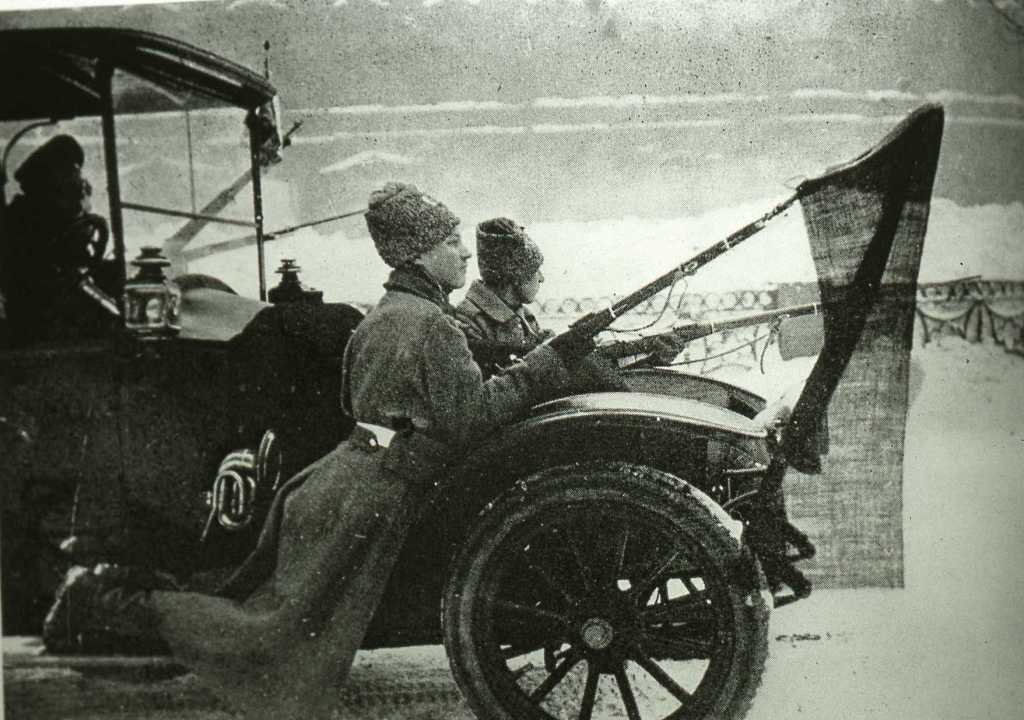
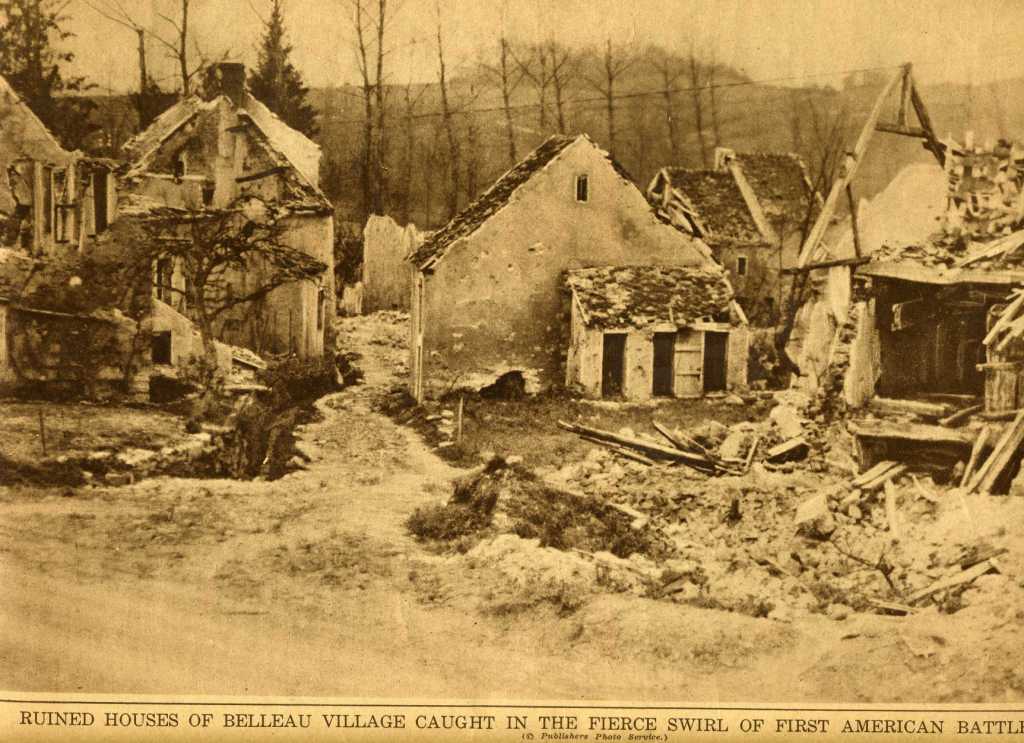

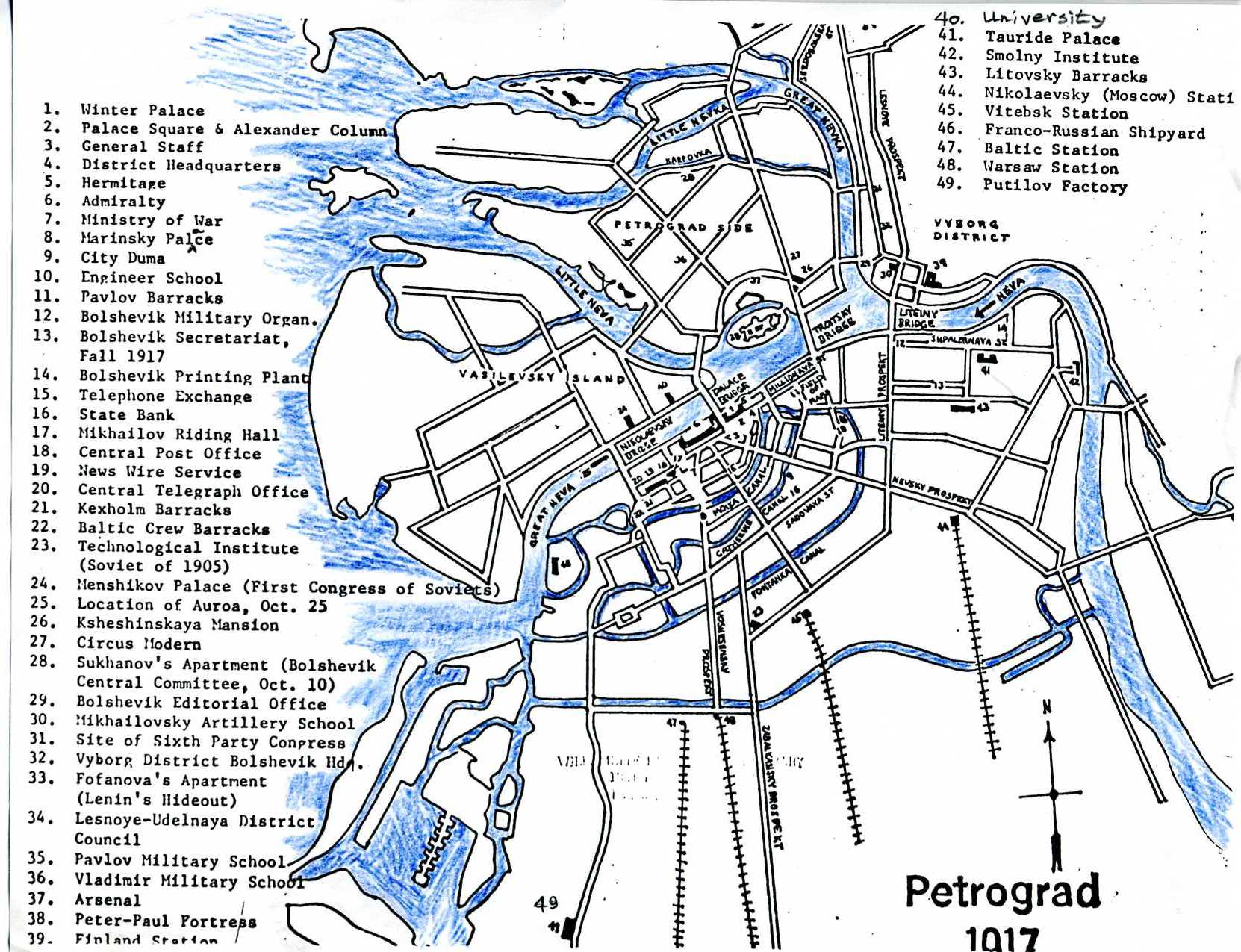


.PNG)

![[pix]](images/1919-Lnn.w.torch-Moor.jpg)
![[pix]](images/1919-Smert.mirovomu.imperializmu-Moor.jpg)