Imperial Russia,
from Peter the Great, through Catherine the Great,
to the collapse of the Russian Empire in World War One
Imperial Russia,
from Peter the Great, through Catherine the Great,
to the collapse of the Russian Empire in World War One
Exercise #1 = Purchase and set up your journal (1st Week)
Exercise #2 = Website technique (1st Week)
Exercise #3 = Website philosophy (1st Week)
Exercise #4 = Self-guided UO library tours (2nd Week)
Exercise #5 = Compose brief draft essays #1 and #2 (2nd and 3rd Weeks)
Exercise #6 = Submit journal for first time (4th Week)
Exercise #7 = Become a regional historian (4th through 10th Weeks, ending in draft essay #6)
Exercise #8 = Become an ethno-historian (4th through 10th Weeks, ending in draft essay #7)
Exercise #9 = Compose draft essays #3 and #4 (5th and 6th Weeks)
Exercise #10 = Take a mid-term exam (6th Week)
Exercise #11 = Compose draft essays #5, #6 and #7 (7th through 10th Weeks)
Exercise #12 = Take a final exam (Finals Week)

HST 346: RUSSIA FROM PETER THE GREAT TO THE RUSSIAN REVOLUTION
Alan Kimball, McK 367, 346-4813. Office hours: TU&TH 10:00-12:00 & by
appointment
KIMBALL@UOREGON.EDU
Most course materials are in the Knight Library or the course webpage. You will purchase a lab book, and there you will keep a record of library and webpage readings, write seven brief "draft" essays, & write your midterm & final exams. Here is a basic calendar of the term's work =
!! ja29 [TU]-----------------1st SUBMISSION of JOURNAL (including first
two draft essays)
!! fe14 [TH]:--------------- MIDTERM EXAM IN JOURNAL (including first four
draft essays)
!! mr20 [WE] at 8:00am: FINAL EXAM IN JOURNAL (including all seven draft essays)
First exercise = Purchase and set up your journal. Ask at the customer service desk in the basement of the UO Book Store for a blue-grey lab book (the larger one, 11x9 inches; Stock # 43-581, JUST EXACTLY THIS ONE. The first thing I want you to do with your lab book (let’s call it the journal) is paste a white label securely to the outer upper right-hand corner of the front cover (a mailing label will do). Boldly inscribe your name there. Inscribe other personal contact info on the inner face of the cover. Leave the first 4-5 numbered pages blank for keeping your own table of contents through the term, indicating sources consulted and lectures attended. Leave the final numbered page blank for instructor comments & grading.
Second exercise: Locate the following course webpage:
http://www.uoregon.edu/~kimball/courses.htm
Add this page to your web-browser
"Bookmarks". You'll go
there often this term.
These first two exercises are also listed and explained on that course website (along with ten further exercises).
ABOUT GRADES: Essays & exams are due at the time the class meets on the days specified. Late exercises are penalized one grade. Exercises AWOL 24 hours after due date are given a failing grade. Failure to complete any one of the essays or exams will result in a failing grade for the course. Unpenalized postponement of an exercise is possible only when documented illness or happenstance forces delay, or when arranged in writing beforehand. If you attend class regularly, keep good lecture notes, devote nine hours of your outside-of-class study-week to your reading & writing, & keep a good record in your journal, you may be sure that you are meeting course expectations.
ACADEMIC CALENDAR
1st Week
DIMENSIONS OF RUSSIAN HISTORY
This calendar defines main topics and provides certain major reading suggestions, week by week. Every week, for ten weeks, we meet three hours in lecture, and you devote nine hours outside of class to various readings [ID] and writing about your readings in your journal [ID]. Here in this first week, just to help you get into this very different sort of syllabus, I have indicated approximate time for each exercise.
This calendar guides you to the chapters in some of the most useful general textbooks and anthologies in THE RESERVE BOOK ROOM or on the open shelves of UO libraries. Textbook readings cover the larger topics suggested in the headline for each week of class. Select from among them as you wish to complete some part of your 9 hours of weekly reading.
You will also find yet further reading suggestions when you follow weekly links to certain parts of The Student's Annotated Chronology and Systematic Bibliography [SAC]
A GLOSSARY [TXT] explains bibliographical abbreviations used in SAC.
It is not wise to attempt all reading suggestions found in this academic calendar or in SAC. Think of weekly reading lists and SAC suggestions as menus. You may consult with me about how to make your choices, given your particular interests.
When your 9 hours of individual work with your journal are complete each week, congratulate yourself. You are doing an excellent job of training yourself to be a fledgling Russian historian.
Class attendance is essential for the successful completion of this course. You will be keeping class lecture notes in your journal and entering each session in your journal table of contents.
The course does not "happen" on the internet or even in the library; it happens when you bring the internet and library materials into contact with lectures in order to expand and refine that most important historical arena of all = Your own mind.
Exercise One
Purchase and set up your journal
[30 minutes]
Ask at the customer service desk in the basement of the UO Book Store for a blue-grey lab book (the larger one, 11x9 inches; Stock # 43-581, JUST EXACTLY THIS ONE. The first thing I want you to do with your lab book (let’s call it the journal) is paste a white label securely to the outer upper right-hand corner of the front cover (a mailing label will do). Boldly inscribe your name there. Inscribe other personal contact info on the inner face of the cover. Leave the first 4-5 numbered pages blank for keeping your own table of contents through the term, indicating sources consulted and lectures attended. Leave the final numbered page blank for instructor comments & grading.
Read this extended description of how best to employ the journal.
Exercise Two
Website technique
[2 hours]
In the first days of the term, you will read through descriptions of all 12 exercises here [ID], including linkages to auxiliary explanatory pages
Get a feel for the larger shape of course requirements. The syllabus is itself one of the dimensions of our course
It seems a lot when considered all together, but remember the old proverb = "inch by inch, life's a cinch; mile by mile, life's a trial". Inch your way through these suggestions and instructions. Things will begin to clarify, and you will inch forward in the right directions
Most of the technical peculiarities you will meet in this course are
connected with what I call
the Student's Annotated Chronology and
Systematic Bibliography [SAC � Alan Kimball].
Read this extended description of SAC and how to use it?.
You may print any part of the electronic material I provide this class, and you can build your own photo-copy library on Imperial Russia.
But do not place photocopied material in the journal (with the exception of outline maps -- IE=maps without words printed over the top of the geography).
In the journal, you enter your own notes on all this electronic, library and lecture material.
Exercise Three
Website philosophy
[6 1/2 hours]
We've introduced ourselves to the syllabus and other logistical dimensions of this course
Now we are ready to explore three vaster dimensions of Imperial Russian history (the vaster dimensions of ALL history) =
(1) The mentalities of those who produce & consume histories
(2) Place (In our course = "Eurasia")
(3) Time (In our course = from "early-modern" to "modern" times)
(1) MENTALITIES = The First Dimension of History
Let's start with ourselves =
(2) SPACE = The Second Dimension of History
Spend 1 hour with the course "Geography" page, especially in order to get a sense of how to read the geographical table on that page
Spend 2 hours with your journal reading in the Reserve Book Room (or photocopy readings and take them home). Read from the following books on reserve, sometimes skimming, sometimes consulting briefly, sometimes giving meticulous attention =
Riasanovsky(1)
Raeff,Imperial(1)
RRC2,2#38 (Pipes on the National Problem, i.e., on "human geography" or demographics of Russian history)
(3) TIME = The Third Dimension of History
Take quick hypertext hops to the six great moments in the history of Imperial Russia =
Four big SAC pages cover our period =
SUMMARY OF THE MOST IMPORTANT FIRST-WEEK "HOPS"
This electronic syllabus has so far presented internet "hops" to the following auxiliary pages and subpages.
These are the most essential to the understanding of the course structure =
B. SAC
C. JOURNAL
---1.
Reading
---2.
Draft essays
---3.
Exams
D. GEOGRAPHY
E. WAYS OF SEEING HISTORY
---1. Dozen Categories of Human Grouping
---2. Taxonomy of Historical Experience
---3. Interests
2nd Week
GEOGRAPHY & IMPERIAL EXPANSION
Frontier and imperialist geography, the first 300 years,
from 1552 (victory over the Kazan Tatars) and opening of Siberia
to 1852 (the beginnings of the Crimean War) =
*1550s:1850s;
Main moments in 300-year Russian frontier & imperial expansion
If you feel the urge, hop through the following =
ca. 40-hop LOOP on "frontier and imperialist expansion"
Before you launch yourself on this LOOP,
REMEMBER THIS
Here are suggestions as you select secondary readings on this week's topic =
\\
Riasanovsky(20)
Mironov,1:1-54
Florinsky,2:(26,32,35-36)
Auty, ch1:1-48
Raeff,Imperial:39-67
Dukes,Making:7-12,
36-43, 63-70, 117-26, 143-46, 148-51, 156-57, 159-63, 178-80
Exercise Four
Self-guided UO library tours
The library tours are a good time to begin serious thinking about exercises seven and eight.
Tour UO collections, round
one
Read the introductory paragraphs in this
big library page.
No library location is more important to us than the following two =
(1) Reserve Book Room (copy our
course Reserve list)
(2) Reference Division (there you'll find
GSE and MERSH.
Notice the MERSH index)
And there is a third crucial location. Time and space are the two fundamental organizational principles of history. In exercise three your initial goal was to get a general sense of chronology (TIME). Here your initial goal is to develop broad familiarity with geography (SPACE), and with certain other visual/spatial dimensions of our history. So the third library location is the following =
(3) MAP LIBRARY
On this course website, open Geographic TABLE. Locate all river systems listed there in column two. If you print out this table, you could use it in the MAP LIBRARY to search out the river systems in any of the good atlases there. Where do the great rivers originate? Where do they terminate?
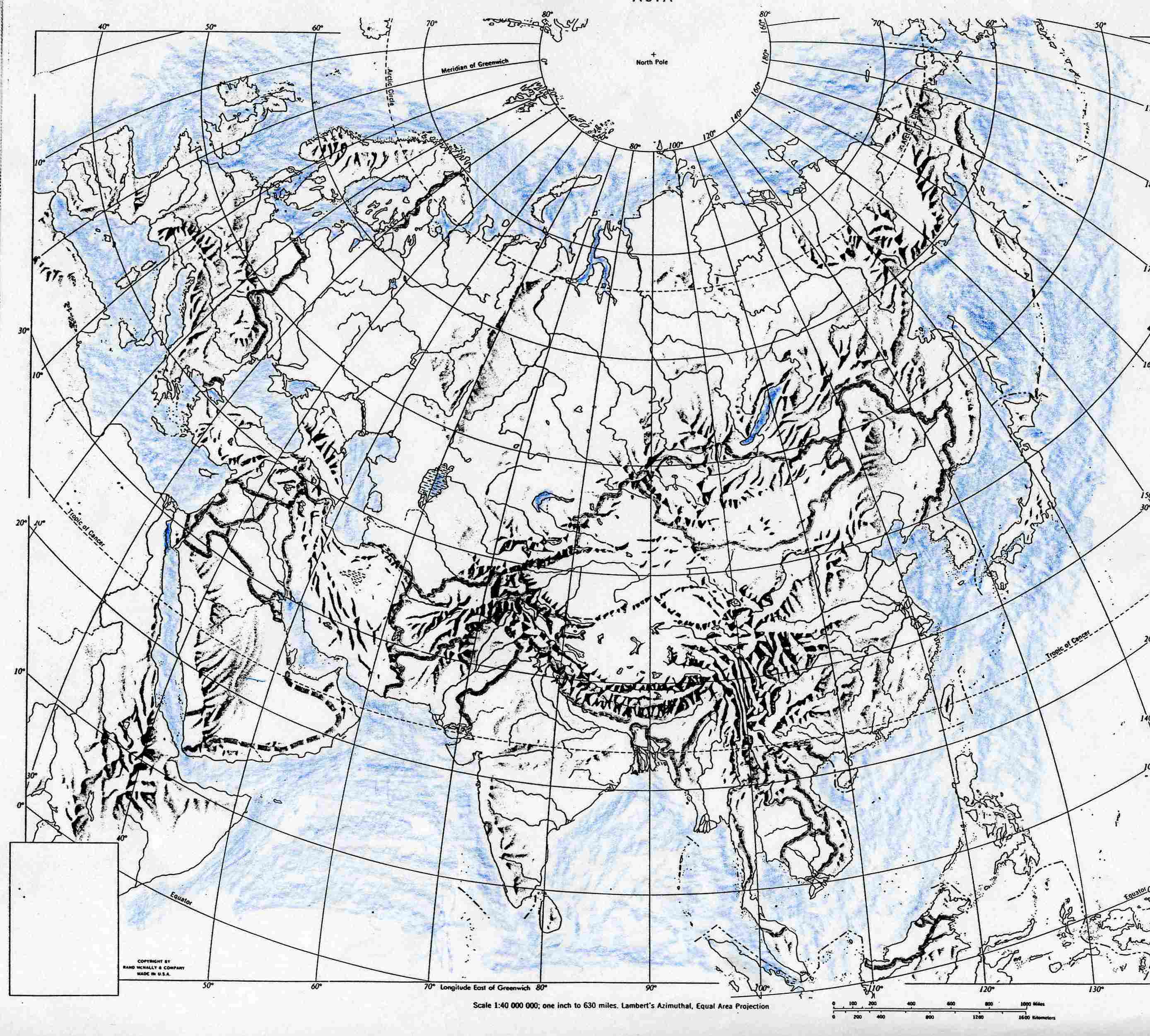
Here in the MAP LIBRARY, survey the range devoted to Russia, G2111.S1 C…, and G2111.S1 G…. Locate and leaf through the pertinent chronological sections of the atlases by Channon and Gilbert. Browse the Cultural Atlas of Russia…. At first, concentrate on the geo-physical features of the territory sometimes called "European Russia" which lies within the space north of Constantinople (Istanbul), south of the White Sea, west of the Ural Mts., & east of the Carpathian Mts. Pay particular attention to the way major rivers drain the low, flat land.
(4) ART AND ARCHITECTURE LIBRARY
Look for pictorial representation of the paintings of the following two artists =
Tour UO collections, round
two. Now you should work your way through the remaining sections of the
library page =
(5) Knight Library open stacks
(6) University of Oregon Museum of Art
(7) Jacqua Law School Library
(8) Information Technology Center
HERE IS A PAGE ON INTERNET LIBRARY RESOURCES
PREPARED FOR US BY UO KNIGHT LIBRARY'S SLAVIC LIBRARIAN,
HEGHINE HAKOBYAN
[TXT]
Exercise Five
Draft essays
Over the next nine weeks, you will compose seven brief draft essays [ID] =
Draft essay #1
should be completed by the beginning of the third
week. I will read it at the time of first submission of the journal
[ID]
The general topic should be imperialist expansion of the Russian Empire, but you should select a very specific episode or period. You should take your lead from the web-syllabus lecture page "Main moments in Russian frontier & imperial expansion, 1550s-1850s"
I am always ready to make suggestions about specific topics within the range of the large theme. Here are some thoughts =
Notice how exercises 7 and 8 [ID] invite you to select a region "internal" to Russian history and a non-Russian people within the boundaries of Russian history. Draft essay #1 draws your attention to "external" issues, to the geographic edges of Russian history, to the frontiers where sovereign states confront one another. This distinction is not absolute. Yet we can say that exercises seven and eight are exercises in regional and ethno-history while this draft essay #1 is an exercise in international relations.
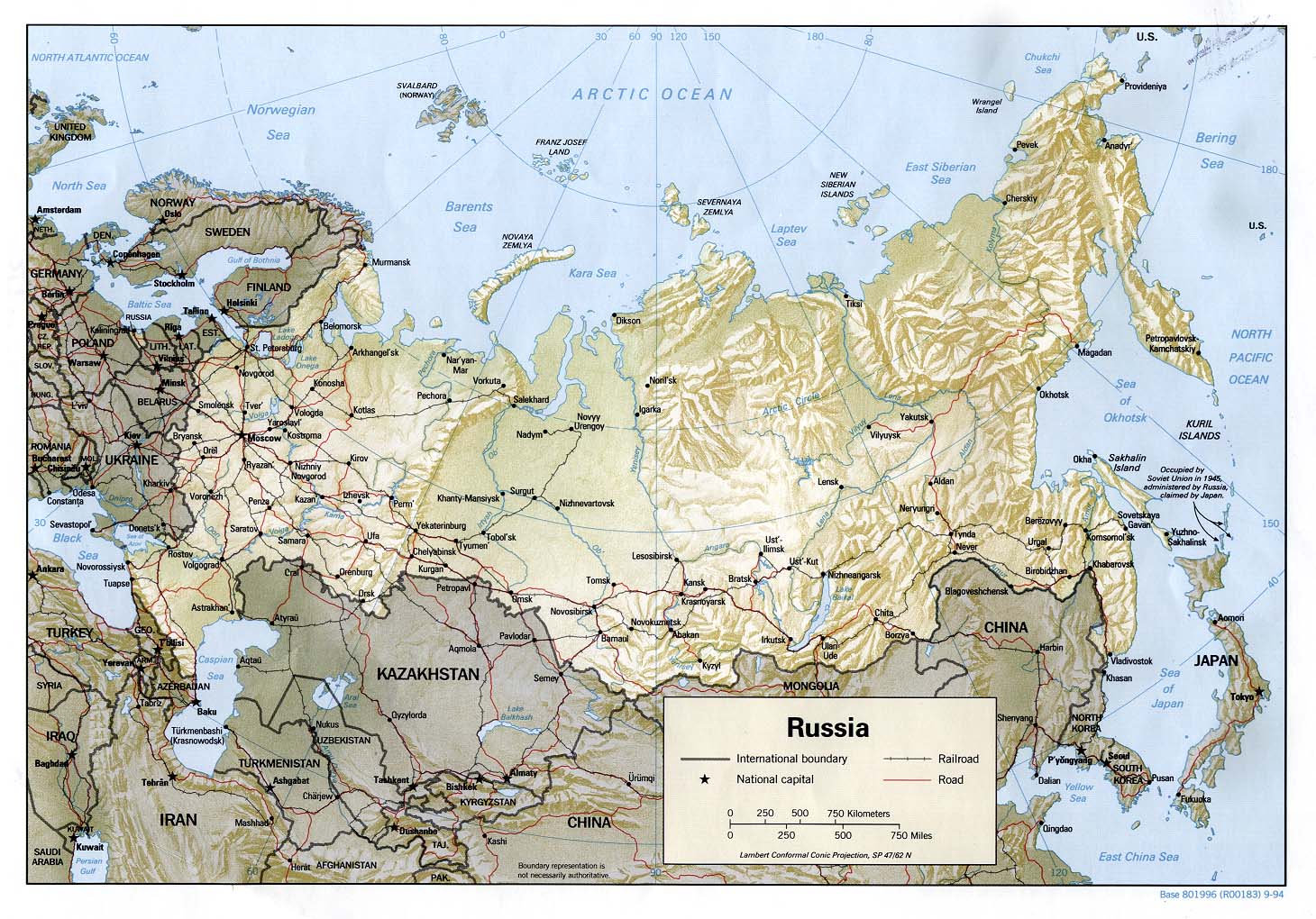
Locate the border areas appropriate to our course in the atlases, then choose one for a bit a special concentration on your part. This internet map of Russia should be of help
I recommend that you consider a key border or frontier area. You could run a few FIND searches [ID] through SAC with the name of bordering states that interest you
Don’t rush into your draft-essay choices. Run several FIND searches before you select your topic. Start with the SAC that covers the years 1689 to 1796. Work your way up to 1917 in the subsequent SAC pages. Next chronological page can be accessed at the bottom of each SAC page. I will be lecturing about Russian expansion in the early days of the course, and that should help you make a choice of area by the end of the second week, or early in the third.
Draft essay #2
should also be completed before the first submission of the
journal to me [ID]
The general topic should relate to the era of Peter the Great. Attention might best be devoted to some detailed feature of his several energetic efforts at transformation of Russian domestic life. Try this LOOP [ID] on the phrase "Petrine Transformation" (10 big hops)
3rd Week
PETER I "THE GREAT"
\\
Riasanovsky(21-22)
Florinsky,1:(14-18)
Kliuchevskii,4
Blum(15)
Raeff,Imperial(1:3-10)
Dukes,
Making:59-102
Auty, ch4:121-196, Raeff chapter deals with Peter I,
but also with
Catherine II, Alexander I & Nicholas I
Here the main features of the Petrine epoch are arranged according to our mnemonic taxonomy of historical experience
I. Mentalities =
Newspaper,
Fedor Saltykov,
Feofan
Prokopovich, Ivan Pososhkov (notice Academy of
Sciences)
*--Take some notice of Peter's notorious
behavioral
reforms. Peter liked to smoke a pipe. Smoking tobacco (a plant earlier
unknown to Europe, east or west) was a recent novelty. It was widely thought to
be unacceptable behavior. Consider these articles in the 1649 Russian Law Code =
ch25, article 11 and
articles 15-17
II. Institutions =
Follow 10-hop LOOP on the phrase
"Petrine transformation"| NB!
Early
diplomatic innovation
III. Social structure =
*--Table of Ranks
*--What was a "serf"?
*--Read two further SAC entries on serfs =
1680 (about global context of
bound labor in early modern Europe) &
1707 (about the influence of
northeastern European serfdom on Russian serfdom)
IV. Economy =
Take 11 hops on keyword "mercantilism" from
1582su:
to 1776
(a 3-hop LOOP on Petrine
economic development recapitulates main points)
V. Geography =
Review 7-hop LOOP
Frontier and imperial expansion,
from the Treaty of Nerchinsk through the
Seven-Years War
In 37 years between the two "greats" (Peter I and Catherine II), noble insider elites sought to limit autocratic monarchical authority
4th Week
CATHERINE II "THE GREAT"
RRC2,2#20 (Nakaz),21 (Solov'ev),22 (Radishchev)
\\
Riasanovsky(23)
Florinsky,1:(19-24)
Blum(18-19)
Raeff,Imperial(index "Catherine II")
Dukes,Making:145-192
Auty, ch4:121-196 (Raeff on imperial Russia,
Peter I, Catherine II, Alexander I & Nicholas I)
Mironov,1:197-285
deals with Russian Imperial social structure and social mobility
I. Catherine II was a most representative ruler in this European age of Enlightenment
II. Catherine extended state control over the Orthodox Church
III. When Emperor Peter III (Catherine's husband and predecessor on the throne) "emancipated" the Russian gentry from state service, Russian peasants presumed they too would soon be freed from serfdom, but they were very wrong
IV. Mikhail Shcherbatov explored the concept of "modernization"
Transition from Enlightenment to Revolution:
1789:1815; The French Revolution,
Monarchy collapsed, King Louis XVI was tried and executed
Exercise Six
FIRST SUBMISSION OF JOURNAL
[ID]
Submit the journal for an early evaluation, a "no-fault" (no grade) procedure, date indicated on hand-out syllabus. The journal should contain beginning notes on readings and exercises, plus draft essays #1 and #2 [ID]
On the last page of your journal, I enter my evaluations, using what I call "Frequently Observed Qualities" [FOQs]
Exercise Seven
REGIONAL HISTORY
Select a region & concentrate on its historical experience. I strongly recommend that you select one of the river systems on the Geographic TABLE. Consult GSE and, most important, MERSH. Why not choose the great Volga River? "Volga, Volga, mat' rodnaia" [Volga, Volga, our native mother]. However, you would do just as well to select the Caucasus Mts., or Siberia. Think about it before you choose. Email me if you want some advice.
Another example = the Amur River. The movie DERSU UZALA [ID] might interest you in connection with either exercise 7 or 8.
You will write two draft essays toward the end of the term, draft essay #6 will be on the topic chosen here, and draft essay #7 will be on the topic described just below under exercise eight. Beginning now, give these two exercises some particular attention as your weekly readings progress. Make sure your table of contents clearly guides you and your reader to these and other sections of your journal.
Exercise Eight
ETHNO-HISTORY
Select one non-Russian people living within the realm of Russian authority and subject to the experience of "Russian history". Learn the main outline of their historical experience over the time period covered this term.
Think about how this exercise relates to exercise seven, Regional history. The people you choose here should not live in the area you have selected in exercise seven.
For a fuller description of this exercise, look at the webpage Demographic Tables (still under construction).
You are welcome to follow your own instincts and interests as you work on these two exercises through the term. Just be practical. Budget your time. Consult the main reference books and develop the habit of using indexes, looking for information on the topics you select under 7 and 8. In both these exercises you are given the opportunity to become something of a fledgling specialist on two focused topics.
Exercise Nine
Compose draft essays
[ID] #3 and #4 in the 5th
and 6th weeks.
Draft essay #3 should deal with the era of Catherine the Great. It is always useful to explore the relationship between ideas or philosophy and actions or behavior.
Draft essay #4 should deal with either Russian role in the era of "European Revolutions" (fifth week topic), or with the great reform efforts in the final fifty years of the Empire (sixth and seventh week topics).
Be wary of how you schedule the composition of draft essays #3 and #4. I will expect to read them when you complete the midterm exam and hand in your journal.
5th Week
ERA OF "EUROPEAN REVOLUTIONS"
(restless populations, restless ruling elites)
A. Reforms in the time of Alexander I (6-hop
LOOP)
B. Reaction in the time of Alexander I (Arakcheev)
C. "Decembrist" political opposition to autocratic authority (6-hop
LOOP) [RRC2,2#24]
D. "Reactionary reform" in the time of Nicholas I (8-hop
LOOP)
E. "Petrashevtsy" as political
opposition to autocratic authority
\\
*--Raeff,Imperial (index
"Alexander I")
*--Auty, ch4:121-196 (Raeff covers
Peter I, Catherine II, and Alexander I & Nicholas I)
*--Alan Kimball, "Who Were the Petrashevtsy?" [TXT]
The reign of Alexander II opened
the "Era of Great Reforms" and "Russian revolutionary situations"
\\
*--Larissa Zakharova on the Russian State
and the Great Reforms [TXT]
*--Alan Kimball, Tsarist State & Origins of Revolutionary Opposition
in the 1860s [TXT]
*--Alan Kimball, Russian Civil Society and Political Crisis,
1859-1863 [TXT]
*--Riasanovsky(25-26,33)
*--Florinsky,2:(25-32)
*--Auty, ch5:197-271 (John Keep covers imperial
Russia in the era of reform & revolution)
*--Treadgold,
part one, chapters 2-4, offers the best textbook account of Russian
revolutionary movements and the origins of Russian Marxism
6th Week
WITTE & INDUSTRIALIZATION
RRC2,2#37 (Witte memo)
\\
Riasanovsky(32)
Treadgold, part
one, last 2 chapters
Blum(25-26)
Exercise Ten
MIDTERM EXAM IN JOURNAL
[ID], WITH
READING NOTES
[ID] & DRAFT ESSAYS #1 & #2,
and #3 & #4
On the last page of your journal, I enter my evaluations, using what I call "Frequently Observed
Qualities" [FOQs]
Midterm exam study guide.
Exam date indicated in the hand-out syllabus
7th Week
EMANCIPATION & STOLYPIN REFORMS
RRC2,2#41 (Stolypin) & 43 (Black on Russian Society)
\\
Mironov,2:66-107
(evolution of servile relations)
Riasanovsky(27,29,& 30)
Treadgold, part
one, last 2 chapters
Florinsky,2:(33-35,40)
Blum(24)
*--Brief history of serfdom =
1649:Moscow |
1837:1841 |
1861fe19
| 1906no09
*--For a detailed account of serfdom, follow the huge LOOP from
1463
*--Petr Stolypin, a 10-hop LOOP
(1904:1911)
*--Peasants and the land, 1861-1917 +
Exercise Eleven
Compose draft essays [ID] #5, #6 & #7 over the next four weeks.
Draft essay #5 should be completed in the 7th or 8th week. The topic can be of your choosing from among the topics covered in the final three weeks of the term. Select a topic that shows off your breadth of learning.
Draft essay #6 should be completed in the 9th week. The topic of this draft essay has already been defined by you under exercise seven
Draft essay #7 (the final "take-home" draft essay) should be completed in the 10th week. The topic of this draft essay has already been defined by you under exercise eight
I will read draft essays #5, #6 and #7 after you hand in your journal with the final exam [ID]
8th Week
GOLDEN AGE and SILVER AGE of Russian Culture
As you run through the hyperlinks to representative persons and trends in the Russian Golden Age and Silver Age, think about the following theoretical issues =
RRC2,2#26 (Belinskii), 27 (Herzen), 32
(Aksakov,Ivan), 33 (Danilevskii)
\\
*--Riasanovsky(24 & 28)
*--Treadgold,
part one, ch. on "Silver Age"
*--Florinsky,2:(28,31,37)
*--Auty, ch5:197-271 (John Keep covers imperial Russia
in the era of reform & revolution)
Hyperlinks to Representative Persons and Trends =
*--Nikolai Karamzin,
historian and pundit
*--Nikolai Lobachevskii, mathematician
*--Aleksandr Pushkin, poet
*--Uvarov, "Westernizers" and
"Slavophiles"; NB! First reference to Alexander Herzen
*--Petr Chaadaev, historian and social philosopher
*--Nikolai Gogol, novelist
*--Vissarion Belinskii, pundit, social/literary
critic
*--Fedor Tiutchev, poet and diplomat
*--Ivan Kireevskii, Slavophile philosopher
*--Aleksei Khomiakov, Slavophile theorist
*--Ivan Turgenev's
first writings were followed by
great world fame in the 1860s and after
*--Sergei Aksakov, novelist
*--Ivan Aksakov
*--Nikolai Danilevskii
*--Aleksandr Afanas'ev, folklorist
*--Anton Rubinshtein, musician
*--An
alphabetical list of websites containing examples of Russia's
greatest graphic artists [Mitrevski,George]
*--Dmitrii Mendeleev, chemist
*--Fedor Dostoevskii, novelist and moralist
*--Leo Tolstoy,
novelist and
moralist
*--THE SILVER AGE
*--The rise of "pop-arts"
(Here is a useful discussion of
some historical meanings of this development)
*--Vladimir Solov'ev, philosopher
*--The Moscow Art Theatre
*--Dmitrii Merezhkovskii, novelist, aesthete
*--Preliminary censorship
at an end
*--Photographer Sergei
Prokudin-Gorskii
*--Aleksandr Blok, poet
*--Intellectuals denounced intelligentsia
*--Wassily Kandinsky, painter
*--Igor Stravinsky, musician
9th Week
ZEMSTVOS
& STATE DUMA
RRC2,2#34
(Pobedonostsev), #35 (Miliukov), #39
(Nich II) & #40 (Duma)
\\
Riasanovsky(31)
Treadgold, part
one, last 2 chapters
Mironov,2:143-222
(sweeping survey of relationship between state & public sphere)
Florinsky,2:(40)
Sumner:III(2-3)
Blum(27)
10th Week
World War & collapse of Imperial Russia
Treadgold,
part one, last chapter |
Florinsky,2:(42-44)
Complete exercise eleven.
*--Crisis of
European Imperialism (1850s-1914) 22-hop LOOP = Great Game
*--Reactionary official Petr Durnovo's
unheeded memo on dangers of war with Germany
*--WORLD WAR ONE (1914-1917)
*--The Rasputin episode
*--Radical Marxist Vladimir Lenin's
Imperialism: The Highest Stage of Capitalism
*--COLLAPSE (1917mr)
Lectures based on
Main moments in 300-year Russian frontier & imperial expansion,
PART THREE: The "Great Game" and its final catastrophe = WW1
Exercise Twelve
FINAL EXAM
WRITTEN IN JOURNAL
[ID], WITH
READING NOTES [ID] & ALL PREVIOUS DRAFT ESSAYS
[ID], the latest
being = #5 through #7
Exam study guide
Exam date and hour indicated in the hand-out syllabus
You may submit a self-addressed and stamped envelope of proper dimension to me at the end, and I will mail your journal to you after grades are submitted. Beforehand, purchase the envelope and address it to yourself. Then place your journal in it and ask at the Post Office what the proper postage should be. These rates change, but I can tell you that in 2012 the postage was ca. $2.20. Place the proper postage on the self-addressed envelope and submit it with the journal at the end of the final exam. I will mail it to you after grades are posted.
Or email me that you wish to pick up your journal. I will reply telling you where and when you may do that.
Good luck to all.